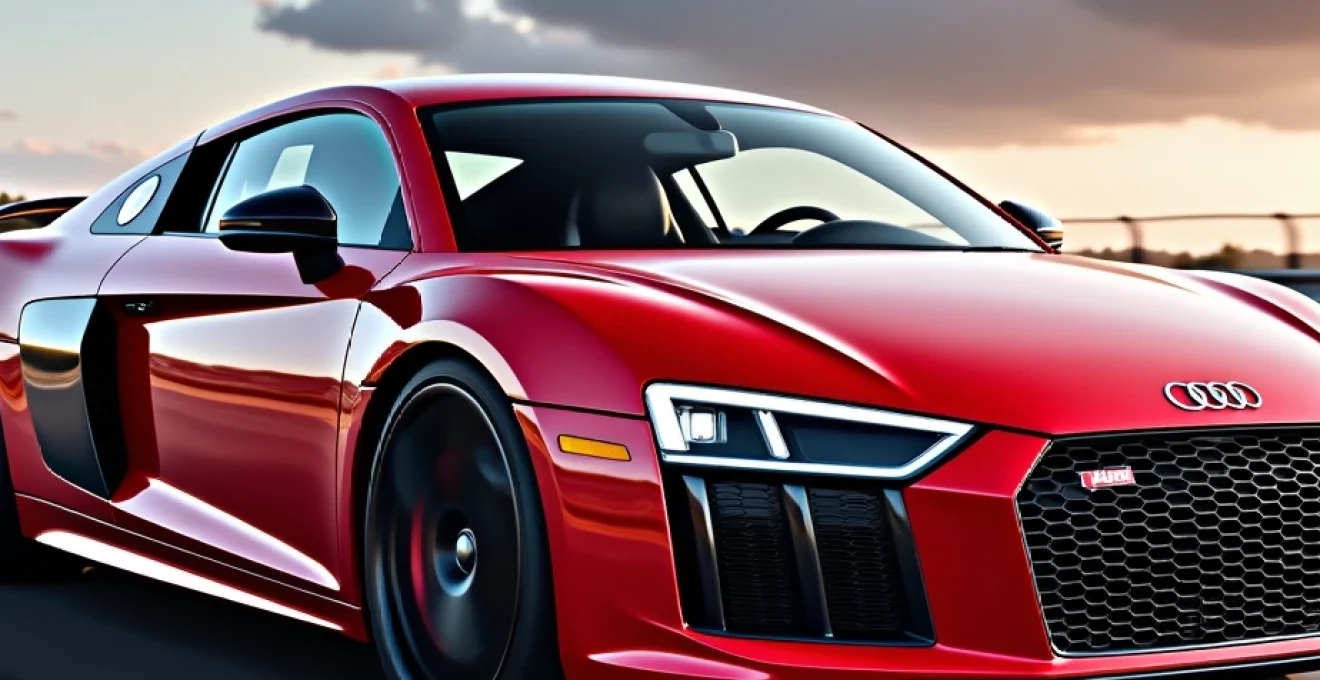
The Audi R8 V8 represents one of the most significant achievements in modern supercar engineering, delivering a naturally aspirated powerplant that challenged the established hierarchy of high-performance vehicles. When Audi introduced this 4.2-litre FSI engine in their inaugural mid-engined supercar, it marked a departure from the brand’s traditional front-engine layout and established Ingolstadt as a serious contender in the supercar arena. The V8’s sophisticated engineering combines cutting-edge direct injection technology with proven naturally aspirated architecture, creating a powerplant that delivers both exhilarating performance and remarkable reliability. This engine’s development drew heavily from Audi’s motorsport heritage, particularly their success at Le Mans, whilst incorporating advanced technologies that would influence the industry for years to come.
Audi R8 V8 4.2-litre FSI engine technical specifications and architecture
The foundation of the R8’s performance credentials lies in its meticulously engineered 4.2-litre V8 engine, designated internally as the BAR engine code . This powerplant represents a significant evolution from Audi’s previous V8 designs, incorporating advanced materials and manufacturing techniques that were revolutionary for their time. The engine block utilises a closed-deck aluminium construction with cast-iron cylinder liners, providing exceptional strength whilst maintaining optimal heat dissipation characteristics. The cylinder bore measures 84.5mm with a stroke of 93mm, creating a displacement of 4,163cc and establishing a bore-to-stroke ratio that favours high-rpm performance.
Naturally aspirated V8 configuration and cylinder head design
The cylinder head architecture employs a four-valve-per-cylinder design with dual overhead camshafts, creating an exceptionally efficient combustion chamber geometry. Each cylinder head features individual coil-over-plug ignition systems, eliminating the traditional distributor and high-tension leads that can introduce power losses at high rpm. The valve train utilises hydraulic lash adjusters with roller cam followers, reducing friction and ensuring consistent valve timing throughout the engine’s operational range. The intake ports are carefully designed to promote tumble flow, enhancing fuel atomisation and combustion efficiency, particularly important given the direct injection system’s requirements.
FSI direct injection system and fuel delivery mechanics
Audi’s Fuel Stratified Injection (FSI) technology represents one of the most advanced fuel delivery systems available when the R8 launched. The high-pressure fuel pump operates at pressures up to 150 bar, delivering precisely metered fuel directly into each combustion chamber through piezo-electric injectors. This direct injection approach allows for stratified charge operation during light load conditions and homogeneous charge during high-performance operation. The system incorporates multiple injection strategies, including split injection events that can deliver fuel during both intake and compression strokes, optimising combustion characteristics across the engine’s entire operating range.
Dry sump lubrication system engineering
The transition to a dry sump lubrication system was essential for the R8’s mid-engined configuration, allowing the engine to be positioned significantly lower in the chassis. The system employs a separate oil reservoir tank with multiple scavenge pumps that continuously remove oil from the engine’s various chambers. This design prevents oil surge during high lateral acceleration, ensuring consistent lubrication under extreme driving conditions. The dry sump system also reduces the engine’s overall height by approximately 100mm compared to conventional wet sump designs, contributing to the R8’s low centre of gravity and optimal weight distribution.
Variable valve timing technology implementation
The engine incorporates Audi’s variable valve timing system on both intake and exhaust camshafts, providing precise control over valve events throughout the rpm range. The system utilises hydraulically actuated cam phasers that can advance or retard valve timing by up to 50 degrees of crankshaft rotation. During low-rpm operation, the system retards intake valve timing to improve idle stability and reduce emissions, whilst advancing timing at higher rpm to maximise volumetric efficiency. The exhaust cam timing is similarly optimised to reduce pumping losses and improve scavenging characteristics, contributing significantly to the engine’s impressive power output.
Power output analysis: 420 PS at 7,800 RPM performance metrics
The R8 V8’s power output of 420 PS (414 bhp) at 7,800 rpm represents a remarkable achievement in naturally aspirated engine design, delivering approximately 100 bhp per litre of displacement. This specific power output places the R8’s engine among the most efficient naturally aspirated units of its era, rivalling dedicated sports car engines from Ferrari and Lamborghini. The power curve demonstrates exceptional linearity, with over 90% of peak torque available from 3,500 rpm onwards, creating a broad and usable power band that enhances everyday driveability. The engine’s ability to maintain strong power output well beyond 7,000 rpm showcases the effectiveness of its variable valve timing and optimised breathing characteristics.
Torque curve characteristics and peak 430 nm delivery
Maximum torque output of 430 Nm (317 lb-ft) arrives at 4,500 rpm, providing substantial mid-range flexibility that distinguishes the R8 from many high-strung competitors. The torque curve exhibits a remarkably flat characteristic, maintaining over 400 Nm from 3,000 rpm through to 6,500 rpm, ensuring strong acceleration across a wide range of engine speeds. This broad torque plateau results from careful optimisation of the intake and exhaust systems, combined with the sophisticated variable valve timing that adjusts port timing for maximum cylinder filling. The naturally aspirated configuration eliminates turbo lag entirely, providing instantaneous throttle response that enhances the driving experience significantly.
Power-to-weight ratio calculations for 1,560kg kerb weight
With a kerb weight of 1,560kg, the R8 V8 achieves a power-to-weight ratio of 270 bhp per tonne, placing it in direct competition with established supercars of its era. This figure represents exceptional performance potential, particularly when considering the car’s four-wheel-drive system typically adds approximately 80-100kg compared to rear-wheel-drive alternatives. The aluminium space frame construction contributes significantly to this impressive power-to-weight ratio, with the body structure weighing just 210kg despite its exceptional rigidity. The engine itself weighs approximately 180kg, remarkably light for a naturally aspirated V8 with dry sump lubrication, thanks to extensive use of aluminium components throughout its construction.
Compression ratio impact on High-RPM performance
The engine employs a compression ratio of 12.5:1, exceptionally high for a naturally aspirated unit designed to operate on premium unleaded fuel. This elevated compression ratio contributes significantly to the engine’s thermal efficiency and power output, particularly at higher rpm where combustion chamber pressures peak. The high compression design necessitates precise combustion timing and sophisticated knock detection systems to prevent detonation under varying fuel quality conditions. Advanced piston design incorporates carefully shaped combustion chambers that promote rapid flame propagation whilst maintaining controlled burn rates, essential for reliable operation at such elevated compression ratios.
Redline engineering at 8,250 RPM maximum revolution
The 8,250 rpm redline represents a remarkable achievement for a naturally aspirated V8 of this displacement, requiring exceptional attention to reciprocating assembly balance and valve train dynamics. The connecting rods utilise powder forged steel construction with precisely machined big-end bearings, whilst the crankshaft employs a fully counterweighted design to minimise vibration at high rpm. The valve springs are designed with progressive rate characteristics and anti-surge dampers to prevent valve float, even during sustained high-rpm operation. This high redline capability allows the engine to maintain strong power output well beyond typical operating ranges, contributing to the R8’s exceptional top-end performance characteristics.
Transmission integration: r-tronic sequential gearbox dynamics
The R8 V8’s integration with Audi’s R-tronic sequential gearbox represents a sophisticated approach to automated manual transmission technology, though one that proved controversial among enthusiasts. This single-clutch system employs hydraulically actuated gear changes controlled by advanced electronic management systems that monitor engine load, throttle position, and driving style to optimise shift characteristics. The transmission features six forward gears with carefully chosen ratios that maximise the engine’s broad power band, whilst the final drive ratio of 4.43:1 provides an optimal balance between acceleration and top speed capability. However, the system’s inherent limitations became apparent in low-speed traffic conditions, where the single-clutch design created noticeable interruptions in power delivery during gear changes.
The manual gearbox option, available throughout the R8 V8’s production run, utilised a traditional open-gate design that became one of the car’s most celebrated features. This six-speed manual transmission, sourced from Graziano, featured exceptionally precise shift quality with short, mechanical throws that provided direct connection between driver and drivetrain. The clutch system employed a single-disc design with sufficient capacity to handle the V8’s torque output whilst maintaining reasonable pedal effort for everyday use. Gear ratios were optimised to complement the engine’s power characteristics, with first gear providing strong acceleration from standstill whilst sixth gear enabled relaxed high-speed cruising at moderate engine speeds.
Acceleration benchmarks: 0-62 MPH in 4.6 seconds analysis
The R8 V8’s acceleration performance of 0-62 mph in 4.6 seconds represents impressive capability for a naturally aspirated engine of its era, achieved through careful optimisation of gearing, traction systems, and power delivery. This benchmark time places the R8 ahead of contemporary Porsche 911 Carrera models whilst remaining competitive with forced-induction alternatives from other manufacturers. The acceleration curve demonstrates the benefits of the naturally aspirated configuration, with consistent power delivery that avoids the lag characteristics associated with turbocharged engines. Launch control systems, when equipped, optimise wheel slip and gear change timing to achieve maximum acceleration whilst protecting drivetrain components from excessive stress.
The quattro all-wheel-drive system contributes significantly to the R8’s impressive acceleration figures, distributing the V8’s power effectively to maximise traction under varying conditions. The system employs a viscous coupling centre differential with a baseline torque split of 15% front and 85% rear, providing near-rear-wheel-drive characteristics during normal driving whilst automatically redistributing power when traction limits are approached. This intelligent torque distribution allows the R8 to achieve consistent acceleration times regardless of surface conditions, a significant advantage over rear-wheel-drive competitors that may struggle for traction in less-than-ideal circumstances. The electronic stability control systems work in conjunction with the quattro system to maintain optimal vehicle dynamics during hard acceleration.
Engine sound characteristics and exhaust note acoustics
The R8 V8’s auditory signature represents one of its most compelling attributes, delivering a sophisticated blend of intake and exhaust notes that create an unmistakably premium sound experience. The engine’s naturally aspirated configuration allows for unfiltered acoustic expression, whilst the mid-mounted position provides optimal sound transmission to both cabin and external environment. The standard exhaust system employs carefully tuned resonators and mufflers that enhance desirable frequencies whilst attenuating harsh or unpleasant notes, creating a refined sound character that remains civilised during everyday driving yet becomes increasingly aggressive under load.
Resonance frequency analysis of V8 firing order
The V8’s firing order of 1-5-4-2-6-3-7-8 creates a distinctive acoustic signature characterised by evenly spaced ignition events that produce a smooth, refined sound character. This firing sequence generates primary harmonics at 200 Hz intervals when measured at idle, creating the classic V8 rumble that distinguishes it from V6 or inline configurations. As engine speed increases, these fundamental frequencies multiply, creating complex harmonic interactions that contribute to the engine’s increasingly aggressive sound character. The 90-degree V-angle produces optimal acoustic balance, eliminating the uneven firing intervals that would create harsh or discordant notes typically associated with less sophisticated V8 designs.
Sports exhaust system impact on acoustic performance
The optional sports exhaust system transforms the R8 V8’s acoustic character significantly, employing electronically controlled valves that modify exhaust flow patterns based on driving mode and throttle position. During normal driving conditions, the system maintains a refined, subdued character suitable for urban environments, whilst aggressive driving opens the valves to create a more dramatic and engaging sound experience. The sports system reduces back pressure by approximately 15% compared to the standard exhaust, contributing marginally to power output whilst dramatically enhancing the auditory experience. Resonance chambers are strategically positioned to amplify desirable frequencies whilst maintaining compliance with noise regulations across different markets.
Sound symposer technology and cabin audio enhancement
Audi’s implementation of sound symposer technology in the R8 V8 represents a sophisticated approach to cabin audio enhancement, utilising acoustic channels that direct engine sound into the passenger compartment. This system employs carefully positioned apertures in the firewall that allow controlled amounts of engine noise to enter the cabin, enhancing the driving experience without compromising comfort or creating excessive noise levels. The symposer channels are tuned to emphasise the engine’s most appealing frequencies whilst filtering out undesirable noise characteristics such as gear whine or auxiliary component noise. Electronic sound augmentation systems complement the mechanical symposer, providing additional acoustic enhancement through the audio system speakers during specific driving conditions.
Comparative performance against contemporary competitors
When evaluated against its contemporary rivals, the R8 V8 demonstrated competitive performance credentials that justified its position in the premium sports car segment. The engine’s naturally aspirated configuration provided distinct advantages in terms of throttle response and acoustic character, whilst its power output remained competitive with forced-induction alternatives from other manufacturers. Reliability and maintenance requirements compared favourably with Italian competitors, whilst the quattro all-wheel-drive system provided year-round usability that distinguished the R8 from rear-wheel-drive alternatives. The engine’s broad torque curve and linear power delivery created a more accessible performance character than many high-strung competitors, enhancing everyday driveability without compromising ultimate capability.
Ferrari F430 4.3-litre V8 power comparison
The Ferrari F430’s 4.3-litre V8 produced 490 bhp compared to the R8’s 414 bhp, representing a significant power advantage for the Italian machine. However, the Ferrari’s higher specific output came at the cost of increased complexity and maintenance requirements, with service intervals significantly shorter than the Audi’s more conservative engineering approach. The F430’s engine required major services every 12,000 miles compared to the R8’s 18,600-mile intervals, whilst parts costs and specialist labour requirements favoured the German alternative significantly. Peak power delivery characteristics also differed substantially, with the Ferrari requiring higher rpm to access maximum performance compared to the R8’s more accessible power band that provided strong acceleration from lower engine speeds.
Lamborghini gallardo 5.0-litre V10 performance differential
The Lamborghini Gallardo’s 5.0-litre V10 engine, producing 520 bhp, provided superior power output compared to the R8 V8, though both vehicles shared significant platform components and development expertise. The V10’s additional displacement and two extra cylinders created a more dramatic acoustic signature and stronger top-end performance, whilst the R8’s V8 offered superior fuel economy and lower running costs. Both engines utilised similar direct injection technology and variable valve timing systems, though the Gallardo’s higher specific output resulted in increased maintenance requirements and more frequent service intervals. The quattro all-wheel-drive system provided similar traction capabilities to the Gallardo’s system, though with slightly different torque distribution characteristics that favoured the R8’s more predictable handling balance.
Porsche 911 turbo forced induction advantage analysis
The Porsche 911 Turbo’s 3.6-litre turbocharged flat-six engine produced 480 bhp with significantly higher torque output than the naturally aspirated R8 V8, demonstrating the efficiency advantages of forced induction technology. The Turbo’s 620 Nm of torque, available from just 1,950 rpm, provided dramatically superior low-end performance compared to the R8’s 430 Nm at 4,500 rpm, creating more flexible everyday driveability. However, the R8’s naturally aspirated configuration eliminated turbo lag entirely, providing more immediate throttle response and a more linear power delivery characteristic that many enthusiasts preferred. The Porsche’s rear-engine layout created distinct handling characteristics compared to the R8’s mid-engine configuration, with each approach offering specific advantages depending on driving conditions and personal preferences. Reliability
and maintenance considerations favoured the Audi significantly, with the naturally aspirated V8 requiring less frequent servicing and proving more tolerant of varying fuel quality compared to the highly stressed turbocharged Porsche unit. The R8’s mid-engine weight distribution provided more neutral handling characteristics compared to the 911’s rear-engine layout, though both approaches offered distinct advantages depending on driver preference and intended use.
The comparative analysis reveals that whilst the R8 V8 may not have led in absolute power figures, its combination of naturally aspirated character, reliable operation, and sophisticated engineering created a compelling alternative to more established supercar manufacturers. The engine’s broad torque curve and linear power delivery made it more accessible to a wider range of drivers, whilst its proven reliability and reasonable maintenance costs provided long-term ownership advantages that became increasingly apparent over time. This balanced approach to performance engineering established the R8 V8 as a benchmark for naturally aspirated engines in the modern supercar era.
The R8 V8’s competitive position was further enhanced by its exceptional build quality and attention to detail, areas where German engineering traditionally excelled over Italian rivals. The engine’s integration with sophisticated electronic systems provided enhanced safety and performance capabilities, whilst maintaining the engaging character that enthusiasts demanded. Fuel economy figures of approximately 16-18 mpg in mixed driving conditions compared favourably with competitors, making the R8 a more practical proposition for regular use compared to more exotic alternatives that demanded premium fuel and frequent maintenance interventions.
Market reception confirmed the R8 V8’s successful positioning within the competitive landscape, with sales figures demonstrating sustained demand throughout its production run. The engine’s reputation for reliability and performance consistency attracted buyers who prioritised long-term ownership satisfaction over absolute power figures, establishing a loyal customer base that appreciated the R8’s unique combination of everyday usability and supercar performance. This market success validated Audi’s engineering approach and established the foundation for future R8 development programmes that would build upon the V8’s proven architecture and refinement.