East London’s automotive landscape transformed dramatically when Bernie Fineman and Leepu Awlia established their legendary custom workshop in the heart of Brick Lane. Their unique approach to vehicle modification, combining traditional Bangladeshi craftsmanship with British mechanical expertise, has produced some of the most remarkable custom builds in the industry. From celebrity commissions featuring pop legends and sports stars to groundbreaking engineering projects that push the boundaries of automotive design, Chop Shop London Garage has consistently delivered exceptional results that capture both performance and artistic vision.
The workshop’s reputation extends far beyond typical custom car modifications. Each build represents a meticulous fusion of artistic creativity and engineering precision, where traditional hand-forming techniques meet modern performance requirements. The garage’s ability to transform discarded vehicles into bespoke masterpieces has attracted clients ranging from television personalities to professional athletes, each seeking unique automotive solutions that reflect their individual style and performance demands.
Chop shop london’s Award-Winning custom motorcycle builds
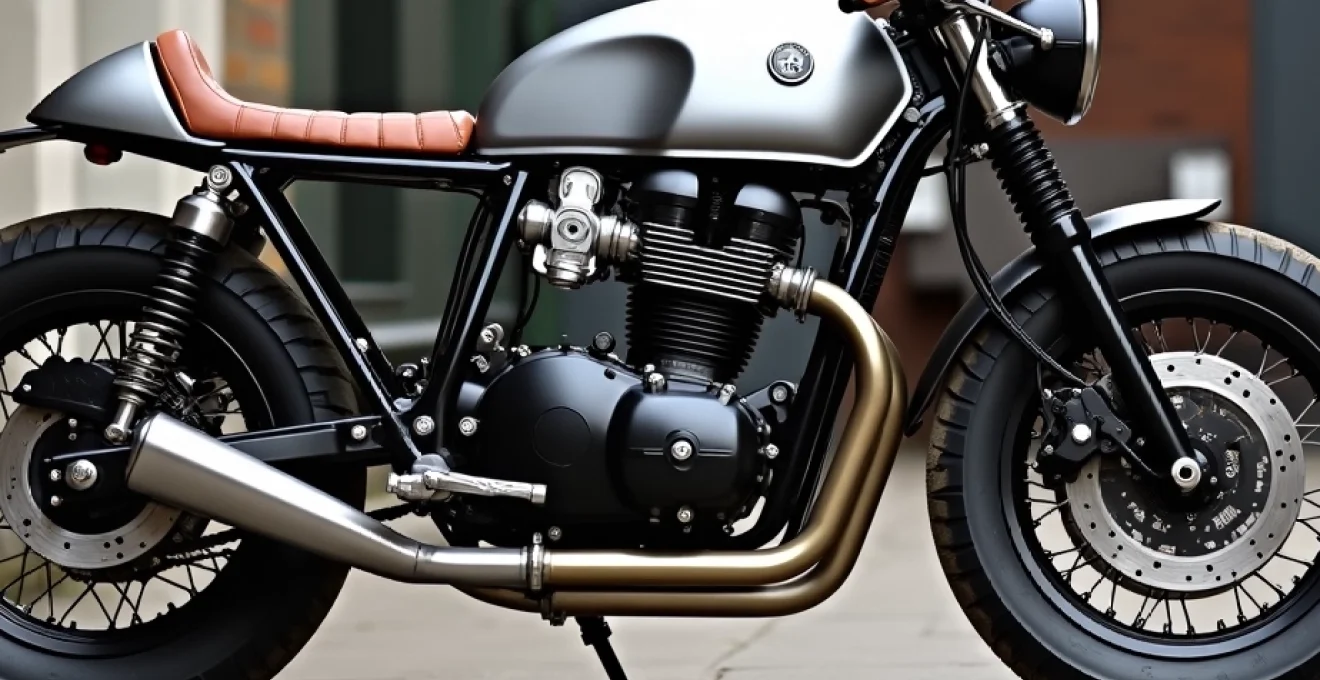
The motorcycle division at Chop Shop London has established itself as a premier destination for bespoke two-wheeled creations. The workshop’s approach to motorcycle customisation emphasises both aesthetic excellence and performance enhancement, ensuring that each build delivers an exceptional riding experience while maintaining visual impact. The team’s expertise spans multiple motorcycle platforms, from classic British marques to modern performance machines.
Triumph bonneville T120 café racer conversion with öhlins suspension
The Triumph Bonneville T120 café racer project represents one of the workshop’s most celebrated achievements in motorcycle customisation. This build transformed a standard Bonneville into a track-focused machine that retained the classic British styling cues while incorporating modern performance components. The integration of Öhlins suspension components required extensive chassis modifications to accommodate the premium damping system.
The conversion process involved comprehensive weight reduction strategies, including the removal of unnecessary components and the installation of lightweight alternatives. Carbon fibre bodywork replaced the original steel components, resulting in a significant reduction in overall weight while maintaining structural integrity. The workshop’s fabrication team created custom mounting points for the Öhlins rear shock absorber, ensuring optimal suspension geometry for both street riding and occasional track use.
BMW R ninet scrambler build featuring akrapovič exhaust system
The BMW R nineT scrambler project showcased the workshop’s ability to enhance already impressive machinery through carefully selected modifications. The build focused on improving both performance and aesthetic appeal while maintaining the motorcycle’s distinctive character. The Akrapovič exhaust system provided the foundation for performance improvements, delivering increased power output and enhanced sound characteristics.
Suspension modifications included the installation of progressive-rate springs and adjustable dampers to improve handling characteristics across various terrain types. The workshop’s fabrication team created custom skid plates and engine protection components using aerospace-grade aluminium alloys. Bespoke lighting systems incorporated LED technology to improve visibility while maintaining period-appropriate styling elements.
Honda CB750 SOHC restomod with brembo brake upgrades
The Honda CB750 restomod project demonstrated the workshop’s expertise in combining classic motorcycle architecture with modern performance components. This build required extensive research to identify compatible upgrade options that would enhance performance without compromising the motorcycle’s original character. The integration of Brembo brake components necessitated custom mounting solutions and hydraulic system modifications.
Engine modifications focused on improving reliability and performance through careful component selection and tuning. The workshop’s engine specialists performed comprehensive internal upgrades, including piston and cylinder head modifications to increase compression ratio and improve combustion efficiency. Electronic ignition systems replaced the original points-based setup, providing improved reliability and timing accuracy across the rev range.
Yamaha XSR700 Neo-Retro build with motogadget electronics package
The Yamaha XSR700 project represented the workshop’s approach to modern motorcycle customisation, where contemporary technology meets classic styling elements. The Motogadget electronics package provided comprehensive instrumentation and control systems while maintaining clean, minimalist aesthetics. This build required extensive wiring modifications to integrate the advanced electronic components with the motorcycle’s existing systems.
Bodywork modifications included custom fuel tank fabrication and seat construction, both designed to complement the motorcycle’s neo-retro styling theme. The workshop’s upholstery specialists created bespoke seat coverings using premium leather and traditional hand-stitching techniques. Performance modifications included exhaust system upgrades and engine management tuning to optimise power delivery and fuel efficiency.
Engine modifications and performance tuning techniques
Performance enhancement represents a cornerstone of Chop Shop London’s technical expertise. The workshop’s engine specialists possess comprehensive knowledge of internal combustion engine principles and apply this understanding to develop custom tuning solutions for diverse powerplants. Each engine modification project begins with thorough analysis of the existing configuration, followed by careful selection of upgrade components that align with performance objectives and reliability requirements.
Carburettor rejetting with mikuni HSR42 and keihin FCR systems
Carburettor tuning remains an essential skill for optimising engine performance in classic and modified vehicles. The workshop maintains extensive experience with Mikuni HSR42 and Keihin FCR carburettor systems, both renowned for their precision fuel metering capabilities. The rejetting process requires careful consideration of air/fuel ratio requirements across different operating conditions, ensuring optimal performance while maintaining engine reliability.
The tuning process involves systematic testing of various jet combinations, needle positions, and float settings to achieve ideal combustion characteristics. Dynamometer testing provides quantitative data to validate tuning decisions and identify areas for further optimisation. The workshop’s technicians utilise wideband oxygen sensors to monitor air/fuel ratios during tuning sessions, ensuring precise mixture control across the engine’s operating range.
Camshaft profiling and valve timing optimisation methods
Camshaft selection and valve timing optimisation represent critical factors in engine performance development. The workshop’s approach to camshaft profiling considers multiple variables, including engine displacement, compression ratio, and intended operating characteristics. Custom camshaft profiles can significantly alter power delivery characteristics, shifting peak torque and power outputs to match specific performance requirements.
Valve timing adjustment involves precise measurement and calculation to achieve optimal breathing characteristics. The workshop utilises degree wheels and dial indicators to ensure accurate timing events, measuring lift, duration, and overlap periods to match theoretical specifications. Computer-aided analysis helps predict performance outcomes before physical implementation, reducing development time and improving final results.
Dynojet power commander V fuel mapping procedures
Modern fuel injection systems require sophisticated tuning approaches to maximise performance potential. The Dynojet Power Commander V provides comprehensive fuel mapping capabilities, allowing precise control over fuel delivery across various operating conditions. The workshop’s tuning specialists develop custom fuel maps based on specific engine configurations and performance objectives.
Mapping procedures involve systematic testing across multiple load and speed conditions, ensuring optimal fuel delivery throughout the engine’s operating range. The workshop maintains extensive databases of proven fuel map configurations for various engine combinations, providing starting points for new tuning projects. Real-world testing validates dyno-based tuning results, ensuring that performance improvements translate effectively to actual driving conditions.
Compression ratio adjustments using wiseco piston kits
Compression ratio modifications represent fundamental changes to engine characteristics, affecting both performance output and fuel requirements. Wiseco piston kits provide reliable solutions for compression ratio adjustments, offering various dome configurations to achieve specific compression targets. The workshop’s engine builders carefully calculate compression ratios to match fuel quality and performance objectives.
Piston installation requires precise measurement and fitting procedures to ensure proper clearances and optimal performance. The workshop utilises precision measuring equipment to verify bore dimensions, piston-to-wall clearances, and ring gap specifications. Quality control procedures include comprehensive leak-down testing and visual inspection to confirm proper assembly before engine operation.
Bespoke fabrication and metalworking projects
Metalworking expertise distinguishes exceptional custom workshops from ordinary modification facilities. Chop Shop London’s fabrication capabilities encompass traditional hand-forming techniques alongside modern manufacturing methods, enabling the creation of unique components that cannot be sourced from conventional suppliers. The workshop’s craftsmen possess deep understanding of metal characteristics and forming processes, applying this knowledge to create both functional and aesthetic components.
Hand-formed steel tank construction using english wheel techniques
Fuel tank fabrication represents one of the most challenging aspects of custom vehicle construction, requiring both technical precision and artistic vision. The English wheel technique enables the creation of complex curved surfaces that would be impossible to achieve through conventional forming methods. Each tank begins as flat sheet metal, gradually shaped through careful manipulation and progressive forming operations.
The construction process involves multiple stages, beginning with template creation and progressing through rough forming, detail shaping, and final finishing operations. Quality control measures include pressure testing and leak detection procedures to ensure tank integrity before installation. The workshop’s fabricators apply traditional lead-loading techniques for final finishing, creating seamless surfaces that require minimal preparation before painting.
Custom exhaust header fabrication with stainless steel tubing
Exhaust system design significantly influences engine performance characteristics, making custom header fabrication a critical capability for performance-oriented builds. The workshop’s approach to header construction emphasises both functional performance and aesthetic appeal, utilising high-grade stainless steel tubing for durability and corrosion resistance. Each header system is designed specifically for its intended application, considering engine specifications, chassis constraints, and performance objectives.
Fabrication techniques include precision tube bending, welding, and fitting procedures that ensure optimal flow characteristics and proper installation. The workshop maintains comprehensive tooling for tube manipulation, including mandrel benders and specialised jigs for consistent results. Flow testing equipment validates header designs before final installation, ensuring that theoretical performance improvements translate to measurable results.
Aluminium subframe modifications and weight reduction strategies
Weight reduction represents a fundamental approach to performance improvement, affecting acceleration, braking, and handling characteristics. Aluminium subframe modifications require specialised welding techniques and careful engineering analysis to maintain structural integrity while achieving weight savings. The workshop’s fabricators possess extensive experience with aluminium welding processes, including TIG welding techniques optimised for structural applications.
Design considerations include stress analysis, fatigue resistance, and repairability factors that influence long-term durability. The workshop utilises finite element analysis software to validate structural modifications before implementation, ensuring that weight reductions do not compromise safety or reliability. Material selection involves careful consideration of alloy properties, availability, and compatibility with existing components.
Titanium component integration for Track-Focused applications
Titanium components offer exceptional strength-to-weight ratios for high-performance applications, making them ideal for track-focused builds where weight reduction and durability are paramount. The integration of titanium components requires specialised fabrication techniques and careful consideration of thermal expansion characteristics. The workshop’s experience with exotic materials enables successful implementation of titanium solutions in various applications.
Manufacturing challenges include machining difficulties, welding complexities, and cost considerations that influence design decisions. The workshop maintains relationships with specialised suppliers and fabricators who possess the necessary equipment and expertise for titanium component production. Quality control procedures include non-destructive testing methods to verify component integrity before installation.
Electronic systems integration and wiring harness development
Modern vehicle customisation increasingly relies on sophisticated electronic systems that enhance both performance and functionality. The workshop’s electrical specialists possess comprehensive understanding of automotive electronics, from basic charging systems to complex engine management configurations. Each electronic integration project requires careful planning and systematic implementation to ensure reliable operation and future serviceability.
Wiring harness development represents a critical aspect of custom vehicle construction, particularly when integrating multiple aftermarket components or modifying existing systems. The workshop’s approach emphasises proper wire gauge selection, connector reliability, and protection against environmental factors. Documentation procedures ensure that electrical modifications can be diagnosed and serviced effectively throughout the vehicle’s operational life.
Advanced electronic systems require careful consideration of power requirements, signal integrity, and electromagnetic compatibility factors. The workshop utilises professional-grade diagnostic equipment to validate system operation and identify potential issues before they affect vehicle reliability. Integration challenges often involve compatibility issues between different manufacturer’s components, requiring custom interface solutions and programming modifications.
The key to successful electronic integration lies in understanding not just what each component does, but how it interacts with other systems to create a cohesive, reliable whole that exceeds the sum of its individual parts.
Suspension geometry modifications and handling enhancements
Suspension system modifications represent one of the most effective approaches to improving vehicle handling characteristics and overall driving experience. The workshop’s suspension specialists understand the complex relationships between geometry, spring rates, damping characteristics, and vehicle dynamics. Each suspension project begins with comprehensive analysis of existing configuration and identification of specific performance objectives.
Geometry modifications can dramatically alter vehicle behaviour, affecting characteristics such as camber change rates, roll centre locations, and anti-dive/anti-squat properties. The workshop utilises precision measurement equipment to document existing suspension geometry and calculate the effects of proposed modifications. Computer simulation software helps predict handling changes before physical implementation, reducing development time and improving final results.
Spring rate selection requires careful consideration of vehicle weight distribution, intended usage patterns, and driver preferences. The workshop maintains extensive experience with various spring configurations, from progressive-rate options for street use to linear-rate competition springs for track applications. Damping characteristics must be matched to spring rates and vehicle dynamics to achieve optimal performance across different operating conditions.
Effective suspension tuning requires balancing multiple competing factors to achieve a compromise that delivers the desired handling characteristics while maintaining acceptable comfort and reliability standards.
Advanced suspension systems incorporate adjustable components that allow fine-tuning for specific applications or changing requirements. The workshop’s installation procedures ensure proper component alignment and adjustment range optimisation. Regular maintenance schedules help preserve suspension performance and identify potential issues before they affect vehicle handling or component longevity.
Paint finishing techniques and custom livery applications
Paint finishing represents the final stage of custom vehicle construction, requiring exceptional attention to detail and mastery of various application techniques. The workshop’s paint specialists possess comprehensive knowledge of surface preparation, primer selection, colour matching, and clear coat application procedures. Each paint project demands careful planning and systematic execution to achieve professional-quality results that withstand environmental exposure and regular use.
Surface preparation forms the foundation of durable paint finishes, involving multiple stages of cleaning, sanding, and priming operations. The workshop maintains dust-controlled spray booth facilities equipped with proper ventilation and filtration systems to ensure contamination-free paint application. Quality control procedures include paint thickness measurements and adhesion testing to verify coating integrity before final delivery.
Custom livery applications require artistic vision combined with technical expertise to create unique visual designs that complement vehicle proportions and styling elements. The workshop’s designers utilise computer-aided design software to develop livery concepts and provide client visualisation before paint application begins. Complex multi-colour schemes demand precise masking techniques and careful timing to achieve clean colour separations and professional appearance.
The difference between good paint work and exceptional paint work lies in the countless small details that are invisible individually but collectively create an unmistakable impression of quality and craftsmanship.
Special effect finishes, including metallic, pearl, and custom-mixed colours, require specialised application techniques and environmental control to achieve consistent results. The workshop maintains comprehensive colour matching capabilities, including spectrophotometer equipment for precise colour analysis and reproduction. Final finishing operations include polishing and protection procedures that enhance paint appearance and provide long-term durability against environmental factors.