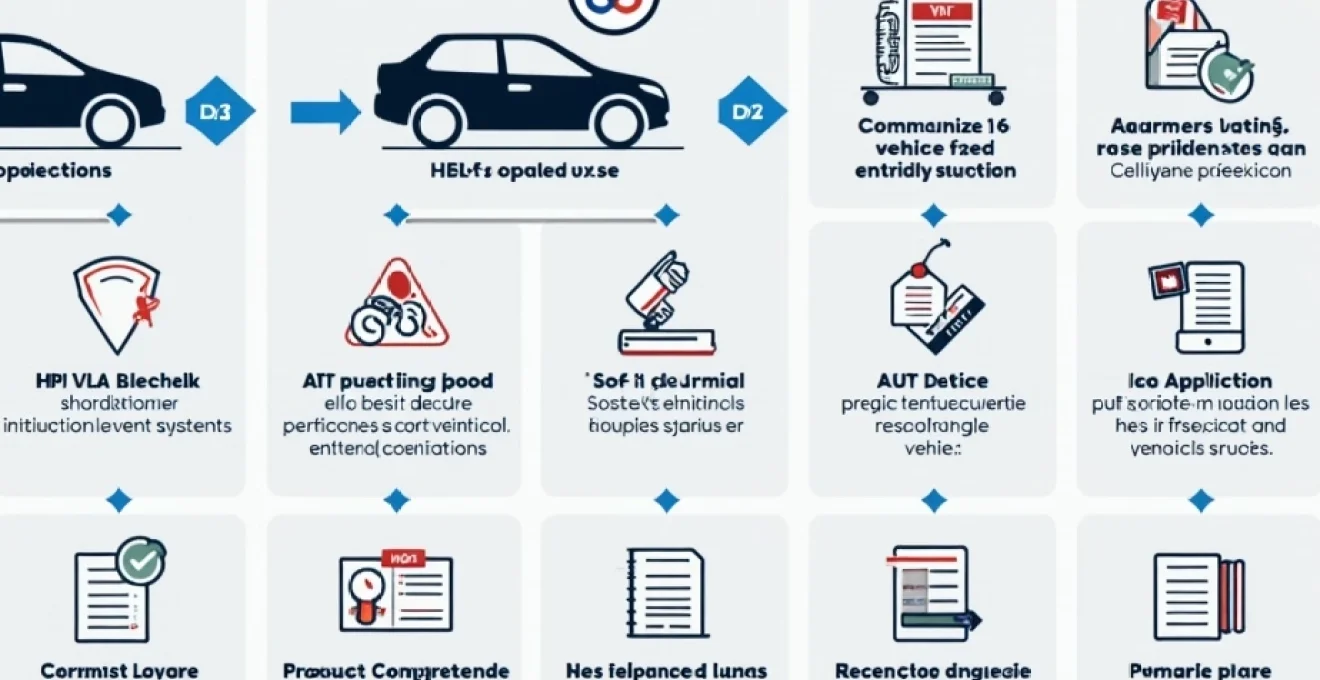
When your vehicle sustains structural damage and receives a Category S write-off classification, understanding the DVLA inspection process becomes crucial for returning the car to roadworthy condition. The Cat S designation indicates that while your vehicle suffered significant structural damage, it can be repaired and safely returned to the road following proper procedures and inspections.
The Category S inspection system represents a comprehensive framework designed to ensure that previously written-off vehicles meet stringent safety standards before re-entering public roads. This process involves multiple stages of documentation, assessment, and verification that protect both current owners and future purchasers from potential safety risks associated with improperly repaired structural damage.
For vehicle owners navigating this complex process, understanding each step of the Cat S inspection procedure can mean the difference between a smooth re-registration experience and costly delays. The implications extend far beyond mere paperwork, affecting everything from insurance premiums to resale values and legal compliance requirements.
DVLA category S classification system and statutory requirements
Insurance total loss categories under the association of british insurers framework
The Association of British Insurers established a comprehensive framework for categorising written-off vehicles, with Category S representing one of four distinct classifications. This system replaced the previous Cat C and Cat D categories in October 2017, shifting focus from purely economic considerations to safety-critical structural assessments. The change reflects industry recognition that structural integrity directly impacts vehicle safety, regardless of repair costs.
Under this framework, vehicles receive classifications based on damage severity and repairability. Category A vehicles face complete destruction, while Category B allows parts salvage but prohibits road return. Category N covers non-structural damage that remains economically viable to repair, whereas Category S specifically addresses structural damage that, while repairable, requires extensive professional intervention and inspection protocols.
Structural damage assessment criteria for cat S designation
Structural damage encompasses any compromise to load-bearing components that contribute to vehicle integrity during normal operation or collision scenarios. This includes chassis deformation, crumple zone damage, A-pillar distortion, sill panel crushing, or floor pan buckling. Even seemingly minor structural modifications can trigger Cat S classification if they affect the vehicle’s ability to protect occupants during subsequent impacts.
Assessment criteria extend beyond visible damage to include alignment issues, welding requirements, and replacement of safety-critical components. Professional assessors evaluate whether structural repairs can restore original manufacturer specifications without compromising crashworthiness. The determination considers both immediate safety concerns and long-term structural reliability under normal driving conditions.
DVLA V5C logbook endorsement process for category S vehicles
The V5C logbook endorsement process ensures permanent documentation of a vehicle’s Cat S status throughout its operational lifetime. Once classified, this designation cannot be removed or altered, creating a transparent history for all subsequent owners. The endorsement appears prominently on the registration document, alerting future purchasers, insurers, and regulatory authorities to the vehicle’s structural repair history.
This permanent marking system protects consumers from unknowingly purchasing vehicles with significant repair histories while maintaining accurate records for insurance and legal purposes. The endorsement process involves updating DVLA databases, which then reflect the Cat S status in all official documentation and third-party vehicle history checks.
MOT testing implications following cat S classification
Cat S vehicles face enhanced MOT testing requirements focusing on structural integrity and safety systems functionality. Testing centres must pay particular attention to areas previously damaged, examining repair quality, alignment accuracy, and component integration. While standard MOT procedures apply, inspectors often conduct more thorough examinations of structural repairs and associated safety systems.
The MOT framework doesn’t require special Cat S certificates, but inspectors may request additional documentation regarding repairs performed. Vehicles must demonstrate full compliance with safety standards regardless of their classification history, ensuring that structural repairs meet or exceed original manufacturer specifications for continued road use.
Pre-inspection documentation and vehicle history verification
HPI check and MyCarCheck database Cross-Reference analysis
Comprehensive vehicle history verification forms the foundation of effective Cat S inspection preparation. HPI checks reveal crucial information about previous damage, insurance claims, and repair histories that directly impact inspection outcomes. These database searches identify potential discrepancies between reported damage and actual repair work, highlighting areas requiring additional scrutiny during professional assessment.
MyCarCheck and similar services provide detailed accident histories, including damage photographs, repair estimates, and insurance settlement details. This information helps inspectors understand the full scope of structural work performed and identify any unreported modifications or additional damage discovered during repair processes.
Insurance settlement documentation requirements
Insurance settlement documentation provides critical context for understanding the original damage assessment and repair authorisation process. These records include damage photographs, assessor reports, repair authorisations, and settlement calculations that establish baseline expectations for inspection outcomes. Comprehensive documentation demonstrates transparency and helps inspectors verify that all identified damage received appropriate attention.
Settlement records also reveal whether repairs followed original manufacturer procedures or employed alternative methods that might affect structural integrity. This information proves particularly valuable when assessing vehicles repaired by independent garages or using aftermarket components rather than original equipment manufacturer parts.
Repair invoice compilation and parts authenticity verification
Detailed repair invoices serve as roadmaps for inspection procedures, identifying specific work performed, parts replaced, and methods employed during structural restoration. These documents must demonstrate compliance with manufacturer repair procedures and use of appropriate materials for safety-critical components. Invoice compilation should include all subcontractor work, parts suppliers, and quality control measures implemented during repair processes.
Parts authenticity verification ensures that replacement components meet original specification requirements for strength, compatibility, and safety performance. Counterfeit or substandard parts can compromise structural integrity even when properly installed, making verification essential for successful inspection outcomes and long-term vehicle safety.
Independent engineer’s report validation process
Independent engineer reports provide professional assessment of repair quality and structural integrity restoration. These reports must come from qualified professionals with appropriate credentials and experience in structural vehicle assessment. The validation process examines both the engineer’s qualifications and the thoroughness of their inspection methodology.
Report validation includes verification of testing procedures, measurement accuracy, and compliance with industry standards for structural assessment. Engineers must demonstrate familiarity with the specific vehicle type and manufacturer repair procedures, ensuring their assessment reflects accurate understanding of original design parameters and acceptable repair tolerances.
Comprehensive vehicle safety assessment protocol
The comprehensive safety assessment protocol represents the cornerstone of Cat S inspection procedures, encompassing detailed examination of all safety-critical systems and structural components. This assessment goes far beyond standard vehicle inspections, requiring specialised knowledge of structural engineering principles and automotive safety systems integration. Professional assessors must evaluate not only visible repairs but also the underlying structural integrity that may not be immediately apparent during casual examination.
Assessment protocols begin with detailed measurement of structural alignment using sophisticated equipment capable of detecting minute deviations from manufacturer specifications. This includes checking wheel alignment, chassis straightness, door alignment, and panel gaps that might indicate underlying structural issues. Even minor misalignments can signal significant structural compromise that could affect vehicle safety during normal operation or collision scenarios.
The protocol extends to comprehensive testing of safety systems potentially affected by structural repairs, including seatbelt anchor points, airbag mounting systems, and crumple zone effectiveness. Assessors must verify that all safety systems operate within manufacturer specifications and that structural modifications haven’t compromised their ability to protect occupants during various collision scenarios. This requires both visual inspection and functional testing using appropriate diagnostic equipment.
Quality assessment of welding and bonding work forms another critical component of the safety protocol. Professional assessors examine weld quality, penetration depth, heat-affected zones, and structural continuity to ensure repairs meet or exceed original strength specifications. Poor welding can create weak points that fail catastrophically under stress, making this assessment particularly crucial for vehicles with extensive structural repairs.
Professional structural assessment requires specialised equipment and expertise that goes far beyond standard mechanical knowledge, making independent verification essential for ensuring vehicle safety and legal compliance.
Approved testing station requirements and inspector qualifications
Approved testing stations must meet stringent facility and equipment requirements to conduct Cat S inspections effectively. These facilities require specialised measuring equipment, hydraulic lifts capable of supporting damaged vehicles safely, and diagnostic tools for evaluating safety systems functionality. The physical infrastructure must accommodate thorough structural examination while maintaining safety standards for both inspectors and vehicle owners.
Inspector qualifications extend beyond standard MOT testing credentials to include specialised training in structural assessment and automotive engineering principles. Qualified inspectors must demonstrate understanding of metallurgy, welding techniques, and manufacturer repair procedures across various vehicle types. This expertise ensures accurate assessment of repair quality and identification of potential safety concerns that might not be apparent to less specialised technicians.
Continuous professional development requirements ensure that approved inspectors remain current with evolving automotive technologies and repair techniques. The automotive industry’s rapid advancement in materials science, manufacturing techniques, and safety systems requires ongoing education to maintain competency in structural assessment procedures. Regular certification updates and practical training sessions help inspectors adapt to new vehicle designs and repair methodologies.
Documentation requirements for approved testing stations include detailed record-keeping procedures, photographic evidence protocols, and standardised reporting formats. These requirements ensure consistency across different testing facilities while providing traceable documentation for regulatory compliance and insurance purposes. Proper documentation also protects both testing stations and vehicle owners from potential liability issues related to inspection outcomes.
Post-inspection DVLA re-registration procedures
V23 application form completion and supporting evidence
The V23 application form serves as the primary mechanism for notifying DVLA of Category S vehicle repairs and requesting re-registration approval. This comprehensive document requires detailed information about repair work performed, parts replaced, and inspection outcomes. Accurate completion ensures smooth processing while incomplete or incorrect submissions can result in significant delays and additional correspondence requirements.
Supporting evidence requirements include all repair documentation, inspection reports, and photographic evidence of completed work. The application must demonstrate that repairs restore the vehicle to roadworthy condition and comply with all relevant safety standards. Insufficient documentation frequently causes application rejections , making thorough preparation essential for successful re-registration outcomes.
DVLA swansea processing timeframes and fee structure
DVLA Swansea processes V23 applications within established timeframes that vary based on application complexity and documentation completeness. Standard processing typically requires 2-4 weeks for straightforward cases with complete documentation, while complex repairs or incomplete submissions may require 6-8 weeks or longer. Understanding these timeframes helps vehicle owners plan accordingly and avoid unnecessary delays in returning vehicles to service.
The current fee structure reflects administrative costs associated with application processing, documentation review, and database updates. Fees remain relatively modest compared to overall repair costs, but applicants should budget for potential additional costs if supplementary documentation or clarification becomes necessary during processing. Fee schedules are updated periodically and should be verified before submission.
V5C registration document amendment process
V5C amendment processes ensure that registration documents accurately reflect the vehicle’s Cat S status and current condition. The amended document includes specific endorsements identifying the structural damage history while maintaining all other vehicle identification and ownership information. This permanent record protects future purchasers and maintains transparency throughout the vehicle’s operational lifetime.
Amendment processing involves updating central databases accessed by insurers, law enforcement, and other regulatory authorities. The updated information becomes immediately available through various checking services, ensuring that the vehicle’s history remains accessible to all relevant parties. This transparency supports informed decision-making and maintains public safety standards.
Insurance implications and market value impact assessment
Admiral and direct line cat S vehicle policy restrictions
Major insurance providers like Admiral and Direct Line impose specific restrictions on Cat S vehicle coverage that significantly impact policy availability and pricing structures. These restrictions typically include enhanced documentation requirements, mandatory engineer reports, and limited coverage options compared to standard vehicle policies. Understanding these restrictions before completing repairs helps vehicle owners make informed decisions about retention versus disposal.
Policy restrictions often extend to coverage limitations for certain types of damage, higher excess requirements, and reduced settlement values in subsequent claims. Some insurers may refuse coverage entirely, particularly for vehicles with extensive structural repairs or those repaired using non-standard methods. This creates challenges for vehicle owners seeking comprehensive coverage and may necessitate specialised insurance providers who focus on previously damaged vehicles.
Residual value depreciation following category S declaration
Category S declaration creates immediate and permanent depreciation that significantly exceeds normal vehicle depreciation patterns. Research indicates that Cat S vehicles typically retain 50-70% of comparable undamaged vehicle values, depending on repair quality, vehicle age, and market conditions. This depreciation persists throughout the vehicle’s lifetime, affecting both trade-in values and private sale prices.
Depreciation calculations must consider not only the initial value reduction but also accelerated depreciation rates compared to standard vehicles. Financial planning should account for limited resale markets and reduced appeal to mainstream buyers who may prefer vehicles without structural damage histories. Professional valuation services can provide accurate assessments for insurance and financial planning purposes.
Future sale disclosure obligations under consumer rights act 2015
The Consumer Rights Act 2015 imposes strict disclosure obligations on anyone selling Cat S vehicles, whether private individuals or commercial dealers. These obligations require clear, prominent disclosure of the vehicle’s structural damage history and repair status in all advertising and sales materials. Failure to disclose this information constitutes misrepresentation and can result in legal action from purchasers.
Disclosure requirements extend beyond simple mention of Cat S status to include details about damage extent, repair methods, and any ongoing limitations or considerations. Sellers must provide access to all relevant documentation and allow prospective purchasers reasonable opportunity to conduct independent inspections. Comprehensive disclosure protects both parties while ensuring compliance with consumer protection legislation and maintaining ethical standards in vehicle sales transactions.