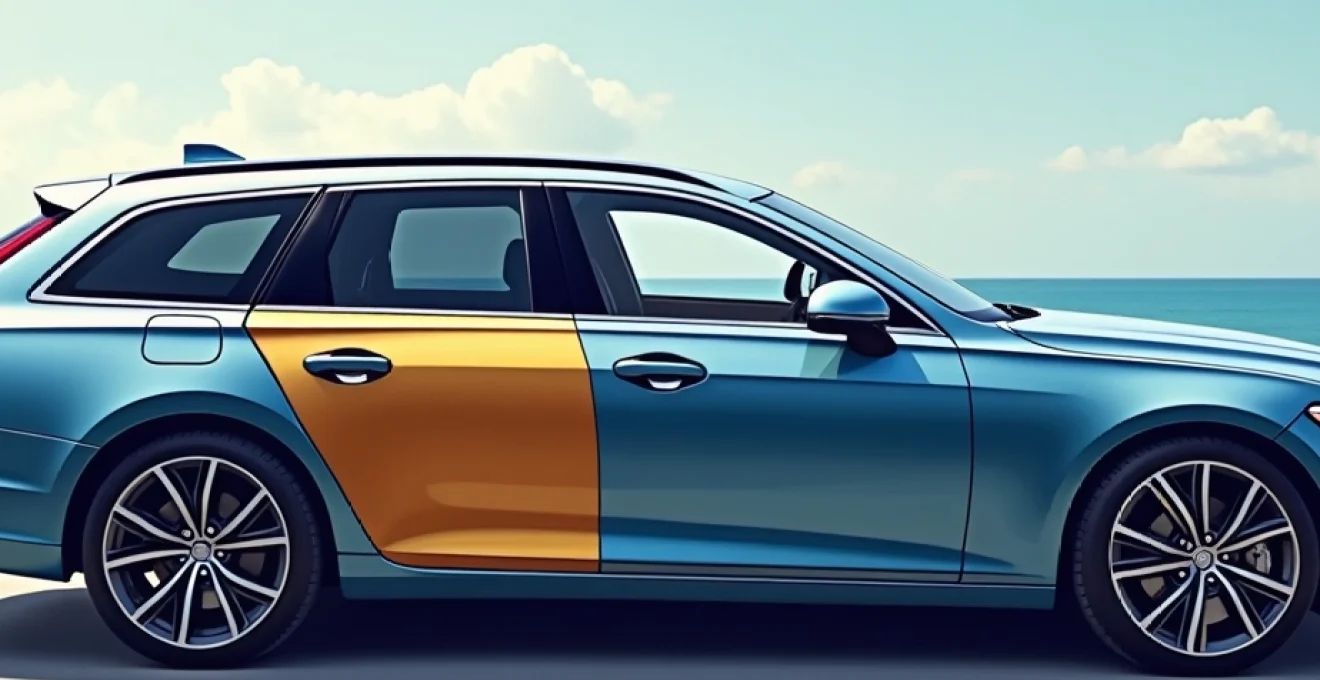
The decision between an estate and saloon represents one of the most fundamental choices in automotive purchasing, yet the complexity of modern car design has blurred traditional boundaries. Both body styles offer distinct advantages that cater to different lifestyle requirements and preferences. Estates have evolved from utilitarian workhorses into sophisticated family vehicles that match their saloon counterparts in refinement and performance. Meanwhile, saloons continue to appeal to drivers who prioritise elegant design and driving dynamics over maximum cargo capacity. Understanding the engineering principles, practical implications, and financial considerations behind each choice becomes crucial when selecting your next vehicle.
Estate vs saloon body style architecture and design philosophy
The fundamental architectural differences between estates and saloons extend far beyond simple visual distinctions. These variations influence every aspect of vehicle performance, from structural integrity to aerodynamic efficiency. Modern automotive engineering has refined both body styles to achieve remarkable sophistication, yet the core design principles remain distinct.
Wheelbase extension and rear overhang engineering in estate models
Estate models typically feature extended rear overhangs rather than increased wheelbases, maintaining the same distance between front and rear axles as their saloon counterparts. This engineering approach preserves the fundamental driving characteristics while maximising cargo space. The BMW 3 Series Touring, for example, shares its 2,851mm wheelbase with the saloon variant but extends the overall length by approximately 190mm through rear overhang extension. This design philosophy ensures that weight distribution remains optimal for handling performance.
The structural implications of extended rear overhangs require sophisticated engineering solutions. Manufacturers must reinforce the chassis to handle the additional torsional stress created by the longer body structure. Advanced high-strength steel construction and strategic reinforcement points ensure that estates maintain comparable structural rigidity to their saloon siblings while accommodating the increased rear section mass.
Load floor height optimisation and ground clearance trade-offs
Load floor height represents a critical design parameter that affects both practicality and vehicle dynamics. Estate models typically maintain ground clearance levels similar to their saloon counterparts, resulting in relatively low load floors that facilitate easy loading and unloading. The Mercedes C-Class Estate achieves a load floor height of just 665mm, significantly lower than comparable SUV alternatives.
This optimisation creates a compelling balance between accessibility and aerodynamic efficiency. Lower load floors reduce the physical effort required for cargo handling while maintaining the vehicle’s overall aerodynamic profile. However, this design choice may limit off-road capability compared to higher-riding SUV alternatives, making estates most suitable for predominantly on-road use.
Aerodynamic coefficient differences between BMW 3 series touring and saloon
Aerodynamic performance represents one area where saloons traditionally maintain an advantage over estates. The BMW 3 Series saloon achieves a drag coefficient (Cd) of 0.26, while the Touring variant registers 0.27. This seemingly modest difference translates into measurable impacts on fuel consumption and high-speed stability. The saloon’s tapered rear profile and integrated bootlid design create more efficient airflow separation compared to the estate’s vertical rear window and squared-off tailgate.
Modern computational fluid dynamics has enabled manufacturers to minimise these aerodynamic penalties through sophisticated rear spoiler integration and underbody airflow management. Active aerodynamic elements on premium models can further reduce the performance gap between body styles, though saloons retain their fundamental advantage in this critical area.
Structural reinforcement requirements for extended roof lines
The extended roofline characteristic of estates demands additional structural reinforcement to maintain torsional rigidity equivalent to saloon models. Manufacturers employ various strategies including reinforced A-pillars, additional roof cross-bracing, and strengthened floor pan construction. These modifications add approximately 30-50kg to the vehicle’s kerb weight, depending on the specific model and reinforcement strategy employed.
Advanced materials technology has enabled manufacturers to minimise weight penalties while maintaining structural performance. Ultra-high-strength steel components and strategic use of aluminium sections help offset the additional reinforcement requirements. The result is that modern estates achieve structural rigidity levels that closely match their saloon counterparts while providing significantly enhanced cargo carrying capability.
Boot capacity specifications and cargo loading dynamics
The practical advantages of estate body styles become most apparent when examining cargo capacity specifications and loading characteristics. These differences extend beyond simple volume measurements to encompass loading ergonomics, cargo securing provisions, and versatility in accommodating various load types.
VDA measurement standards: estate vs saloon volume comparisons
VDA (German Association of the Automotive Industry) measurement standards provide standardised cargo volume comparisons across different body styles. Under these protocols, estates consistently demonstrate significant capacity advantages over their saloon counterparts. The Audi A4 Avant offers 495 litres of cargo space compared to 460 litres in the A4 saloon, representing an 8% volume increase that translates into meaningful practical benefits.
These measurements, however, only tell part of the story. The shape and accessibility of cargo areas prove equally important in real-world applications. Estates provide more useable volume due to their vertical loading capability and wider rear apertures, making them significantly more practical for bulky items despite seemingly modest volume advantages on paper.
Rear seat folding mechanisms and Load-Through capabilities
Modern estates typically feature sophisticated rear seat folding mechanisms that dramatically expand cargo carrying capability. Split-folding rear seats, commonly configured in 60/40 or 40/20/40 arrangements, allow partial passenger capacity retention while accommodating long items. This flexibility proves invaluable for families who must balance passenger and cargo requirements.
Load-through capabilities vary significantly between manufacturers and model ranges. Premium estates often incorporate ski hatches or load-through panels that permit long items to extend into the passenger compartment while maintaining rear seat functionality. These features highlight the inherent versatility advantages that define the estate body style philosophy.
Mercedes C-Class estate 490-litre vs 455-litre saloon analysis
The Mercedes C-Class provides an excellent case study in estate versus saloon cargo capacity comparison. The estate’s 490-litre cargo area represents a 35-litre advantage over the saloon’s 455-litre boot. While this 7.7% increase appears modest, the estate’s cargo area geometry provides significantly enhanced practicality for real-world loading scenarios.
The estate’s vertical loading capability accommodates items that simply cannot fit in the saloon’s more restrictive boot opening. Golf bags, prams, and large shopping loads all benefit from the estate’s superior access and volume distribution. Additionally, the estate’s load floor extends much further rearward, providing better weight distribution for heavy cargo loads.
Loading sill heights and tailgate opening dimensions
Loading ergonomics represent a critical practical consideration that significantly favours estate body styles. Typical estate loading sill heights range from 550-650mm, compared to saloon boot floors positioned at 650-750mm. This difference substantially reduces the physical effort required for cargo handling, particularly beneficial for elderly users or those with mobility limitations.
Tailgate opening dimensions further enhance estate practicality. The Mercedes E-Class Estate provides a 1,020mm wide by 870mm high tailgate opening compared to the saloon’s 980mm wide bootlid aperture. These dimensions enable accommodation of items that physically cannot enter saloon boot compartments, regardless of available volume. Wide-opening tailgates also facilitate easier loading techniques and reduce the risk of damage to both vehicle and cargo during loading operations.
Driving dynamics and weight distribution characteristics
The driving experience between estates and saloons reveals subtle but meaningful differences that affect everything from handling precision to ride comfort. These variations stem from fundamental structural and weight distribution differences that influence vehicle dynamics across all driving conditions. Modern engineering has minimised these disparities, yet distinct characteristics remain that may influence your selection process.
Weight distribution represents the most significant dynamic difference between body styles. Estates typically carry additional weight behind the rear axle due to their extended body structure and reinforcement requirements. This rearward weight bias can affect handling characteristics, particularly during rapid directional changes or emergency manoeuvring situations. However, the impact varies considerably between manufacturers and their specific engineering approaches to chassis tuning.
Suspension tuning often differs between estate and saloon variants to accommodate the altered weight distribution and cargo carrying requirements. Estates frequently receive slightly firmer rear suspension settings to maintain level ride height under load, while saloons prioritise optimised handling balance for their lighter rear-end configuration. These differences create subtly different driving characters that may favour different driving styles and preferences.
Centre of gravity differences also influence dynamic behaviour, with estates typically sitting marginally higher due to their extended roofline structure. This affects body roll characteristics and ultimate cornering limits, though modern electronic stability systems effectively manage these differences for most driving situations. The practical impact on everyday driving remains minimal, yet enthusiastic drivers may detect these subtle variations in vehicle behaviour.
Modern estates achieve handling characteristics that closely match their saloon counterparts through sophisticated chassis engineering and electronic assistance systems, making dynamic differences largely imperceptible in normal driving conditions.
Fuel economy and emissions performance analysis
Fuel economy and emissions performance represent crucial considerations in today’s automotive market, with both environmental consciousness and operating costs driving consumer decisions. The relationship between body style and fuel efficiency involves multiple factors including aerodynamic efficiency, weight penalties, and powertrain optimisation strategies employed by manufacturers.
Aerodynamic drag represents the primary factor influencing fuel consumption differences between estates and saloons. The typical 0.01-0.02 Cd penalty associated with estate body styles translates into approximately 2-4% higher fuel consumption at motorway speeds. This difference becomes more pronounced during sustained high-speed driving but remains minimal during urban and suburban driving cycles where aerodynamic drag plays a reduced role.
Weight penalties associated with estate construction contribute additional fuel consumption impacts. The typical 30-50kg weight increase affects acceleration performance and requires marginally more energy for vehicle propulsion. However, modern lightweight construction techniques and advanced materials have minimised these penalties compared to earlier generation vehicles where weight differences could exceed 100kg.
Manufacturers increasingly employ model-specific powertrain calibrations to optimise efficiency across different body styles. Advanced engine management systems and transmission programming can partially compensate for the aerodynamic and weight penalties associated with estate variants. Some manufacturers even offer efficiency-focused powertrain options specifically calibrated for estate models to minimise real-world fuel consumption differences.
Real-world fuel economy data suggests that the practical difference between estate and saloon variants typically ranges from 1-3mpg in combined driving conditions. This translates into annual fuel cost differences of £50-150 for average UK drivers, representing a relatively modest financial impact that rarely influences purchase decisions when weighed against the practical advantages offered by estate body styles.
Market positioning and target demographics in the UK
The UK automotive market demonstrates distinct preferences and purchasing patterns that differentiate estate and saloon buyers. Understanding these demographic trends provides valuable insight into the practical considerations and lifestyle factors that influence body style selection. Market positioning strategies employed by manufacturers reflect these consumer preferences while attempting to optimise sales volumes across different model variants.
Fleet buyer preferences for audi A4 avant vs A4 saloon
Fleet buyers represent a significant segment of the UK premium car market, with distinct preferences that often favour estate variants. Analysis of Audi A4 sales data reveals that fleet buyers select the Avant estate variant at a 60% rate compared to 40% for the saloon. This preference stems from the enhanced practicality requirements of business users who frequently transport equipment, samples, or marketing materials.
Company car drivers appreciate the versatility offered by estate variants without sacrificing the professional image required for client meetings and business entertainment. The ability to accommodate golf clubs, presentation equipment, or overnight luggage while maintaining executive-level prestige makes estates particularly attractive to field sales personnel and consultants. Fleet managers also recognise the enhanced resale value typically associated with estate variants in the UK market.
Insurance group classifications and premium variations
Insurance group classifications between estate and saloon variants typically show minimal differences, with most models sharing identical ratings. The Association of British Insurers (ABI) classification system primarily considers performance, security features, and repair costs rather than body style variations. However, some insurers apply marginal premium variations based on theft statistics and damage frequency data specific to each body style.
Estate variants occasionally attract slightly lower premiums due to their association with family-oriented, lower-risk driving patterns. Insurance underwriters recognise that estate buyers typically prioritise practicality over performance, leading to more conservative driving behaviours and reduced claim frequencies. However, these differences rarely exceed 2-3% of annual premium costs and vary significantly between insurance providers and specific model ranges.
Residual value predictions using CAP and glass’s methodologies
Residual value analysis using established industry methodologies reveals interesting patterns between estate and saloon variants. CAP HPI data suggests that premium estate variants typically retain 2-4% higher residual values after three years compared to equivalent saloons. This advantage reflects sustained demand for practical family vehicles in the used car market.
Glass’s Guide methodology considers regional preferences and demographic trends when calculating residual values. Their analysis indicates that estate variants demonstrate particular strength in suburban and rural markets where practical considerations outweigh stylistic preferences. Urban markets show less pronounced differences, with saloons occasionally maintaining marginal advantages in metropolitan areas where parking constraints and image considerations influence buyer preferences. Geographic variations in residual values can significantly impact total ownership costs depending on your location and intended usage patterns.
Total cost of ownership calculations and depreciation curves
Total cost of ownership analysis reveals the complete financial picture of estate versus saloon ownership, encompassing purchase price, depreciation, fuel costs, maintenance expenses, and residual values. These calculations provide essential insight for rational vehicle selection that extends beyond initial purchase price considerations.
Purchase price premiums for estate variants typically range from £1,500-3,000 depending on the manufacturer and model range. Premium brands like BMW and Mercedes command higher estate premiums, while volume manufacturers such as Volkswagen and Ford maintain more modest differences. These initial cost variations must be weighed against enhanced practicality and typically superior residual value performance.
Depreciation curves show interesting variations between body styles that affect long-term ownership costs. Estate variants typically demonstrate more stable depreciation patterns due to sustained demand in the used car market. Family buyers seeking practical vehicles actively pursue estate models, creating consistent demand that supports residual values. Saloon variants may experience steeper initial depreciation but can show stronger performance in specific market segments.
Maintenance costs between estate and saloon variants remain largely equivalent, with most servicing requirements identical between body styles. However, estates may incur marginally higher costs for items such as rear window replacement, tailgate mechanism servicing, and load area trim repair. These differences typically amount to less than £100 annually and rarely influence ownership cost calculations significantly.
Three-year total cost of ownership analysis typically favours estate variants by £500-1,500 when factoring in residual value advantages and enhanced utility value, despite higher initial purchase prices.
Insurance costs, as previously discussed, show minimal variation between body styles for most mainstream models. However, premium estate variants in certain model ranges may attract marginally lower premiums due to favourable claims experience and demographic factors. These savings, while modest, contribute to the overall cost equation and may influence selection for cost-conscious buyers.
Fuel cost differences between estate and saloon variants translate into £50-150 annual variations for typical UK driving patterns. While estates consistently demonstrate higher consumption due to aerodynamic and weight penalties, the practical impact on total ownership costs remains relatively modest. Advanced powertrain technologies and manufacturer optimisation efforts continue to narrow these efficiency gaps across successive model generations.
| Cost Factor | Estate Advantage | Saloon Advantage | Annual Impact |
|---|---|---|---|
| Purchase Price | – | £500-1,000 | Depreciated over ownership period |
| Fuel Economy | – | £50-150 | Direct annual saving |
| Residual Value | £300-800 | – | Realised at disposal |
| Insurance | £0-50 | – | Direct annual saving |
The financial analysis clearly demonstrates that while saloons offer advantages in initial purchase price and operational efficiency, estates typically provide superior total cost of ownership performance through enhanced residual values and retained utility. For buyers prioritising financial
optimisation, estates represent compelling value propositions that justify their premium positioning in the UK market.
The decision between estate and saloon ultimately depends on individual priorities and lifestyle requirements. While saloons excel in areas such as fuel efficiency and initial purchase costs, estates provide superior practicality, enhanced residual values, and greater versatility for family-oriented buyers. Understanding these financial implications enables informed decision-making that aligns with both immediate needs and long-term ownership objectives.
Market trends suggest increasing preference for practical body styles, with estate variants gaining market share across premium segments. This shift reflects changing consumer priorities that increasingly value utility over traditional styling preferences. For buyers seeking optimal balance between practicality and refinement, modern estates represent sophisticated solutions that no longer require compromise on driving dynamics or luxury appointments.
The evolving automotive landscape continues to blur traditional boundaries between body styles, with manufacturers introducing innovative solutions such as shooting brakes and crossover variants. However, the fundamental choice between estate practicality and saloon elegance remains relevant for discerning buyers who understand their specific requirements and priorities.
Careful consideration of total ownership costs, practical requirements, and personal preferences ensures selection of the optimal body style for your individual circumstances. Whether prioritising maximum cargo capacity or refined driving dynamics, both estates and saloons offer compelling advantages in today’s sophisticated automotive market.