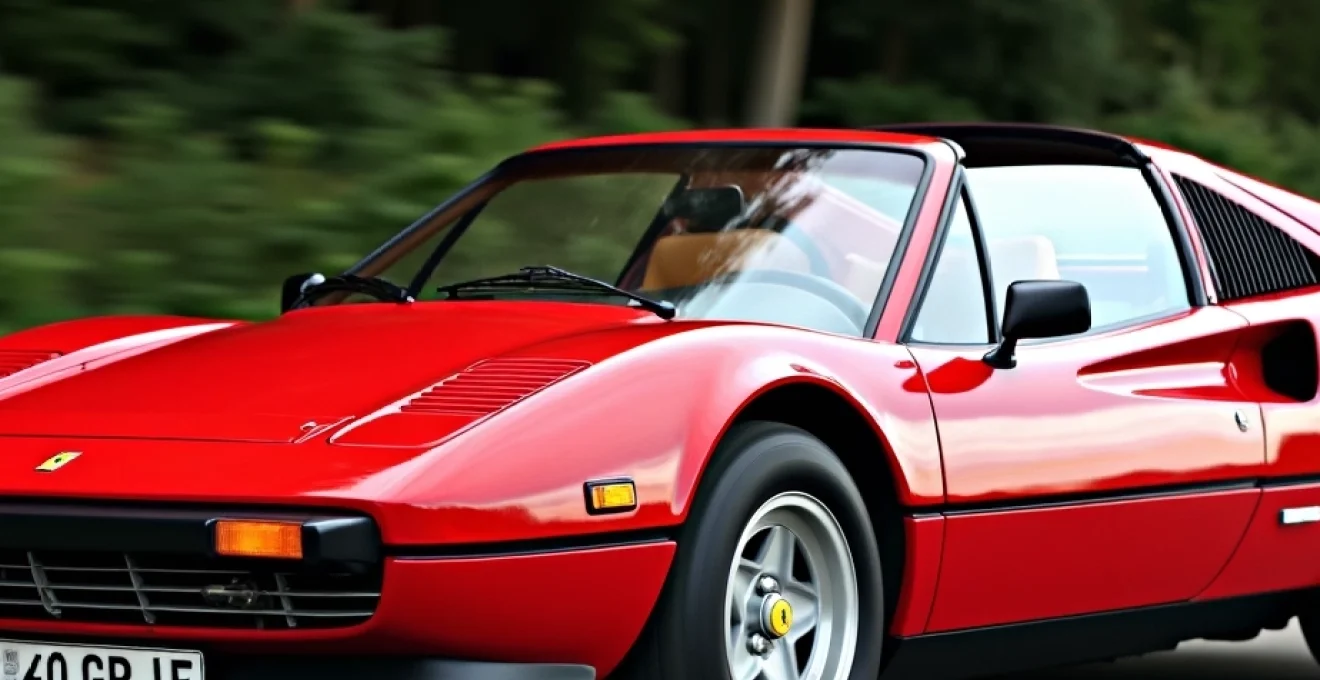
The Ferrari 308 GTB/GTS stands as one of the most iconic and recognisable supercars ever produced by the Prancing Horse. Born from the marriage of Pininfarina’s sublime design language and Ferrari’s engineering excellence, the 308 series transformed the landscape of mid-engined sports cars during its production run from 1975 to 1985. This model not only marked Ferrari’s transition from the Dino marque to full Ferrari badging for V8 models but also established the template for modern mid-engined supercars. The 308’s cultural impact extends far beyond automotive enthusiasts, having achieved global recognition through its starring role in the television series Magnum P.I., cementing its status as a dream car for multiple generations.
Ferrari 308 GTB/GTS evolution and production timeline
Pininfarina design development and bertone prototype origins
The genesis of the Ferrari 308 GTB/GTS can be traced back to the controversial Dino 308 GT4, which featured angular Bertone styling that divided opinion among Ferrari purists. Recognising the need for a more commercially appealing design, Enzo Ferrari commissioned Pininfarina to create a successor that would blend the curved elegance of the earlier Dino 246 with contemporary styling cues. Leonardo Fioravanti, the talented designer behind the Daytona and Berlinetta Boxer, crafted a masterpiece that perfectly balanced aggressive wedge proportions with flowing organic curves. The resulting design featured pronounced wheel arches, distinctive side air intakes, and the signature flying buttresses that would become hallmarks of Ferrari’s V8 lineage.
Fioravanti’s design philosophy emphasised visual lightness and aerodynamic efficiency, incorporating lessons learned from Ferrari’s Formula One programme. The 308’s development benefited from extensive wind tunnel testing at Pininfarina’s facilities, making it one of the first Ferraris to be aerodynamically optimised from conception. This scientific approach to bodywork design resulted in a drag coefficient that was remarkably low for its era, contributing significantly to the car’s impressive performance figures and fuel efficiency relative to its contemporaries.
Fibreglass body construction vs steel body transition in 1977
The earliest Ferrari 308 GTB models featured an innovative fibreglass body construction, earning them the coveted “Vetroresina” designation. Ferrari adopted this unconventional approach due to uncertainty about production volumes and the need to bring the model to market quickly. These early cars, numbering approximately 808 units according to most sources, possessed several advantages over their steel-bodied successors. The fibreglass construction reduced overall weight by approximately 150 kilograms, resulting in superior power-to-weight ratios and enhanced acceleration performance.
By mid-1977, increasing demand necessitated a transition to conventional steel body panels to facilitate higher production volumes. This change brought both advantages and drawbacks for prospective owners. Steel bodies offered superior structural rigidity and long-term durability but added significant weight to the chassis. The transition period saw both construction methods used simultaneously, creating an interesting overlap in production. Today, the fibreglass Vetroresina models command substantial premiums in the collector car market, with pristine examples exceeding £180,000 at auction.
Carburettor models vs fuel injection quattrovalvole variants
The evolution of the Ferrari 308’s induction system tells the story of automotive technology’s march toward greater efficiency and emissions compliance. Early models featured four Weber 40DCNF twin-choke carburettors that delivered an intoxicating combination of performance and sound. These carburettor-equipped engines produced 252 horsepower in European specification, with their distinctive intake roar becoming synonymous with the Ferrari V8 experience. The Weber setup required regular attention and expert tuning but rewarded owners with razor-sharp throttle response and an unmistakable exhaust note.
The introduction of Bosch K-Jetronic fuel injection in 1980 marked a significant technological shift, creating the 308 GTBi and GTSi variants. While injection improved reliability and cold-starting characteristics, it reduced power output to 214 horsepower and muted the distinctive intake sound that many enthusiasts cherished. Ferrari addressed these concerns in 1982 with the introduction of the Quattrovalvole variants, featuring four-valve cylinder heads that restored power levels to 240 horsepower while maintaining the benefits of fuel injection technology.
Production numbers and VIN identification across model years
Understanding Ferrari 308 production numbers proves essential for authentication and valuation purposes. Total production reached approximately 12,000 units across all variants, making the 308 series Ferrari’s best-selling model at the time. The breakdown reveals interesting market preferences: GTS Targa models significantly outsold the fixed-roof GTB variants by nearly two to one, reflecting consumer preference for open-air motoring. Right-hand-drive production remained limited, with only 154 fibreglass GTB models and 233 Quattrovalvole GTS variants produced for markets including the United Kingdom, Japan, and Australia.
Ferrari’s VIN numbering system provides crucial information for prospective buyers. Early fibreglass models carry chassis numbers beginning with F106AB, while steel-bodied cars use F106BB prefixes for GTB variants and F106BS for GTS models. Quattrovalvole cars adopted new numbering sequences, with F106GB for GTB and F106GS for GTS variants. These prefixes, combined with production sequence numbers, allow experts to verify authenticity and production dates with remarkable precision.
Technical specifications and drivetrain analysis
2.9-litre V8 engine architecture and Flat-Plane crankshaft design
The heart of every Ferrari 308 lies in its sophisticated 2.9-litre V8 engine, designated Tipo F106 AB. This all-aluminium powerplant featured a flat-plane crankshaft design that delivered the distinctive high-pitched exhaust note characteristic of Ferrari V8 engines. The flat-plane configuration, while creating some vibration compared to cross-plane designs, offered superior exhaust scavenging and allowed for more compact packaging within the mid-mounted engine bay. Bore and stroke measurements of 81mm by 71mm created an oversquare design that favoured high-rpm operation, with the redline set at 7,700 rpm for carburettor models.
Ferrari’s engineers incorporated numerous advanced features for the era, including wet sleeve cylinder construction that facilitated rebuilding without complete engine removal. The dual overhead camshaft design operated four valves per cylinder in Quattrovalvole variants, utilising bucket tappets for precise valve control. Dry-sump lubrication systems in early models provided superior oil control during high-performance driving, though later variants adopted conventional wet-sump designs for cost considerations and easier maintenance access.
Weber 40DCNF carburettors vs bosch K-Jetronic fuel injection systems
The contrast between carburettor and fuel injection systems in the Ferrari 308 represents a fascinating study in automotive technology evolution. The Weber 40DCNF carburettors featured twin-choke designs with mechanical operation that delivered instantaneous throttle response. Each carburettor served two cylinders, creating a quartet of induction systems that required precise synchronisation for optimal performance. These units incorporated accelerator pumps, multiple progression circuits, and adjustable air correction jets that allowed extensive tuning for different operating conditions and fuel qualities.
Bosch K-Jetronic mechanical fuel injection, introduced with the GTBi variants, represented a significant technological advancement. This system utilised a mechanical air flow sensor to determine fuel requirements, delivering precisely metered fuel quantities to each cylinder. The continuous injection design provided more consistent fuel distribution and improved cold-starting reliability compared to carburettors. However, the system’s complexity and proprietary nature made field repairs more challenging, requiring specialised diagnostic equipment and training that many independent mechanics lacked during the 1980s.
The transition from carburettors to fuel injection marked Ferrari’s reluctant acceptance that emissions regulations would fundamentally change the character of high-performance engines, though the Quattrovalvole variants proved that technology could restore much of the lost performance.
Gearbox options: Five-Speed manual vs optional automatic transmission
All Ferrari 308 models came standard with a five-speed manual gearbox mounted beneath and behind the engine in typical transaxle configuration. This arrangement centralised weight distribution and allowed for optimal packaging within the mid-engined architecture. The gearbox featured synchromesh on all forward gears, though second gear synchronisers proved problematic when cold, requiring careful shifting technique to avoid transmission damage. The distinctive open-gate shifter became an iconic Ferrari design element, providing precise gear selection and visual drama within the cockpit.
Limited-slip differentials came standard on all variants, utilising clutch-type mechanisms that provided progressive torque distribution between rear wheels. Final drive ratios varied between model years and market specifications, with European variants typically receiving shorter ratios for improved acceleration at the expense of top speed. No automatic transmission options were offered during the 308’s production run, reflecting Ferrari’s commitment to driver engagement and performance priorities over convenience features.
Suspension geometry: independent MacPherson struts and Anti-Roll bar configuration
The Ferrari 308’s suspension system employed double wishbone designs at all four corners, providing superior geometry control compared to MacPherson strut layouts common on contemporary sports cars. Unequal-length control arms optimised camber curves during suspension travel, maintaining optimal tyre contact patches during cornering. Coil springs over telescopic dampers provided the primary springing medium, with anti-roll bars at both ends controlling body roll during lateral load transfer. This configuration delivered exceptional handling balance that allowed skilled drivers to exploit the car’s considerable performance potential.
Suspension mounting points utilised rubber bushings that provided reasonable noise isolation while maintaining structural precision. However, these bushings deteriorated over time, particularly on cars subjected to harsh storage conditions or infrequent use. Modern replacement options include polyurethane alternatives that offer enhanced durability and slightly improved precision, though at the cost of increased noise transmission and a firmer ride quality that may not suit all driving preferences.
Performance characteristics and driving dynamics
The Ferrari 308’s performance envelope reflected the technological constraints and aspirations of its era, delivering figures that seemed impressive during the 1970s and 1980s but appear modest by contemporary standards. Carburettor-equipped European models achieved 0-60 mph acceleration in approximately 6.5 seconds, with top speeds exceeding 150 mph depending on gearing and aerodynamic configuration. These figures placed the 308 among the elite performance cars of its time, competing directly with Lamborghini Jalpa and Porsche 911 Turbo variants. The power-to-weight ratio of early fibreglass models approached 205 horsepower per tonne, providing thrilling acceleration characteristics that remain engaging today.
Beyond straight-line performance, the Ferrari 308 excelled in areas that pure statistics cannot capture. The mid-engined layout provided exceptional weight distribution, typically achieving 42/58 front-to-rear balance that favoured stability and predictable handling characteristics. Steering feel, delivered through an unassisted rack-and-pinion system, offered precise road feedback that modern electronically assisted systems cannot match. The flat-plane crankshaft V8 engine delivered power with a linear progression that encouraged high-rpm operation, creating an addictive driving experience that prioritised driver engagement over absolute performance figures.
Handling dynamics represented perhaps the 308’s greatest strength, with chassis tuning that favoured progressive characteristics over knife-edge precision. The suspension setup induced mild understeer at the limit, providing clear warnings before adhesion loss occurred. Skilled drivers could easily neutralise this tendency through throttle application, transforming understeer into controlled oversteer that remained manageable and predictable. This behaviour made the 308 accessible to drivers of varying skill levels while providing sufficient dynamic range to satisfy experienced enthusiasts on track days or spirited road drives.
Braking performance utilised ventilated disc brakes at all four corners, providing adequate stopping power for the period though lacking the ultimate capability of modern systems. The brake system featured separate hydraulic circuits for front and rear axles, ensuring maintained stopping ability in the event of individual circuit failure. Pedal feel remained consistent and progressive, allowing precise modulation during performance driving. However, repeated hard stops could induce fade, particularly with original brake pad compounds that prioritised comfort over ultimate performance capabilities.
Ownership experience and maintenance requirements
Engine service intervals and timing belt replacement procedures
Ferrari 308 ownership demands meticulous attention to service intervals, particularly regarding timing belt maintenance that represents the most critical aspect of engine preservation. The recommended replacement interval stands at 24 months or 12,500 miles, whichever occurs first, though many specialists advocate annual replacement for cars covering minimal annual mileage. Timing belt failure typically results in catastrophic valve damage due to the engine’s interference design, potentially requiring complete engine rebuilds costing £15,000 or more. Prudent owners often combine timing belt services with additional maintenance items, including water pump replacement, valve clearance adjustments, and clutch inspection to maximise labour efficiency.
Professional timing belt replacement requires specialised tools and expertise, making this maintenance unsuitable for amateur mechanics. The procedure involves removing the rear engine cover, disconnecting various ancillary systems, and precisely timing the camshaft and crankshaft positions. Quality replacement belts from reputable manufacturers prove essential, as inferior products may fail prematurely despite proper installation. Many specialists recommend replacing timing belt tensioners and guide pulleys simultaneously, as these components often exhibit wear that compromises new belt longevity.
Common issues: cam belt tensioner failure and oil leak points
Cam belt tensioner failure represents one of the most insidious threats to Ferrari 308 engine longevity, as deteriorating tensioners may allow timing belts to skip teeth or fail completely. Original tensioners utilised spring-loaded mechanisms that weakened over time, particularly on cars subjected to infrequent use or poor storage conditions. Modern replacement tensioners incorporate improved materials and designs that provide enhanced reliability, though installation requires complete timing belt removal and reinstallation. Warning signs include metallic rattling noises from the engine bay, irregular idle quality, or visible tensioner arm movement during engine operation.
Oil leaks plague many Ferrari 308 engines, with common failure points including cam cover gaskets, crankshaft seals, and transmission input shaft seals. Cam cover gaskets deteriorate due to heat cycling and age, allowing oil to weep onto exhaust manifolds and create distinctive burning oil odours. While these leaks rarely cause immediate mechanical damage, they can create fire hazards and necessitate regular cleaning to maintain engine bay appearance. Crankshaft seals typically fail gradually, with early symptoms including oil spots beneath parked cars and reduced oil levels between services.
Ferrari 308 engines respond exceptionally well to regular use, with many high-mileage examples exhibiting superior reliability compared to low-mileage garage queens that suffer from deteriorated seals and stagnant fluids.
Clutch replacement and gearbox synchroniser wear patterns
Clutch longevity in Ferrari 308 models varies significantly based on driving style and maintenance history, with typical service life ranging from 20,000 to 40,000 miles under normal conditions. Early models featured particularly heavy clutch pedal effort that could prove fatiguing during extended driving, though later variants incorporated improved hydraulic assistance that reduced operator effort considerably. Clutch replacement requires transmission removal, making labour costs substantial despite relatively affordable replacement parts. Symptoms of clutch wear include high engagement points, slipping under acceleration, and difficulty engaging gears cleanly.
Gearbox synchroniser wear typically affects second gear first, manifesting as grinding noises or resistance when downshifting at higher engine speeds. This characteristic reflects the transmission’s original design priorities that favoured durability over refinement compared to modern gearboxes. Cold-weather operation exacerbates synchroniser wear, making gentle shifting technique essential until transmission oil reaches operating temperature. Many owners adopt driving techniques that minimise second gear usage when cold, shifting directly from first to third gear to preserve synchroniser longevity.
Electrical system troubleshooting and fuse box locations
The Ferrari 308’s electrical system represents perhaps the most frustrating aspect of ownership for many enthusiasts, combining Italian complexity with 1970s reliability standards. The main fuse box location varies between model years, with early cars positioning fuses behind the driver’s left knee and later models relocating them to more accessible positions near the passenger compartment. These fuse boxes utilised blade-type fuses that corrode over time, creating intermittent electrical faults that can prove maddeningly difficult to diagnose. Many specialists recommend complete fuse box replacement with modern alternatives that provide superior reliability and easier maintenance access.
Common electrical gremlins include malfunctioning pop-up headlights, erratic gauge readings, and inoper
ative air conditioning systems. Window motors frequently fail due to age and inadequate lubrication, requiring complete disassembly and servicing to restore proper operation. Dashboard lighting circuits often develop faults that affect instrument illumination, though replacement bulbs remain readily available from Ferrari parts suppliers and independent specialists.
Corroded earth connections throughout the chassis create numerous electrical anomalies that can manifest as seemingly unrelated symptoms. These connections, typically located behind interior panels and within the engine bay, require periodic cleaning and protection to maintain circuit integrity. Many experienced owners maintain detailed electrical fault logs to track recurring issues and identify patterns that might indicate broader systemic problems requiring professional attention.
Market valuation and investment potential
The Ferrari 308 GTB/GTS market has experienced remarkable appreciation over the past decade, transforming from an accessible entry point into Ferrari ownership to a significant investment-grade collectible. Early fibreglass Vetroresina models now command premiums approaching £180,000 for exceptional examples, representing appreciation rates that consistently outperform traditional investment vehicles. Steel-bodied carburettor variants typically trade between £75,000 and £120,000 depending on condition and provenance, while fuel-injected variants occupy the £50,000 to £85,000 range. Quattrovalvole models bridge these categories, with prices reflecting their superior performance characteristics and improved reliability.
Investment potential varies significantly between model variants, with early carburettor cars demonstrating the strongest appreciation trajectory. The combination of limited production numbers, distinctive characteristics, and cultural significance creates compelling investment fundamentals. However, prospective investors must consider ongoing maintenance costs that can easily exceed £5,000 annually for proper preservation. Professional storage, regular exercise, and proactive maintenance prove essential for maintaining investment-grade condition standards that support strong resale values.
Market dynamics favour original, well-documented examples with complete service histories and minimal modification. Restoration projects, while potentially offering entry opportunities at lower initial costs, typically consume budgets far exceeding professional completion estimates. The specialist knowledge required for proper Ferrari restoration, combined with increasingly expensive original parts, makes comprehensive restoration economically challenging except for the most valuable variants. Collectors increasingly prioritise preservation over restoration, driving premium valuations for unmolested examples regardless of cosmetic imperfections.
Purchasing guide and authentication methods
Factory records verification through ferrari classiche documentation
Ferrari Classiche certification represents the gold standard for 308 authentication, providing comprehensive documentation of a vehicle’s original specification and modification history. This programme, launched by Ferrari in 2006, maintains detailed records of every Ferrari produced, including original paint colours, interior specifications, and optional equipment. Classiche-certified vehicles command significant premiums in the marketplace, often exceeding 20% above comparable uncertified examples. The certification process requires submission of detailed photographs and documentation, followed by factory inspection when questions arise regarding authenticity or originality.
The Classiche database enables verification of critical details including engine and transmission matching numbers, original colour combinations, and factory-fitted options. This information proves invaluable when evaluating potential purchases, as discrepancies between claimed specifications and factory records often indicate previous damage, theft recovery, or parts substitution. Prospective buyers should request Classiche documentation or authorise independent verification before completing significant transactions, particularly for early production models where documentation may be incomplete or contradictory.
Matching numbers authentication: engine and chassis verification
Matching numbers verification requires careful inspection of engine, transmission, and chassis stampings that identify original factory combinations. The engine number location varies between model years, typically appearing on the cylinder head between cylinders four and six on the left bank. Transmission numbers appear on the bellhousing casting, while chassis numbers occupy multiple locations including the door frame, engine bay, and certification plates. These stampings should exhibit consistent fonts, depths, and weathering patterns that indicate original factory application rather than subsequent remarking or replacement.
Engine number formats follow specific patterns that enable production date verification and specification confirmation. Early carburettor engines utilise different numbering sequences compared to fuel-injected variants, while Quattrovalvole units incorporate distinctive prefixes that identify their four-valve configuration. Transmission numbers similarly follow chronological patterns that should correspond to engine and chassis sequences within reasonable tolerances. Significant discrepancies between component dates may indicate accident damage, theft recovery, or parts car assembly that affects both authenticity and value significantly.
Professional authentication services can identify subtle signs of number alteration or component substitution that untrained eyes might overlook, making expert inspection worthwhile for high-value transactions or investment-grade purchases.
Pre-purchase inspection checklist for GTB and GTS models
Comprehensive pre-purchase inspection begins with exterior examination for rust, accident damage, and paint quality assessment. Steel-bodied models require particular attention to door frames, sill areas, and front wing lower sections where corrosion typically initiates. Paint quality varies significantly between original factory finishes and subsequent refinishing work, with metallics and unusual colours commanding premiums when authentic. Panel alignment and gap consistency provide valuable clues regarding accident history, particularly around the front luggage compartment and engine bay areas where impact damage commonly occurs.
Interior inspection should encompass all electrical systems, including air conditioning, window operation, and instrumentation functionality. Original leather and trim materials exhibit characteristic aging patterns that differ markedly from replacement items, while wear patterns should correspond logically to recorded mileage figures. The distinctive Ferrari odour, combining leather, Italian wool carpeting, and subtle mechanical scents, provides another authenticity indicator that replacement materials cannot replicate convincingly.
Mechanical inspection requires engine bay examination for oil leaks, cooling system condition, and timing belt service evidence. Carburettor synchronisation should produce smooth idle quality and crisp throttle response, while fuel-injected models should demonstrate clean starting and stable idle characteristics. Transmission operation should exhibit smooth shifting when warm, though second gear reluctance when cold remains acceptable within normal parameters. Suspension bushings require careful inspection for deterioration, particularly on cars with extensive storage history or minimal recent use.
Market pricing analysis by condition and provenance
Pricing analysis reveals significant variations based on condition grades, provenance, and market positioning. Concours-level examples typically command 40-60% premiums over good condition cars, reflecting the substantial investment required to achieve show-quality standards. Fair condition cars offer entry opportunities but often require immediate maintenance expenditure approaching £10,000 to achieve roadworthy status. Project cars, while superficially attractive due to low purchase prices, typically consume budgets exceeding £30,000 for comprehensive restoration to good condition standards.
Provenance factors including celebrity ownership, racing history, or unique factory specifications create additional value premiums that vary based on documentation quality and historical significance. Single-owner cars with comprehensive service records command premiums reflecting their superior condition potential and reduced uncertainty regarding maintenance history. Conversely, multiple-owner cars with incomplete documentation often trade at discounts despite potentially superior mechanical condition, reflecting market preference for transparency and accountability in ownership chains.
Regional market variations affect pricing significantly, with right-hand-drive models commanding premiums in appropriate markets despite their relative rarity in global terms. European-specification cars often trade at premiums compared to US-market variants, reflecting their superior power outputs and reduced emissions equipment complexity. However, federalisation status remains crucial for US buyers, as grey-market imports may face registration difficulties and emissions compliance challenges that affect both usability and resale values significantly.