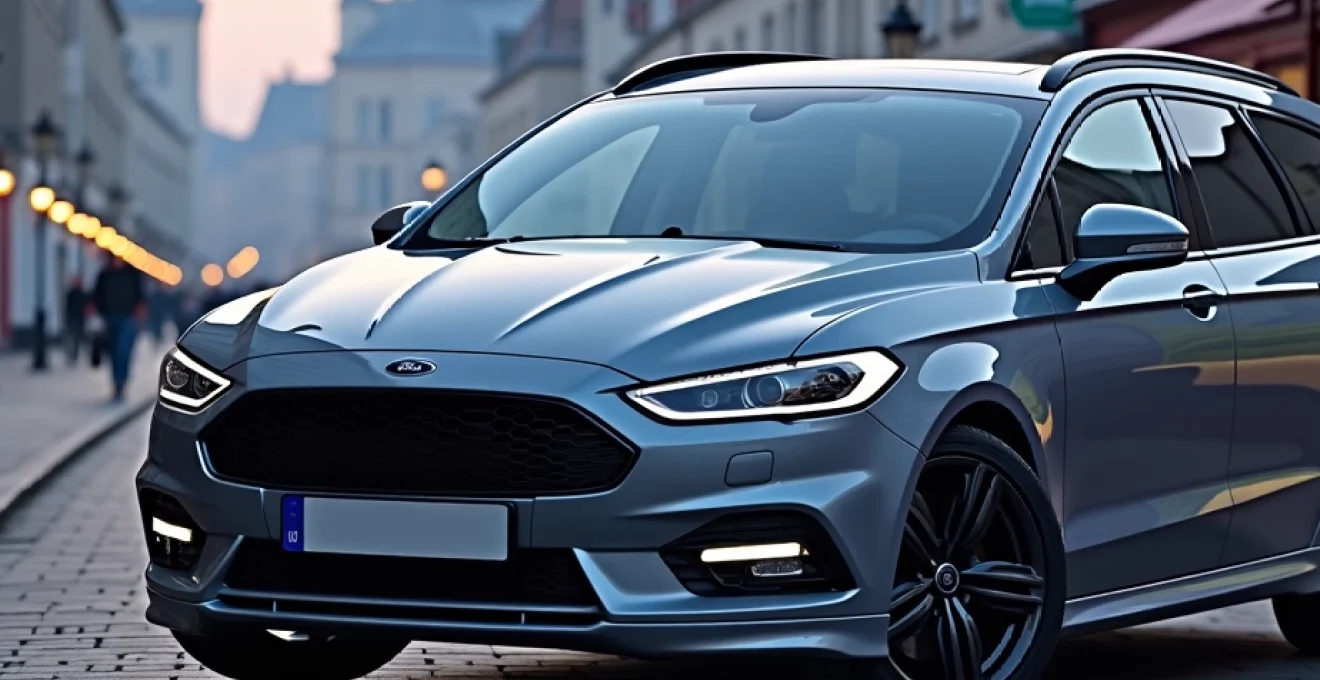
The Ford Mondeo ST220 Estate represents one of the most compelling performance estate propositions ever to emerge from a mainstream manufacturer. Launched in 2002 as part of Ford’s ambitious ST range expansion, this subtly aggressive family hauler combined genuine sporting credentials with cavernous practicality. The ST220 Estate’s unique position in the market stemmed from its sophisticated Duratec V6 engine and advanced chassis dynamics, creating a vehicle that could embarrass hot hatches at traffic lights whilst simultaneously transporting a family’s entire holiday luggage. Today, as Ford has discontinued the Mondeo entirely, these performance estates have evolved from depreciated executive cars into increasingly sought-after modern classics that offer exceptional value for money.
Ford mondeo ST220 estate engine specifications and performance analysis
The heart of every Mondeo ST220 Estate beats with Ford’s sophisticated 3.0-litre Duratec V6 powerplant, an all-aluminium construction that delivers 224bhp at 6,500rpm and 203lb-ft of torque at 4,500rpm. This naturally aspirated unit, developed in collaboration with Mazda, represents the pinnacle of pre-turbocharging V6 technology. The engine’s sophisticated variable valve timing system and dual-port fuel injection create a remarkably linear power delivery that transforms the estate’s character from sedate family transport to genuine performance machine.
Performance figures for the ST220 Estate remain impressive even by contemporary standards. The 0-62mph sprint requires just 6.8 seconds, whilst maximum velocity reaches an electronically limited 149mph. More importantly for real-world driving, the V6’s substantial mid-range torque delivery ensures effortless overtaking capabilities, particularly between 3,000-5,500rpm where the engine produces its most useable power. The distinctive twin exhaust system creates an appropriately sporty soundtrack, complete with the characteristic pop-and-crackle overrun that became synonymous with Ford’s ST models.
Duratec V6 3.0-litre engine reliability assessment
Despite its sophisticated engineering, the Duratec V6 engine exhibits several common failure modes that potential buyers must carefully evaluate. The timing chain system, whilst theoretically maintenance-free, can develop excessive slack after high mileages, creating a distinctive rattling noise particularly noticeable during cold starts. Chain stretch beyond acceptable tolerances often necessitates complete engine replacement rather than economical repair, making this arguably the most critical inspection point for any prospective ST220 Estate purchase.
Head gasket failures represent another significant concern, typically manifesting as coolant loss, white exhaust smoke, or mysterious misfiring conditions. The V6’s compact installation within the Mondeo’s engine bay creates challenging working conditions, with limited access for routine maintenance and repair work. Oil leaks commonly develop around the valve cover gaskets and timing chain cover, whilst the rear cylinder bank’s spark plugs remain notoriously difficult to access for routine replacement.
Variable valve timing system common failures
The Duratec V6’s variable valve timing system relies on oil pressure-operated cam phasers that can fail catastrophically if service intervals are extended or incorrect oil specifications are used. Warning signs include rough idling, reduced power output, and illuminated engine management lights indicating cam position sensor faults.
Regular oil changes using the correct 5W-20 specification remain absolutely critical for VVT system longevity, with many failures directly attributable to poor maintenance practices.
Camshaft position sensors frequently fail on higher-mileage examples, creating intermittent running problems that can prove challenging to diagnose definitively. The engine management system’s complexity means that multiple fault codes may appear simultaneously, requiring systematic diagnostic approaches to identify root causes rather than merely replacing indicated components.
Six-speed manual gearbox durability issues
Post-2003 ST220 Estates received the Getrag MMT6 six-speed manual transmission, a robust unit that generally withstands the V6’s power output without significant mechanical stress. However, the dual-mass flywheel system proves more problematic, particularly on higher-mileage examples that have experienced enthusiastic driving styles. DMF failure typically announces itself through clutch pedal vibrations, particularly noticeable during engagement and disengagement phases.
Clutch replacement intervals rarely exceed 80,000-100,000 miles under normal driving conditions, though this figure can reduce dramatically if the vehicle has experienced aggressive launches or heavy trailer work. The clutch replacement process requires gearbox removal, making it a relatively expensive maintenance item that often coincides with DMF replacement for economic reasons.
Electronic stability programme malfunction diagnosis
The ST220 Estate’s sophisticated Electronic Stability Programme system integrates multiple sensors and actuators that can develop faults over time. ABS wheel speed sensors represent the most common failure point, typically causing ESP warning lights and potentially affecting brake assist functionality. These sensors prove particularly vulnerable to corrosion and physical damage from road debris, especially on the rear axle where they’re more exposed to the elements.
Steering angle sensors occasionally require recalibration following wheel alignment work or suspension component replacement. The ESP system’s complexity means that diagnostic equipment capable of accessing all relevant control modules becomes essential for accurate fault identification and resolution.
Critical inspection points for ST220 estate chassis components
The Mondeo ST220 Estate’s chassis represents a sophisticated blend of comfort and performance, utilising components derived from both the standard Mondeo platform and Jaguar’s contemporary X-Type. This hybrid approach creates exceptional handling characteristics but introduces specific wear patterns and failure modes that differ significantly from standard Mondeo models. The estate variant benefits from self-levelling rear suspension technology that maintains load-carrying capability whilst preserving the vehicle’s dynamic balance under varying cargo conditions.
Front suspension architecture employs MacPherson struts with specifically tuned springs and dampers, lowered by 15mm compared to standard Mondeo variants. The system incorporates larger anti-roll bars and uprated bushings designed to control the additional power and torque loads. However, this enhanced specification creates accelerated wear patterns, particularly in the anti-roll bar drop links and suspension arm bushings, which experience significantly higher stress levels than their standard Mondeo counterparts.
Rear subframe corrosion detection methods
The ST220 Estate’s rear subframe construction utilises a steel fabrication that proves susceptible to corrosion, particularly around mounting points where dissimilar metals create galvanic corrosion cells. Visual inspection requires removing the rear undertray panels to access critical areas, though surface rust around the exhaust mounting points often indicates more extensive hidden corrosion. Structural integrity can be compromised without obvious external signs, making professional assessment advisable for any vehicle exhibiting surface corrosion symptoms.
Welded repair sections are available for common corrosion areas, though the subframe’s complex geometry makes quality repairs challenging without specialist equipment. Many insurance companies classify extensive subframe corrosion as economically terminal, effectively writing off otherwise serviceable vehicles. Preventive treatment with corrosion inhibitors during routine servicing can significantly extend subframe life, particularly for vehicles used in harsh winter conditions.
Anti-roll bar drop link wear assessment
The ST220’s enhanced anti-roll bar system places exceptional demands on the connecting drop links, which commonly fail between 60,000-80,000 miles. Symptoms include knocking noises over uneven surfaces, particularly noticeable during low-speed manoeuvring or when traversing speed humps. The failure pattern typically begins with worn ball joints that create excessive play, progressing to complete separation if left unaddressed.
Replacement drop links must match the ST220’s specific specifications, as standard Mondeo components lack the necessary strength ratings and will fail prematurely under the enhanced anti-roll bar loads.
Quality aftermarket alternatives from manufacturers like Lemforder or Meyle provide cost-effective solutions that often exceed original equipment durability specifications.
Macpherson strut top mount deterioration signs
MacPherson strut top mounts on the ST220 Estate experience accelerated wear due to the vehicle’s enhanced performance capabilities and lowered ride height. Deterioration typically manifests as knocking noises over bumps, steering wheel vibration during braking, or visible separation of the rubber mounting components. The estate’s additional weight compared to hatchback variants places extra stress on these components, particularly under heavy loading conditions.
Replacement procedures require specialist spring compression equipment due to the uprated spring rates, making this a task best suited to experienced technicians. Complete strut assemblies including renewed top mounts often provide better long-term value than individual component replacement, particularly when addressing higher-mileage vehicles with multiple worn suspension elements.
Brake disc warping and brembo calliper condition
The ST220 Estate’s braking system utilises larger 300mm front discs and 280mm rear discs compared to standard Mondeo variants, though many owners subsequently upgrade to Focus ST225 brake components for improved performance. Brake disc warping commonly occurs due to the system’s tendency toward heat buildup during spirited driving, creating steering wheel judder during braking that becomes progressively worse over time.
Rear brake callipers prove particularly problematic, with seized pistons and corroded handbrake mechanisms creating uneven pad wear and reduced braking efficiency. The electronic handbrake system on later models adds complexity to calliper servicing, requiring specific diagnostic equipment to retract pistons during pad replacement procedures. Brake fluid contamination accelerates internal corrosion, making regular fluid replacement intervals critical for system longevity.
Ford mondeo ST220 estate interior and electronics evaluation
The ST220 Estate’s cabin represents Ford’s attempt to elevate the Mondeo’s interior ambience to match its enhanced performance capabilities. Standard leather upholstery in black, red, or grey colour schemes provides durability and visual distinction from lesser Mondeo variants. The Recaro front seats offer excellent lateral support during enthusiastic driving whilst maintaining comfort levels appropriate for long-distance touring. However, the leather’s quality varies significantly between production years, with early examples showing superior grain patterns and wear resistance compared to later cost-reduced specifications.
Electronic systems integration reflects the era’s technological capabilities, with features like climate control, cruise control, and the premium audio system generally proving reliable over extended ownership periods. The six-disc CD changer system occasionally develops mechanical faults, though aftermarket replacement options provide enhanced connectivity and modern interface capabilities. Heated seat elements can fail individually, creating uneven warming patterns that require professional diagnosis to identify specific heating pad failures within the seat assemblies.
Dashboard construction utilises a combination of hard and soft-touch plastics that generally age well, though the piano-black trim pieces on early models prove susceptible to scratching and UV degradation. The instrument cluster’s red backlighting creates an appropriately sporting ambience, though individual bulb failures can create uneven illumination patterns. Window regulator mechanisms occasionally fail, particularly on the driver’s door where frequent operation accelerates component wear. The estate’s additional electrical complexity, including the self-levelling suspension system, creates potential failure points that don’t affect hatchback or saloon variants.
Market pricing analysis and depreciation patterns for ST220 estates
The Ford Mondeo ST220 Estate’s market positioning has evolved dramatically since its initial launch, transforming from a rapidly depreciating executive car into an increasingly collectible modern classic. Current market values reflect this transition, with examples in genuinely excellent condition commanding premium prices that seemed impossible just five years ago. Price stratification has become pronounced, with the gap between rough examples and pristine vehicles widening considerably as enthusiast demand increases for the best available cars.
Estate variants consistently command higher prices than their hatchback or saloon counterparts, reflecting their superior practicality and relative rarity in the marketplace. Performance Blue examples attract particular interest from collectors, whilst less common colours like Diamond White or Panther Black can either enhance or detract from values depending on overall condition and specification levels. Low-mileage examples with comprehensive service histories have begun appreciating, particularly those with fewer than 100,000 miles and evidence of enthusiast ownership.
The market shows clear preference for post-2003 six-speed manual examples, which benefit from the improved interior specification, enhanced ECU mapping, and superior long-distance cruising capabilities. However, early five-speed models with their more aggressive acceleration characteristics and distinctive dual-intake airbox configuration maintain their own following among purist enthusiasts.
Market analysts predict continued appreciation for the best examples, driven by the model’s unique position as the final naturally aspirated performance Ford estate and growing recognition of its engineering excellence.
Regional price variations reflect local demand patterns, with Scottish and Northern English markets showing particularly strong interest driven by the model’s suitability for challenging driving conditions. Insurance classifications have evolved favourably as the vehicle ages, with many companies now treating well-maintained examples as modern classics rather than high-performance family cars, resulting in reduced premium costs for suitable owners.
Pre-purchase mechanical inspection checklist
Conducting a thorough pre-purchase inspection requires systematic evaluation of the ST220 Estate’s critical systems, beginning with comprehensive engine diagnostics using professional-grade diagnostic equipment. The Duratec V6’s complexity demands more than basic code reading, with live data analysis essential for identifying intermittent faults or developing problems that haven’t yet triggered warning lights. Oil analysis can reveal internal wear patterns, particularly bearing material in the oil filter that indicates bottom-end problems requiring immediate attention.
Chassis inspection must include removal of undertray panels to access critical structural areas, particularly around the rear subframe mounting points and suspension attachment locations. Professional lifting equipment provides the only reliable method for assessing these areas thoroughly, making garage-based inspections essential for serious purchasers. Brake system evaluation should include measurements of disc thickness variations, calliper piston movement, and brake fluid contamination levels that indicate maintenance standards.
Road testing protocols should encompass both urban and motorway conditions, evaluating the transmission’s operation through all gears whilst monitoring engine temperatures and cooling system performance. The electronic systems require individual testing, including the climate control’s refrigeration cycle, heated seat functionality, and audio system operation. Suspension assessment benefits from testing over various road surfaces, listening for unusual noises that indicate worn components whilst evaluating the vehicle’s stability and steering precision under different loading conditions.
Documentation verification proves equally important, with service records providing crucial insights into maintenance standards and potential future requirements. Original purchase documentation, previous MOT certificates, and any modification records help establish the vehicle’s history and identify any non-standard components that might affect reliability or insurance costs. Professional inspection services specialising in performance vehicles can provide detailed reports covering aspects that general mechanics might overlook, though their costs must be weighed against the potential purchase price and associated risks.
Running costs and maintenance schedule for ST220 estate ownership
Ownership of a Mondeo ST220 Estate requires realistic expectations regarding running costs, with fuel consumption representing the most significant ongoing expense for most owners. Real-world fuel economy rarely exceeds 25mpg under mixed driving conditions, falling to approximately 20mpg during enthusiastic driving or urban commuting. Premium unleaded fuel requirements add further cost implications, though the engine’s sophisticated knock sensors provide some tolerance for lower octane ratings during economic necessity periods.
Insurance costs vary dramatically depending on owner demographics and regional factors, though the vehicle’s performance capabilities ensure it remains in higher risk categories despite its age. Specialist classic car insurance policies may provide cost advantages for vehicles with limited annual mileages, though restrictions on daily use may limit their practical applicability. Road tax implications vary by registration date, with post-March 2006 examples incurring significantly higher annual costs due to emissions-based taxation structures.
Maintenance scheduling follows Ford’s recommended 12,500-mile service intervals, though many specialists advocate shorter intervals for the V6 engine to maximise longevity. Component replacement costs reflect the vehicle’s performance orientation, with brake pads, tyres, and suspension components wearing faster than equivalent items on standard Mondeos. Timing belt replacement intervals reach 100,000 miles or eight years, representing a significant maintenance cost that affects vehicle valuations if approaching service requirements.
Parts availability remains generally excellent through Ford’s dealer network and specialist suppliers, though some ST220-specific components command premium prices. The estate’s unique self-levelling suspension components prove particularly expensive, with replacement shock absorbers and associated sensors representing significant cost items. Aftermarket support continues growing as the vehicle’s enthusiast following expands, providing cost-effective alternatives for many consumable items whilst maintaining original equipment quality standards. Professional servicing costs reflect the vehicle’s complexity, with diagnostic capabilities essential for efficient fault identification and repair procedures that maximise long-term reliability whilst controlling ownership expenses.