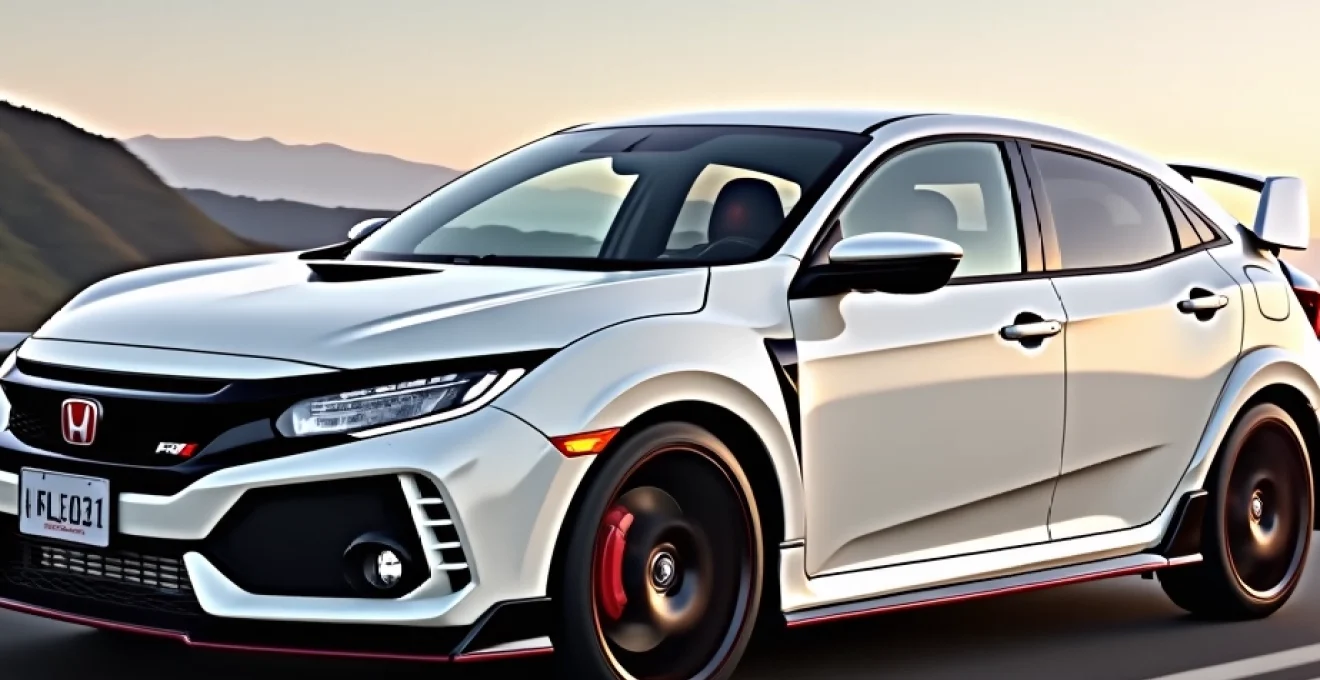
The Honda Civic Type R FL5 represents the pinnacle of front-wheel-drive performance engineering, building upon decades of Type R heritage while introducing revolutionary refinements. This latest generation combines track-proven capabilities with enhanced daily usability, creating what many consider the definitive hot hatch experience. With production ending in 2026 due to European emissions regulations, the FL5 stands as potentially the final naturally aspirated Type R, making it an instant modern classic.
Understanding the FL5’s intricate engineering and market positioning becomes crucial for prospective buyers navigating this premium segment. The model commands significant investment, yet delivers unparalleled driving dynamics that justify its position among the world’s most accomplished performance hatchbacks. Every aspect, from the turbocharged VTEC powerplant to the meticulously tuned chassis, reflects Honda’s unwavering commitment to driver-focused engineering excellence .
Honda civic type R FL5 technical specifications and performance analysis
The FL5 generation showcases Honda’s relentless pursuit of engineering perfection through comprehensive mechanical refinements. Despite sharing fundamental architecture with its FK8 predecessor, virtually every component has undergone meticulous optimisation to enhance performance, response, and durability. The structural improvements include a 15% stiffer bodyshell achieved through extensive use of structural adhesives, creating an exceptionally rigid platform that maximises suspension effectiveness.
Dimensional changes significantly impact the FL5’s dynamic character, with the wheelbase extended by 36mm and track widths increased by 15mm front and rear. These modifications lower the centre of gravity while improving stability and cornering precision. The overall package weighs 1,429kg according to Honda’s official figures, though independent testing suggests real-world weight approaches 1,437kg with a full fuel load, representing a modest 28kg increase over the FK8 primarily due to additional structural reinforcement.
K20C1 turbocharged engine architecture and VTEC turbo technology
The heart of the FL5 remains Honda’s acclaimed K20C1 turbocharged four-cylinder engine, now producing 329 PS (325 bhp) at 6,500 rpm and 420 Nm (310 lb-ft) of torque between 2,600-4,000 rpm. This represents meaningful gains of 9 horsepower and 20 Nm over the FK8, achieved through comprehensive internal refinements rather than increased boost pressure. The turbocharger features redesigned compressor wheel geometry with fewer, optimised blades that reduce rotational inertia by 25%, significantly improving throttle response and reducing lag.
Honda’s engineers implemented a wider front grille opening and revised exhaust system to enhance thermal management and breathing efficiency. The VTEC system continues to provide variable valve timing optimisation, though its character differs markedly from naturally aspirated predecessors. Instead of the dramatic high-rpm surge associated with traditional VTEC, the turbocharged implementation focuses on maintaining strong torque delivery across the entire rev range while preserving the engine’s appetite for high-rpm operation.
Six-speed manual transmission with Rev-Match system integration
The six-speed manual transmission receives substantial updates centred around an 18% lighter flywheel that dramatically improves engine response characteristics. This reduction in rotational mass allows the engine to build and shed revs more rapidly, creating a more immediate connection between throttle input and acceleration. The gear ratios remain unchanged from the FK8, with a close-ratio setup that maximises the engine’s power band utilisation.
Honda’s rev-match system has been refined with adjustable intensity settings accessible through the Individual drive mode. The system can provide subtle assistance or more aggressive matching depending on driver preference, though purists can disable the function entirely. The mechanical limited-slip differential continues to manage torque distribution between the front wheels, utilising a helical gear design that provides progressive lock-up characteristics without the harshness associated with clutch-type systems.
Adaptive damper system and Multi-Link rear suspension configuration
The adaptive damping system represents one of the FL5’s most significant dynamic improvements, offering unprecedented customisation through the Individual drive mode. Unlike the FK8’s three fixed settings, owners can now independently adjust suspension firmness, steering weight, throttle response, engine sound enhancement, and rev-match intensity. This flexibility allows drivers to create personalised setups that optimise performance for specific conditions or preferences.
The front suspension utilises Honda’s Dual-Axis Strut design, which separates steering and damping loads to reduce friction and improve response precision. This system minimises torque steer while maintaining excellent feedback through the steering wheel. The multi-link rear suspension has been retuned with revised spring rates and anti-roll bar settings to complement the increased structural rigidity, providing better body control without compromising ride quality in Comfort mode.
Brembo brake package and michelin pilot sport 4S tyre specifications
Stopping power comes from a comprehensive Brembo brake package featuring 350mm two-piece ventilated and cross-drilled front discs gripped by four-piston callipers. The rear setup utilises 305mm solid discs with single-piston callipers, providing excellent balance and feel. The brake pedal offers exceptional modulation and consistency, even during extended track sessions where the substantial thermal mass prevents fade.
The FL5 standardises on 265/30 R19 Michelin Pilot Sport 4S tyres, downsized from the FK8’s 20-inch Continental setup. This change improves ride quality while maintaining exceptional grip levels, with the reduced unsprung weight contributing to improved suspension response. The tyre compound provides remarkable consistency across temperature ranges, though replacement costs approach £280 per corner, representing a significant ongoing ownership consideration.
FL5 generation design evolution and aerodynamic enhancements
The FL5’s visual transformation reflects Honda’s response to criticism regarding the FK8’s polarising aesthetics while maintaining functional aerodynamic requirements. The design philosophy shifts toward mature aggression, integrating aerodynamic elements more seamlessly into the bodywork rather than the apparent add-on approach of its predecessor. This evolution creates a more cohesive appearance that appeals to a broader audience without sacrificing performance capabilities.
Aerodynamic development utilised Computational Flow Dynamics analysis in conjunction with Honda’s global racing programmes, including World Touring Car Cup and Super GT series. The drag coefficient has been reduced compared to the FK8, improving high-speed stability and fuel efficiency. All functional aerodynamic elements receive gloss black finish, creating visual consistency while clearly delineating form-follows-function components from purely aesthetic treatments.
The FL5’s aerodynamic refinement demonstrates Honda’s commitment to evidence-based design, where every surface serves a specific purpose in managing airflow for optimal performance and efficiency.
Championship white pearl and rallye red exterior colour options
Honda offers the FL5 in six exterior colours, with Championship White Pearl and Rallye Red representing the most iconic Type R finishes. Championship White Pearl carries particular significance as the signature colour of Honda’s motorsport heritage, featured on legendary models including the NSX Type R and Integra Type R. The metallic finish provides exceptional depth and durability while maintaining the clean aesthetic that emphasises the car’s refined proportions.
Rallye Red offers a more contemporary interpretation of Type R heritage, complementing the red interior accents and providing striking visual impact. Additional colour options include Sonic Grey Pearl, Crystal Black Pearl, Boost Blue Pearl, and Platinum White Pearl, each carefully selected to enhance the FL5’s sophisticated design language while offering personalisation opportunities for different tastes and preferences.
Active grille shutter system and front splitter functionality
The FL5’s front end incorporates an active grille shutter system that automatically adjusts opening area based on cooling requirements and aerodynamic efficiency needs. During high-speed cruising, the shutters partially close to reduce drag, while track driving or city conditions trigger full opening to maximise cooling airflow. This system represents sophisticated integration of performance and efficiency technologies rarely seen in this market segment.
The front splitter extends further forward than the FK8’s design while maintaining ground clearance for practical use. Thin vertical intakes flanking the main grille direct cooling air specifically to the front brake callipers, addressing thermal management during aggressive driving. These elements demonstrate functional design principles where every aerodynamic component serves specific performance objectives rather than merely visual enhancement.
Triple-exit exhaust configuration and rear wing aerodynamics
The rear wing has been completely redesigned to address the FK8’s criticism regarding impaired visibility while maintaining downforce generation. The new design features thinner mounting structures and revised blade angle that preserves aerodynamic efficiency while significantly improving rearward vision. Wind tunnel testing confirmed that the revised wing generates equivalent downforce to its predecessor despite the more refined appearance.
The triple-exit exhaust system utilises a central resonator with dual side outlets, creating Honda’s distinctive Type R sound signature while meeting increasingly stringent noise regulations. The exhaust note can be enhanced through the drive mode system, though even in its most subdued setting, the FL5 maintains an appropriately sporting character. The rear diffuser integrates seamlessly with the exhaust outlets, managing underbody airflow to reduce drag and enhance stability.
Recaro bucket seats and alcantara interior trim materials
The interior transformation centres around exceptional Recaro bucket seats that provide remarkable support during spirited driving while maintaining comfort for extended journeys. These seats feature red Alcantara upholstery with contrasting stitching, creating a distinctive environment that immediately communicates the car’s performance intentions. The seat mounting position has been lowered by 8mm compared to the FK8, further improving the driving position while enhancing forward visibility.
Alcantara application extends throughout the cabin, covering the steering wheel rim, gear lever gaiter, and various trim panels. This material choice provides superior grip and tactile feedback compared to leather alternatives while contributing to the FL5’s premium ambiance. The red colour scheme creates visual drama without overwhelming the cabin’s functionality, with all controls remaining logically positioned and easily accessible during dynamic driving situations.
Honda SENSING suite and infotainment technology package
The FL5 incorporates Honda’s comprehensive SENSING safety suite as standard equipment, representing significant advancement over previous Type R models’ basic safety provision. The system includes adaptive cruise control, collision mitigation braking, lane keeping assist, road departure mitigation, and traffic sign recognition. These technologies transform long-distance touring capability while maintaining the driver engagement that defines the Type R experience.
The 9-inch touchscreen infotainment system provides Apple CarPlay and Android Auto integration alongside Honda’s proprietary interface. While not the largest screen in this market segment, the display offers excellent resolution and response times. The system includes Honda’s LogR telemetry function, providing real-time performance data during track sessions including g-force measurements, lap timing, and various vehicle parameters that appeal to enthusiast drivers.
The digital instrument cluster represents a significant upgrade over the FK8’s analogue gauges, offering multiple display configurations depending on the selected drive mode. Sport mode presents traditional round dials with red backgrounds reminiscent of the NSX Type R, while +R mode switches to a bar-graph rev counter with enlarged speed display. LED shift lights mounted above the main display provide visual cues for optimal gear change points, adding to the race-car atmosphere during spirited driving.
Connectivity features include wireless smartphone charging, USB ports, and Bluetooth audio streaming. The 12-speaker Bose premium audio system delivers exceptional sound quality, though wind and tyre noise at motorway speeds can overwhelm quieter musical passages. Climate control remains manually operated through traditional knobs and buttons, providing tactile feedback that allows adjustment without diverting attention from the driving task.
FL5 market pricing structure and trim level comparison
The FL5’s pricing structure reflects Honda’s positioning within the premium hot hatch segment, with the standard model commanding £51,905 before options. This represents a substantial increase over previous Type R generations, elevating the model into direct competition with established German alternatives including the Audi RS3, Mercedes-AMG A45 S, and BMW M135i. The pricing strategy acknowledges the FL5’s exceptional engineering depth while potentially limiting accessibility compared to earlier Type R models.
Honda offers minimal trim variation, focusing on a single, comprehensively equipped specification rather than multiple choice levels. Optional equipment includes exterior carbon fibre styling packages, interior illumination enhancements, and paint protection films, though the core mechanical specification remains consistent across all examples. This approach simplifies the buying process while ensuring every FL5 receives the complete performance package that defines the Type R experience.
Market positioning analysis reveals the FL5’s value proposition when considering engineering sophistication and performance capability. While nominally expensive compared to alternatives like the Hyundai i30 N, the Honda’s development depth, build quality, and anticipated residual values justify the premium for buyers prioritising long-term ownership satisfaction. The limited production run through 2026 suggests strong value retention, particularly for well-maintained examples with comprehensive service histories.
| Model | Power (bhp) | Torque (lb-ft) | 0-62mph (sec) | Price (£) |
|---|---|---|---|---|
| Honda Civic Type R FL5 | 325 | 310 | 5.4 | 51,905 |
| Audi RS3 Sportback | 394 | 354 | 3.8 | 56,000 |
| Mercedes-AMG A45 S | 416 | 369 | 3.9 | 54,580 |
| Hyundai i30 N | 276 | 289 | 5.9 | 35,395 |
Pre-purchase inspection points and common FL5 issues assessment
Given the FL5’s recent introduction and relatively low production numbers, widespread reliability issues have yet to emerge. However, prospective buyers should conduct thorough inspections focusing on areas that historically affect high-performance Honda models. The inspection process should encompass mechanical, electrical, and cosmetic elements while paying particular attention to modification evidence and driving history indicators that suggest track use or aggressive operation.
Documentation verification forms a crucial aspect of the pre-purchase process, particularly confirming service history completeness and warranty status. Honda’s five-year, 90,000-mile warranty provides significant protection for buyers of nearly-new examples, though warranty validity depends on adherence to service schedules and operational parameters. Any modifications, even seemingly minor ones, can void warranty coverage and should be carefully evaluated for their impact on reliability and resale value.
Thorough pre-purchase inspection becomes particularly important given the FL5’s performance focus and the likelihood that previous owners have explored its dynamic capabilities on both road and track.
Turbocharger wastegate actuator and intercooler system evaluation
The turbocharger system requires specific attention during inspection, particularly the wastegate actuator mechanism and boost control solenoids. These components experience significant thermal and pressure cycling, potentially leading to premature wear in heavily used examples. Listen for unusual whistling or chattering sounds during acceleration and deceleration, which may indicate wastegate or bypass valve issues that require expensive repairs.
Intercooler system inspection should focus on pipe connections, clamp tightness, and core condition. The large front-mounted intercooler is susceptible to stone damage and debris accumulation that can reduce efficiency and potentially cause boost leaks. Check for oil residue around connections, which may indicate seal deterioration or excessive blowby from engine wear. Any modifications to the intercooler system should be thoroughly evaluated for quality and appropriateness.
Clutch disc wear patterns and flywheel surface inspection
The manual transmission and clutch system demand careful evaluation, particularly given the FL5’s substantial torque output and likelihood of enthusiastic operation. Clutch pedal feel should be consistent and progressive, with engagement occurring in the middle third of pedal travel. Excessive free play, spongy feel, or high engagement point may indicate clutch wear or hydraulic system issues requiring immediate attention.
The lightweight flywheel, while improving throttle response, can be sensitive to aggressive clutch operation and may develop surface irregularities more quickly than heavier units. During test driving, listen for clutch chatter during engagement and feel for vibration through the pedal, which may indicate flywheel resurfacing requirements. The six-speed transmission should shift smoothly without grinding or hesitation, particularly when cold, as syn
chronizer wear typically manifests as difficult cold shifting and grinding sounds.
Continental 245/30 ZR20 tyre condition and wheel alignment verification
The FL5’s 265/30 R19 Michelin Pilot Sport 4S tyres represent a significant ongoing cost, making tyre condition assessment crucial during pre-purchase inspection. Examine tread depth across the entire contact patch, paying particular attention to inner and outer edges where alignment issues or aggressive cornering can cause premature wear. Uneven wear patterns may indicate suspension geometry problems, previous accident damage, or excessive track use that could compromise handling performance.
Wheel alignment verification becomes particularly important given the FL5’s precise handling characteristics and expensive tyre replacement costs. Check for signs of kerb damage on wheel rims, which can affect balance and potentially cause vibration at higher speeds. The 19-inch forged wheels are generally robust, though their lightweight construction makes them susceptible to impact damage that may not be immediately visible but could affect structural integrity over time.
Inspect tyre sidewalls for cracking, bulges, or repair patches that might indicate previous punctures or age-related deterioration. Even if tread depth appears adequate, tyres older than five years should be considered for replacement regardless of mileage, as the high-performance compound degrades over time and loses its optimal grip characteristics essential for the FL5’s dynamic capabilities.
Engine bay heat shield integrity and cooling system performance
The FL5’s turbocharged engine generates substantial heat that requires comprehensive thermal management systems operating at peak efficiency. Inspect all heat shields for proper mounting and absence of damage, particularly around the turbocharger and exhaust manifold areas. Loose or missing heat shields can cause localised overheating and potential fire hazards, while also allowing heat soak that reduces performance and component longevity.
Cooling system evaluation should include radiator condition, hose integrity, and coolant level and colour verification. The intercooler requires particular attention, as any blockage from debris or damage can significantly impact performance while potentially causing engine knock under boost. Check for signs of coolant leaks around the water pump, thermostat housing, and radiator connections, as these can lead to overheating issues during spirited driving or track use.
The cooling fans should operate smoothly without excessive noise or vibration, while the coolant expansion tank should show clear fluid without contamination or excessive pressure buildup. Any modifications to the cooling system, including aftermarket radiators or additional oil coolers, should be professionally installed and appropriate for the application to avoid potential reliability issues.
Insurance considerations and running costs analysis for FL5 ownership
FL5 ownership involves substantial ongoing costs that extend well beyond the initial purchase price, making comprehensive financial planning essential for prospective buyers. Insurance premiums typically place the Type R in high-risk categories due to its performance capabilities, theft appeal, and relatively high repair costs. Many insurers classify the FL5 in group 46-50, the highest insurance brackets, though Honda’s reliability reputation can help moderate premiums compared to equivalent German alternatives.
Fuel consumption represents another significant ongoing expense, with real-world economy figures ranging from 20-25 mpg during spirited driving to 30-35 mpg on steady motorway cruising. The FL5’s 47-litre fuel tank provides reasonable range during normal driving, though track day sessions can dramatically increase consumption rates. Premium unleaded fuel is recommended for optimal performance, adding approximately 10-15p per litre to running costs compared to regular petrol.
Servicing costs reflect the FL5’s sophisticated engineering and high-performance components, with Honda main dealer servicing typically costing £300-500 for minor services and £600-1000 for major intervals. Specialist independent workshops familiar with Type R models may offer cost savings while maintaining expertise levels, though warranty considerations should guide servicing decisions for newer examples. The sophisticated adaptive suspension, Brembo brake systems, and turbocharger require specific knowledge and diagnostic equipment.
Depreciation patterns for the FL5 remain largely speculative given its recent introduction, though limited production numbers and final-generation status suggest strong residual values. Previous Type R models have demonstrated exceptional value retention compared to mainstream hot hatches, with pristine examples often appreciating after initial depreciation. The FL5’s position as potentially the last naturally aspirated Type R could accelerate this trend, making it an attractive proposition for collectors and enthusiasts prioritising long-term value preservation.
Tyre replacement costs demand particular consideration, with a complete set of Michelin Pilot Sport 4S tyres costing approximately £1,120 fitted. Aggressive driving or track use can reduce tyre life significantly, potentially requiring replacement every 10,000-15,000 miles rather than the 20,000+ miles possible with moderate use. Brake pad and disc replacement costs are similarly elevated, with front pads costing £200-300 and discs £400-600 each, though the Brembo components provide exceptional durability under normal driving conditions.
The FL5’s running costs reflect its position as a precision instrument requiring appropriate maintenance and care, making it essential for buyers to budget comprehensively beyond the initial purchase investment.
Extended warranty options become increasingly valuable for FL5 owners planning long-term retention, particularly as sophisticated electronic systems age and potentially require expensive repairs. Honda offers extended coverage options, though independent warranty providers may offer competitive alternatives with different coverage levels and excess structures. The decision should consider individual driving patterns, annual mileage, and risk tolerance regarding potential repair costs.
Parts availability and pricing generally favour Honda ownership compared to premium German alternatives, with the manufacturer’s extensive global presence ensuring reasonable parts supply and competitive pricing. However, Type R-specific components such as the Recaro seats, Brembo brake components, and unique body panels command premium prices and may have longer lead times. Building relationships with knowledgeable specialists becomes valuable for accessing competitive parts pricing and expert advice regarding maintenance optimization.