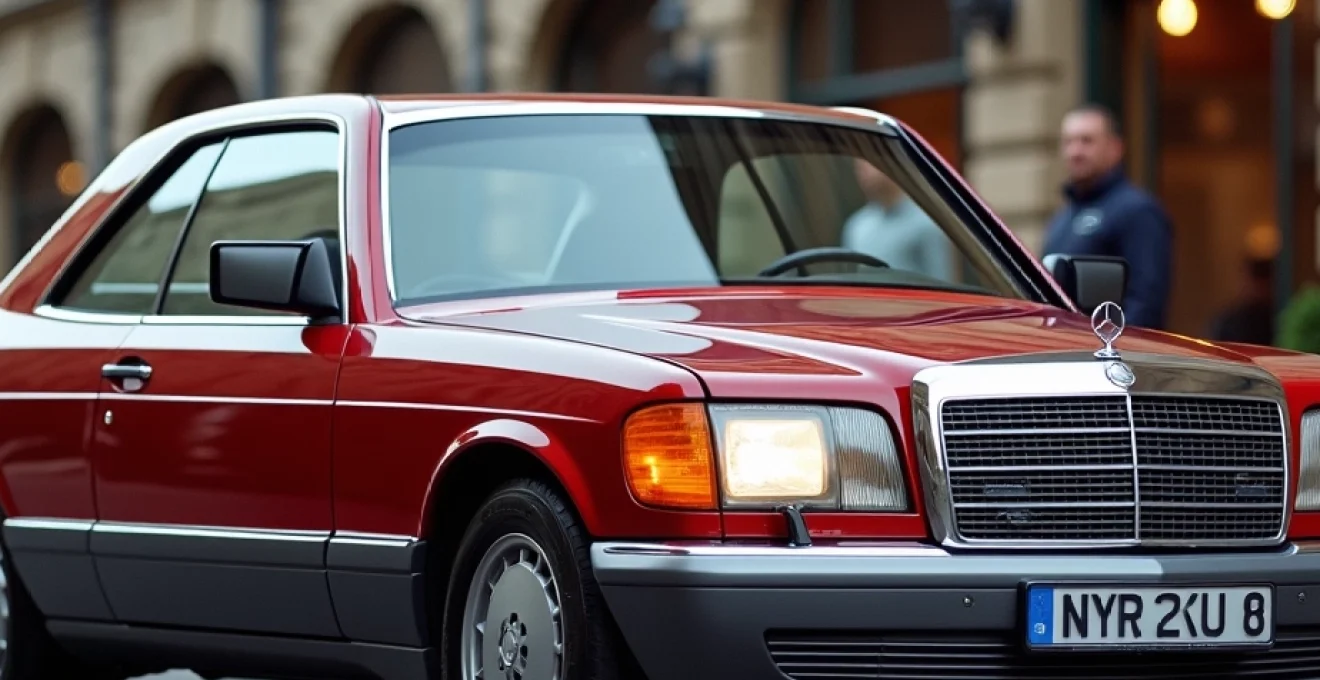
The Mercedes-Benz 500 SEC stands as one of the most significant luxury coupés of the 1980s, representing the pinnacle of German automotive engineering during a golden era for the Stuttgart manufacturer. Based on the acclaimed W126 S-Class platform, this elegant two-door grand tourer combined uncompromising luxury with impressive performance, establishing itself as the preferred choice for discerning buyers seeking prestige without ostentation. With its distinctive pillarless design and sophisticated V8 powertrain, the 500 SEC carved out a unique position in the premium coupé market, offering an alternative to the more flamboyant offerings from Italian and British manufacturers. The model’s enduring appeal lies not only in its timeless aesthetic but also in its remarkable engineering depth, which delivered reliability and refinement that few competitors could match during its production run from 1981 to 1991.
Mercedes-benz W126 C126 coupé development and engineering heritage
The development of the C126 coupé began in the late 1970s as Mercedes-Benz recognised the need for a flagship two-door model to complement their successful W126 S-Class saloon range. The engineering team, led by the legendary Bruno Sacco, faced the challenge of creating a vehicle that would maintain the S-Class’s renowned comfort and safety standards while delivering the distinctive character expected from a luxury coupé. The project required extensive modifications to the saloon’s platform, with unique body panels throughout and significant structural reinforcements to compensate for the removal of the B-pillars.
Bruno sacco design philosophy and aerodynamic coefficient achievements
Bruno Sacco’s design philosophy for the C126 emphasised timeless elegance over fashionable styling trends, a decision that has proved remarkably prescient given the model’s enduring visual appeal today. The design team achieved a drag coefficient of 0.36, exceptional for a luxury coupé of the early 1980s, through careful attention to aerodynamic details including the smooth integration of bumpers, the subtle rear spoiler lip, and the distinctive ribbed rear light clusters designed to prevent dirt accumulation. The pillarless construction required innovative solutions to maintain structural integrity while preserving the clean, uninterrupted glass profile that became the model’s signature aesthetic element.
M117 V8 engine architecture and bosch K-Jetronic fuel injection system
The heart of the 500 SEC was Mercedes-Benz’s proven M117 V8 engine, a sophisticated all-aluminium construction that represented decades of development in large-displacement passenger car engines. The 4973cc unit featured a 90-degree vee configuration with wet cylinder liners and a single overhead camshaft per bank, delivering smooth power delivery characteristic of Mercedes V8 engines of this era. The Bosch K-Jetronic mechanical fuel injection system provided precise fuel metering without the complexity of early electronic systems, contributing to the engine’s reputation for reliability and ease of maintenance.
Anti-lock braking system integration and supplemental restraint system innovation
Mercedes-Benz positioned the 500 SEC as a technology showcase, introducing safety systems that would later become industry standards. The anti-lock braking system, optional initially but standard from 1985, represented cutting-edge technology that prevented wheel lockup during emergency braking situations. More significantly, the C126 became the first European production car to offer a driver airbag as optional equipment , demonstrating Mercedes-Benz’s commitment to occupant protection. The supplemental restraint system worked in conjunction with seatbelt pre-tensioners, another innovation that would later become mandatory across the industry.
Pillarless door construction and structural rigidity engineering
The elimination of B-pillars required extensive structural reinforcement to maintain the chassis rigidity expected from a premium Mercedes-Benz vehicle. Engineers incorporated additional bracing between the A-pillars and bulkhead, while the door frames themselves were strengthened to provide adequate protection in side-impact scenarios. This pillarless construction, a Mercedes coupé tradition dating back to the 1960s, created the distinctive glasshouse profile that set the C126 apart from its more conventional competitors. The engineering challenge of maintaining structural integrity without compromising the visual purity of the design represented one of the project’s most significant achievements.
500 SEC performance specifications and drivetrain analysis
The performance characteristics of the 500 SEC reflected Mercedes-Benz’s philosophy of effortless power delivery rather than outright sporting prowess. The model was designed to excel in high-speed cruising scenarios typical of German autobahn usage, where sustained high speeds and long-distance comfort took precedence over track-focused dynamics. This approach resulted in a drivetrain calibration that prioritised smoothness and refinement, delivering performance that felt both impressive and unstressed across a wide range of operating conditions.
5.0-litre M117.963 engine output and torque characteristics
The initial M117.963 engine produced 240 brake horsepower at 4,750 rpm, with maximum torque of 380 Nm delivered at a relatively low 2,750 rpm, characteristics that provided strong mid-range performance ideal for highway overtaking manoeuvres. The engine’s torque curve remained relatively flat across a wide rev range, contributing to the effortless nature of acceleration that became a defining characteristic of the model. Later versions of the engine, introduced for the 1987 model year, increased output to 261 brake horsepower whilst maintaining the smooth power delivery that distinguished Mercedes V8 engines from their more aggressive competitors.
Mercedes-benz 4G-TRONIC automatic transmission calibration
The four-speed 4G-TRONIC automatic transmission was specifically calibrated for the 500 SEC to emphasise smooth gear changes and optimal fuel economy during cruise conditions. The transmission featured a torque converter with lock-up capability to improve efficiency at highway speeds, whilst the gear ratios were selected to keep the V8 engine operating within its most efficient rev range during normal driving. The transmission’s electronic control unit could adapt its shift patterns based on driving style, providing more aggressive shift points when spirited driving was detected whilst maintaining the refined character expected from a luxury grand tourer.
Independent Multi-Link rear suspension geometry
The rear suspension employed a sophisticated semi-trailing arm configuration with anti-dive geometry, providing excellent stability during high-speed driving whilst maintaining ride comfort over varied road surfaces. The system incorporated progressive-rate coil springs and gas-filled shock absorbers, with an optional self-levelling system available for customers who regularly carried passengers or luggage. Anti-roll bars at both front and rear helped control body roll during cornering, though the suspension tuning prioritised comfort over ultimate handling precision, reflecting the model’s grand touring rather than sports car mission.
Acceleration metrics and top speed limitations
Contemporary road tests recorded 0-60 mph acceleration times of approximately 6.8 seconds for the 500 SEC, performance that was competitive with other luxury coupés of the era whilst maintaining the effortless character that distinguished Mercedes products. The electronically limited top speed of 155 mph reflected both the capabilities of the drivetrain and Mercedes-Benz’s voluntary agreement on speed limitations.
The 500 SEC’s performance envelope was designed to provide reassuring capability rather than headline-grabbing statistics, delivering the kind of sustained high-speed cruising ability that made long journeys genuinely relaxing rather than merely fast.
Luxury appointments and interior craftsmanship standards
The interior of the 500 SEC represented the pinnacle of Mercedes-Benz craftsmanship during the 1980s, featuring materials and construction techniques that established new standards for luxury car interiors. The cabin design balanced traditional luxury cues with contemporary ergonomics, creating an environment that felt both timeless and thoroughly modern. Every surface that occupants might touch was finished to the highest standards, from the hand-polished walnut veneer trim to the carefully stitched leather upholstery that could be specified in a range of sophisticated colour combinations.
The front seats incorporated multiple electric adjustment mechanisms, including lumbar support and position memory functions that were revolutionary for their time. The pneumatic side bolster system automatically adjusted to provide additional lateral support when the vehicle detected cornering forces, whilst heated seats became standard equipment from the 1988 model year. Rear passengers enjoyed generous legroom despite the coupé configuration, with individual seats that provided similar levels of comfort and adjustment to the front positions.
The dashboard featured a comprehensive array of analogue instrumentation, with the speedometer and tachometer flanked by auxiliary gauges monitoring engine temperature, fuel level, and various system functions. The centre console incorporated Mercedes-Benz’s first integrated climate control system , which could maintain precise temperature settings whilst automatically adjusting fan speed and air distribution. Additional luxury features included cruise control, an exterior temperature display, and the distinctive seatbelt presenters that automatically delivered the safety belts to occupants as they settled into their seats.
Storage solutions throughout the cabin reflected practical luxury thinking, with generously proportioned door pockets, a lockable glove compartment, and a centre console that could accommodate the mobile phones that were becoming status symbols among the 500 SEC’s target demographic. The electric sunroof, standard on all models, featured a tilt function as well as full retraction, whilst the sophisticated sound insulation ensured that wind noise remained minimal even at high speeds with the sunroof open.
Market positioning against BMW 6 series E24 and jaguar XJS competition
The luxury coupé segment of the early 1980s presented Mercedes-Benz with formidable competition from established rivals, each offering distinct advantages that appealed to different aspects of the premium car buying public. The BMW 6 Series E24, particularly in 635CSi form, provided a more overtly sporting character with sharper handling dynamics and a more aggressive visual presence. Meanwhile, the Jaguar XJS offered traditional British luxury combined with distinctive styling that polarised opinion but created a devoted following among buyers seeking something different from the German alternatives.
Against this competition, the 500 SEC carved out a unique position by emphasising refinement and build quality over outright performance or styling drama. Where the BMW appealed to drivers who prioritised handling precision and the Jaguar attracted those seeking distinctive style, the Mercedes targeted buyers who valued understated elegance and uncompromising quality. This positioning strategy proved highly successful, with the 500 SEC attracting customers from both premium saloon and sports car segments who appreciated the model’s ability to combine the comfort of the former with the exclusivity of the latter.
The Mercedes advantage became particularly apparent in areas such as build quality and long-term reliability, where the company’s reputation for engineering excellence translated into lower ownership costs and higher residual values. The comprehensive dealer network and parts availability also provided reassurance for buyers concerned about long-term ownership prospects. Contemporary road tests consistently praised the 500 SEC’s ability to cover long distances at high speed whilst maintaining occupant comfort, an area where neither the BMW nor Jaguar could match the Mercedes combination of performance and refinement.
Pricing positioned the 500 SEC at a premium to both rivals, reflecting Mercedes-Benz’s confidence in the model’s superior engineering and build quality. This strategy successfully attracted buyers for whom price was less important than prestige and long-term satisfaction, establishing the 500 SEC as the thinking person’s choice in the luxury coupé segment. The model’s success in attracting customers from competitor brands demonstrated the effectiveness of Mercedes-Benz’s approach to luxury car marketing during this golden era of the company’s history.
Production timeline and chassis number identification guide
Production of the C126 Mercedes-Benz 500 SEC commenced in September 1981 for the 1982 model year, with initial examples rolling off the Sindelfingen production line alongside their four-door W126 siblings. The early production cars, identifiable by chassis numbers beginning with WDB1260451A, featured the original M117.963 engine producing 240 brake horsepower and came equipped with distinctive ‘Mexican Hat’ alloy wheels that would later become highly sought after by collectors.
The significant mid-life refresh introduced for the 1986 model year brought comprehensive updates that transformed both the appearance and mechanical specification of the 500 SEC.
The facelift models, distinguished by chassis numbers beginning with WDB1260451G, incorporated smoother body cladding, revised wheel designs, and the upgraded M117.965 engine that would define the model’s character for the remainder of its production run.
These changes were extensive enough that many enthusiasts consider the pre- and post-facelift models to be distinctly different vehicles in terms of both visual appeal and driving experience.
Further refinements continued throughout the production run, with 1988 model year cars receiving additional standard equipment including heated seats and revised interior trim options. The final production examples, completed in spring 1991, represented the culmination of a decade of continuous development and refinement. Total production across all model years reached approximately 21,000 units for the 500 SEC variant, making it the second most popular engine option after the 560 SEC that was introduced alongside the 1985 facelift.
Chassis number identification remains crucial for determining the exact specification and production date of individual examples, as Mercedes-Benz made numerous running changes throughout the production run that are not always reflected in model year designations. The positioning of the chassis number, stamped into the engine bay and recorded on various identification plates throughout the vehicle, follows Mercedes-Benz conventions that allow experienced enthusiasts to decode production month, factory location, and specification details from the alphanumeric sequence.
Contemporary collector market valuation and authenticity verification
The contemporary classic car market has shown increasing appreciation for well-preserved examples of the 500 SEC, with values rising steadily as collectors recognise the model’s significance in Mercedes-Benz history and automotive development more broadly. Recent auction results demonstrate that exceptional examples can command prices exceeding £25,000, whilst solid, usable cars typically trade in the £8,000 to £15,000 range depending on condition, provenance, and specification. The market shows particular preference for late-production examples with the more powerful M117.965 engine, though early cars with proper maintenance histories and original specifications are also gaining recognition among purists.
Authentication of claimed specifications requires careful verification of multiple identification points throughout the vehicle, as the complexity of the options list and the numerous running changes made during production create opportunities for misrepresentation. Original window stickers, when available, provide definitive specification confirmation, whilst chassis number decoding can verify engine type, production date, and factory-fitted options. The extensive use of plastic trim components and electronic systems means that many survivors show evidence of modification or repair using non-original components, making completely authentic examples increasingly valuable.
Market trends suggest that the most desirable examples combine original specification with comprehensive maintenance records and minimal cosmetic restoration needs. The high cost of properly restoring worn interiors and addressing corrosion issues means that preservation rather than restoration typically provides better financial returns. Professional pre-purchase inspections have become essential for serious buyers, as the complexity of these vehicles and the cost of addressing deferred maintenance can quickly transform an apparent bargain into an expensive project.
The growing recognition of the 500 SEC’s historical significance, combined with the model’s impressive engineering legacy and timeless aesthetic appeal, suggests that values for the best examples will continue strengthening as the classic car market matures. However, the substantial ongoing costs associated with maintaining these sophisticated vehicles to proper standards mean that ownership requires both financial resources and access to knowledgeable specialists, factors that will likely prevent the dramatic price appreciation seen in some other classic car segments whilst ensuring steady demand from serious enthusiasts who appreciate the model’s unique combination of luxury, performance, and engineering excellence.