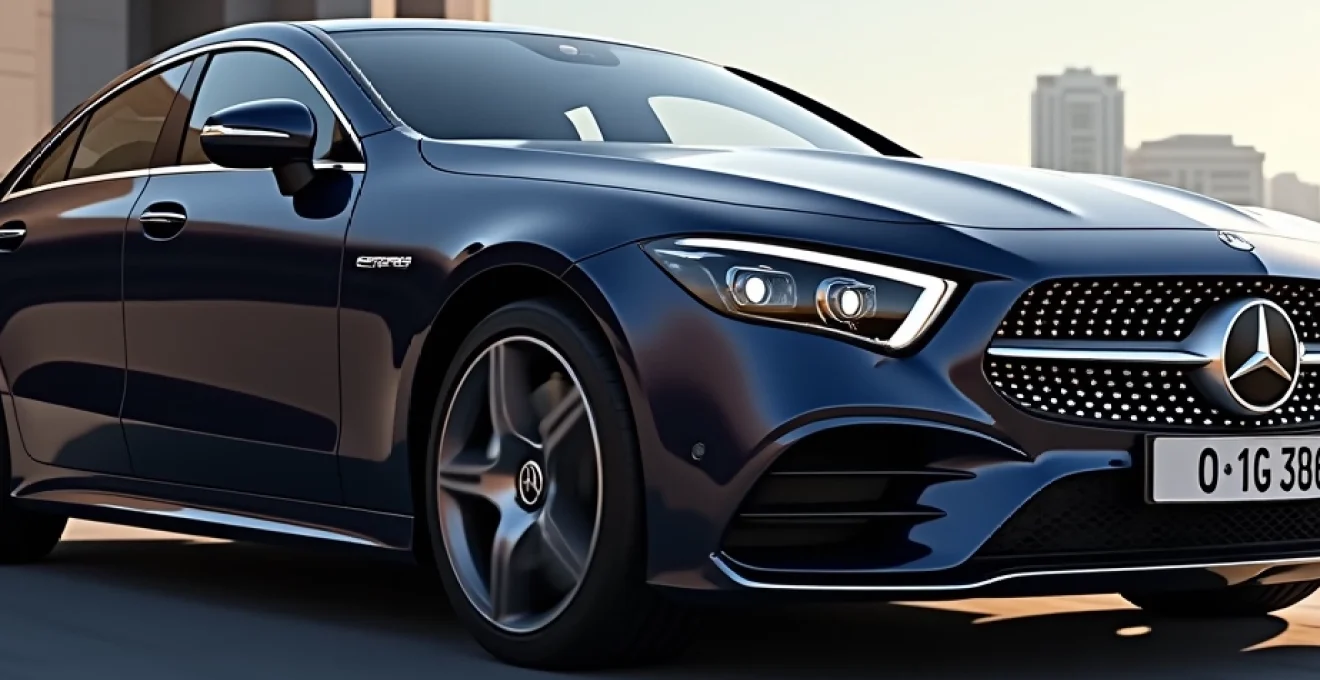
The Mercedes-Benz CLS 500 stands as a pioneering force in the luxury automotive segment, fundamentally redefining the concept of the four-door coupé when it first debuted in 2004. This distinctive model has consistently challenged conventional design paradigms, merging the elegance of a coupé silhouette with the practicality of a traditional saloon. Over nearly two decades of production, the CLS 500 has evolved through three distinct generations, each incorporating cutting-edge technology and refined engineering solutions that have maintained its position as a benchmark in the luxury automotive market.
What distinguishes the CLS 500 from conventional luxury saloons is its unique architectural approach , combining swept-back rooflines with frameless windows and dramatically sculpted bodywork. The model has consistently attracted buyers seeking something beyond traditional luxury sedans, offering a compelling alternative to more conservative competitors. Throughout its production run, the CLS 500 has demonstrated Mercedes-Benz’s commitment to pushing boundaries whilst maintaining the brand’s reputation for engineering excellence and luxury refinement.
CLS 500 generation evolution and platform architecture
C219 first generation development and W211 E-Class platform integration
The inaugural CLS 500, internally designated C219, emerged from Mercedes-Benz’s desire to create an entirely new market segment. Built upon the proven W211 E-Class platform, the first-generation model shared fundamental underpinnings with its more conventional sibling whilst adopting a dramatically different aesthetic philosophy. The platform integration was expertly executed, with engineers modifying the chassis to accommodate the lower roofline and altered proportions without compromising structural integrity or safety standards.
This foundational generation established the CLS’s distinctive design language, featuring the characteristic swept-back roofline that would become synonymous with the model. The C219’s development process involved extensive wind tunnel testing to optimise aerodynamic efficiency, resulting in a drag coefficient that was remarkably competitive for its class. Engineering teams faced significant challenges in maintaining rear passenger comfort whilst achieving the desired coupé-like profile, ultimately developing innovative solutions that would influence future Mercedes-Benz designs.
C218 second generation redesign and extended wheelbase variants
The second-generation C218, introduced in 2011, represented a comprehensive reimagining of the CLS concept. Built on an updated version of the W212 E-Class platform, this iteration featured a longer wheelbase and more sophisticated suspension geometry. The platform modifications included enhanced torsional rigidity and improved weight distribution, contributing to superior handling characteristics and refinement levels that exceeded its predecessor’s capabilities.
Mercedes-Benz introduced extended wheelbase variants during the C218’s production run, primarily targeting markets where rear passenger space commanded premium consideration. These variants maintained the characteristic CLS silhouette whilst providing additional legroom and comfort for rear occupants. The engineering challenge of extending the wheelbase without compromising the model’s visual proportions required careful attention to detail and sophisticated design adjustments throughout the vehicle’s structure.
C257 third generation transition to MRA platform technology
The current C257 generation, launched in 2018, marked the CLS’s transition to Mercedes-Benz’s sophisticated MRA (Modular Rear Architecture) platform. This advanced architecture brought significant benefits in terms of weight reduction, improved handling dynamics, and enhanced safety performance. The MRA platform’s modular construction allows for greater flexibility in powertrain integration and facilitates the incorporation of advanced driver assistance systems.
Platform technology advancements in the C257 include multi-link suspension systems with adaptive damping, advanced high-strength steel construction, and optimised crashworthiness. The MRA architecture also enables more efficient packaging of hybrid powertrains and advanced electronic systems. These improvements have resulted in measurable enhancements in fuel efficiency, emissions performance, and overall refinement compared to previous generations.
AMG line styling package integration across model years
Throughout its evolution, the CLS 500 has offered AMG Line styling packages that enhance the model’s sporting credentials without full AMG mechanical modifications. These packages typically include distinctive bodywork elements, upgraded wheel designs, and sport-oriented interior appointments. The AMG Line integration has become increasingly sophisticated across generations, with current offerings including advanced aerodynamic components and performance-oriented styling cues.
The styling package evolution reflects changing consumer preferences towards more dynamic luxury vehicles. Modern AMG Line packages incorporate active aerodynamic elements, sport suspension tuning, and distinctive visual enhancements that differentiate equipped models from standard variants. These packages have proven popular among buyers seeking enhanced visual presence whilst maintaining the CLS 500’s fundamental character and usability.
M113 and M276 engine specifications and performance characteristics
M113 5.0-litre V8 naturally aspirated engine technical analysis
The original CLS 500’s M113 engine represented the pinnacle of naturally aspirated V8 technology when introduced. This 5.0-litre unit produced 306 horsepower and 339 lb-ft of torque, delivering performance that was both refined and impressive for its era. The engine featured sophisticated variable valve timing, advanced intake manifold design, and precision-engineered internals that provided smooth power delivery across the entire rev range.
Technical specifications of the M113 included aluminium construction for optimal weight distribution, advanced engine management systems, and robust internal components designed for long-term reliability. The engine’s breathing characteristics were optimised through careful port design and exhaust manifold engineering, resulting in a distinctive sound signature that many enthusiasts consider superior to turbocharged alternatives. Performance delivery was notably linear , with peak torque available across a broad rev range that enhanced real-world drivability.
The M113’s naturally aspirated character provided immediate throttle response and a distinctive exhaust note that became synonymous with the CLS 500 driving experience.
M276 3.0-litre V6 biturbo engine configuration and turbocharger technology
Later CLS 500 variants adopted the advanced M276 3.0-litre V6 biturbo engine, representing Mercedes-Benz’s shift towards downsized, turbocharged powertrains. This sophisticated unit produces comparable power to the original V8 whilst delivering superior fuel efficiency and reduced emissions. The twin-turbo configuration utilises advanced boost control systems and intercooling technology to optimise power delivery and thermal management.
The M276’s technical sophistication includes direct fuel injection, advanced variable valve timing on both intake and exhaust camshafts, and sophisticated engine management systems. The turbocharger design incorporates low-inertia turbines for rapid response and minimal lag, whilst advanced wastegate control ensures optimal boost pressure across the engine’s operating range. These technologies combine to deliver impressive performance characteristics that rival naturally aspirated engines of significantly larger displacement.
7g-tronic plus transmission integration and gear ratio optimisation
The CLS 500’s 7G-Tronic Plus automatic transmission represents advanced automotive transmission technology, featuring seven forward gears and sophisticated electronic control systems. The transmission’s gear ratios are specifically optimised for the CLS’s performance characteristics, providing close ratios in lower gears for acceleration whilst maintaining tall overdrive gears for highway efficiency. The unit incorporates torque converter lock-up across multiple gears to minimise energy losses and improve fuel economy.
Advanced features of the 7G-Tronic Plus include adaptive shift programming that learns driving patterns, manual shift modes for enhanced driver engagement, and sophisticated thermal management systems. The transmission’s electronic control unit continuously monitors driving conditions and adjusts shift points accordingly, optimising performance, comfort, and efficiency. Integration with the engine management system ensures seamless coordination between powerplant and transmission for optimal overall performance.
ECO Start-Stop system implementation and fuel efficiency metrics
Modern CLS 500 variants incorporate sophisticated ECO start-stop systems that automatically shut down the engine during stationary periods to reduce fuel consumption and emissions. The system utilises advanced sensors to monitor battery charge levels, climate control demands, and engine temperature to determine optimal start-stop operation. When conditions are appropriate, the engine seamlessly restarts as the driver releases the brake pedal or engages the accelerator.
Fuel efficiency improvements from the ECO start-stop system are particularly noticeable in urban driving conditions, where frequent stops provide numerous opportunities for engine shutdown. The system’s sophisticated control algorithms ensure that comfort and convenience are maintained whilst maximising efficiency benefits. Combined with other efficiency technologies, the ECO start-stop system contributes to overall fuel economy improvements of approximately 5-8% in typical driving conditions.
AIRMATIC suspension technology and dynamic handling systems
The CLS 500’s AIRMATIC suspension system represents one of the most sophisticated chassis technologies available in the luxury automotive segment. This advanced air suspension setup provides infinitely variable ride height adjustment, adaptive damping characteristics, and multiple driving modes that transform the vehicle’s handling personality. The system utilises four-corner air springs controlled by sophisticated electronic management systems that continuously monitor road conditions and driving inputs.
AIRMATIC technology enables the CLS 500 to lower its ride height automatically at highway speeds for improved aerodynamics and fuel efficiency, whilst raising the vehicle when additional ground clearance is required. The system’s adaptive damping capabilities allow real-time adjustment of shock absorber characteristics based on road surface conditions and driving style. Advanced algorithms process sensor data from accelerometers, gyroscopes, and wheel speed sensors to optimise suspension settings thousands of times per second.
The dynamic handling benefits of AIRMATIC extend beyond basic comfort improvements to include enhanced cornering stability, reduced body roll, and improved traction under varying load conditions. The system’s ability to maintain consistent ride height regardless of passenger or cargo loading ensures optimal handling characteristics and headlight aim. When equipped with the optional Dynamic Body Control system, the CLS 500 can actively counteract body roll and pitch motions for even more precise handling characteristics.
AIRMATIC suspension technology transforms the CLS 500’s character from comfortable cruiser to dynamic performer at the touch of a button, demonstrating the sophisticated engineering that defines modern luxury vehicles.
Interior design philosophy and COMAND infotainment integration
The CLS 500’s interior design philosophy centres on creating a luxurious, driver-focused environment that reflects the vehicle’s coupé-inspired exterior. The cabin features premium materials throughout, including carefully selected wood veneers, high-quality leather appointments, and metallic trim accents that create a sophisticated aesthetic. The dashboard design incorporates flowing lines and carefully sculpted surfaces that complement the exterior’s dramatic styling whilst maintaining functional ergonomics.
Seating configurations in the CLS 500 prioritise comfort and support for both front and rear occupants, despite the challenging packaging constraints imposed by the low roofline. The front seats typically feature multi-way power adjustment, heating and ventilation functions, and memory settings that accommodate different drivers. Rear seating, whilst necessarily compromised compared to conventional saloons, still provides reasonable comfort for adult passengers on shorter journeys.
COMAND infotainment integration represents a crucial aspect of the CLS 500’s interior technology suite. The system incorporates navigation, communication, entertainment, and vehicle settings management into a centralised interface that’s designed for intuitive operation. Advanced features include voice recognition, smartphone integration, and internet connectivity that enable comprehensive functionality. The system’s display quality and response times have improved significantly across CLS generations, with current models featuring high-resolution screens and sophisticated graphics processing.
Interior technology continues evolving with each model year, incorporating advanced features such as ambient lighting systems, premium audio installations, and sophisticated climate control systems. The integration of these technologies reflects Mercedes-Benz’s commitment to providing comprehensive luxury experiences that satisfy increasingly sophisticated buyer expectations. Modern CLS 500 interiors also feature advanced driver assistance system interfaces that present information clearly without overwhelming the driver with excessive complexity.
Market positioning against BMW 6 series gran coupé and audi A7 sportback
The CLS 500’s market positioning strategy has consistently focused on differentiation from traditional luxury saloons whilst competing directly with similar four-door coupé offerings from BMW and Audi. Against the BMW 6 Series Gran Coupé, the CLS 500 typically emphasises superior interior space utilisation and more refined ride characteristics, whilst the BMW focuses on sportier handling dynamics and driver engagement. Both vehicles target similar buyer demographics but appeal to slightly different preferences within the luxury coupé-saloon segment.
Comparative analysis with the Audi A7 Sportback reveals interesting differences in design philosophy and market approach. The A7 emphasises technological innovation and progressive styling, whilst the CLS 500 focuses more heavily on luxury refinement and traditional Mercedes-Benz values. Both vehicles offer sophisticated powertrains and advanced chassis technologies, but their execution reflects different brand philosophies and target market preferences.
Pricing strategies across these competitors typically position the CLS 500 as a premium offering within the segment, reflecting Mercedes-Benz’s luxury brand positioning and comprehensive standard equipment levels. The model’s residual value performance has historically been strong, though this varies by market conditions and specific model years. Competitive dynamics continue evolving as manufacturers introduce new technologies and refresh existing models to maintain market relevance.
Market share data indicates that the four-door coupé segment remains relatively niche compared to traditional luxury saloons, but buyer loyalty tends to be higher due to the distinctive nature of these vehicles. The CLS 500’s success in this segment reflects Mercedes-Benz’s ability to identify and exploit emerging market opportunities whilst maintaining the engineering excellence and luxury credentials that define the brand.
Depreciation patterns and Pre-Owned market value analysis
Depreciation analysis for the CLS 500 reveals patterns typical of luxury vehicles, with the steepest value decline occurring during the first three years of ownership. However, the model’s distinctive styling and relative rarity help maintain stronger residual values compared to more conventional luxury saloons. First-generation C219 models have now stabilised at relatively modest values, making them attractive propositions for enthusiasts seeking distinctive luxury transportation at accessible prices.
Pre-owned market dynamics for the CLS 500 are influenced by several factors including model year, mileage, maintenance history, and specification levels. Higher-specification models with comprehensive options packages tend to retain value better than base variants, whilst vehicles with verified service histories command premium pricing. The model’s complexity means that deferred maintenance can significantly impact values, making thorough pre-purchase inspections essential for potential buyers.
Current market conditions show particular strength for well-maintained examples of the second-generation C218 models, which offer modern features and reliability whilst avoiding the highest depreciation rates associated with newer vehicles. Market experts suggest that the CLS 500’s unique positioning and distinctive styling help maintain interest among luxury car buyers, supporting stronger residual values than might otherwise be expected for vehicles in this age range.
Investment potential for classic CLS 500 models remains limited compared to traditional sports cars or rare luxury vehicles, but early examples with low mileage and exceptional condition may appreciate as the model gains historical significance. The first-generation CLS 500’s role in establishing the four-door coupé segment could eventually contribute to collector interest, particularly for pristine examples with comprehensive documentation and original specifications.