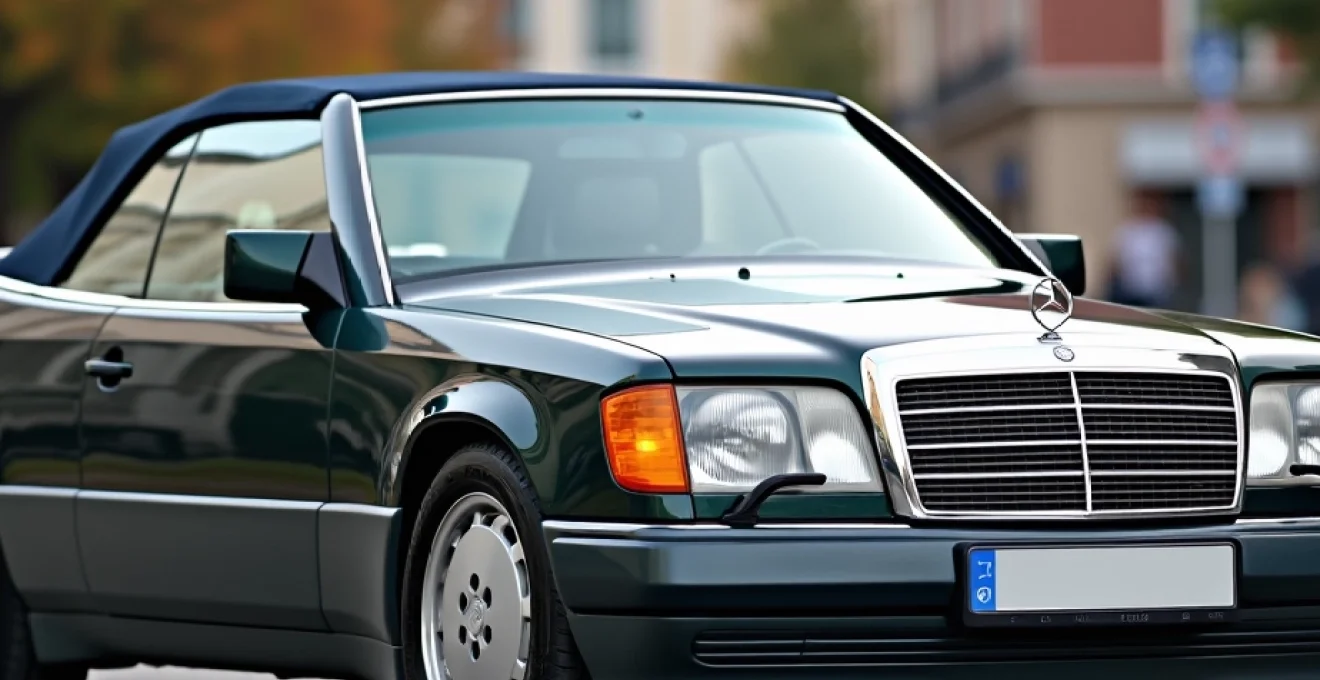
The Mercedes-Benz W124 Cabriolet stands as one of the most sophisticated and enduring open-top luxury cars of the 1990s. Launched in 1991 as the final addition to the acclaimed W124 series, this elegant convertible represented Mercedes-Benz’s commitment to engineering excellence and timeless design. Built on the foundation of what many consider the finest saloon car ever produced, the W124 Cabriolet combined the structural integrity and reliability of its four-door sibling with the emotional appeal of wind-in-the-hair motoring.
Despite commanding premium pricing that positioned it above rivals like the Saab 900 Convertible and BMW’s offerings, the W124 Cabriolet justified its cost through superior build quality, advanced engineering, and a refinement level that few convertibles could match. Today, these vehicles have transcended mere transportation to become coveted collector items, with pristine examples commanding substantial premiums in the classic car market.
Mercedes-benz W124 cabriolet design evolution and body engineering
Bruno sacco’s design philosophy and aerodynamic coefficient achievement
Under the guidance of chief designer Bruno Sacco, the W124 Cabriolet embodied Mercedes-Benz’s design philosophy of elegant simplicity without sacrificing functionality. The convertible’s silhouette maintained the saloon’s distinctive proportions whilst incorporating necessary structural modifications for open-top driving. Sacco’s team achieved a remarkably low drag coefficient of 0.29 for the closed convertible, exceptional for a soft-top vehicle of its era.
The design process involved extensive wind tunnel testing to optimise airflow patterns around the A-pillars and over the soft-top mechanism. This attention to aerodynamic detail contributed not only to fuel efficiency but also to reduced wind noise at highway speeds, a critical factor for convertible comfort. The integrated design approach ensured that even with the roof down, occupants experienced minimal buffeting at speeds up to 120 mph.
Pillarless hardtop construction and structural reinforcement analysis
Converting the W124 saloon to a cabriolet required substantial structural reinforcement to maintain chassis rigidity without the roof’s contribution to overall body strength. Mercedes engineers implemented a comprehensive strengthening programme that included thicker floor pans, reinforced door frames, and additional bracing within the A-pillars and rear bulkhead areas. The pillarless window design, whilst aesthetically striking, demanded precise engineering to ensure proper sealing and structural integrity.
The convertible’s body featured approximately 30% more high-strength steel compared to the saloon, concentrated in critical stress areas. This reinforcement added roughly 150 kilograms to the overall weight but maintained excellent torsional rigidity. Independent testing revealed that the W124 Cabriolet exhibited less than 2mm of A-pillar deflection under maximum loading conditions, substantially better than contemporary convertible rivals.
ASR Anti-Slip regulation integration in convertible architecture
The W124 Cabriolet pioneered the integration of Mercedes-Benz’s ASR (Anti-Slip Regulation) system into a convertible platform. This sophisticated traction control system utilised input from wheel speed sensors and the ABS system to prevent wheel spin during acceleration. The ASR system proved particularly valuable in the convertible variant, where weight distribution changes and reduced structural rigidity could potentially affect traction characteristics.
The system’s electronic brain could selectively apply braking force to spinning wheels whilst simultaneously reducing engine power output through ignition timing adjustment. This dual approach provided seamless traction management without driver intervention, enhancing both safety and driving confidence. The ASR integration required modified brake lines and additional electronic control units, contributing to the convertible’s higher manufacturing costs.
Soft-top mechanism engineering and hydraulic system performance
The W124 Cabriolet’s soft-top mechanism represented a masterpiece of mechanical engineering, utilising a hydraulic system that could lower or raise the roof in approximately 30 seconds. The five-layer canvas top incorporated sound-deadening materials and a heated rear window, providing year-round usability uncommon in convertibles of the period. The hydraulic pump, located in the boot, operated at pressures exceeding 100 bar to ensure smooth, consistent operation regardless of ambient temperature.
The folding mechanism employed a sophisticated linkage system that tucked the roof neatly beneath a rigid tonneau cover, maintaining the car’s elegant proportions when open. Emergency manual operation remained possible through a specially designed tool, ensuring that mechanical failure wouldn’t strand occupants with a permanently closed roof. The system’s reliability proved exceptional, with many examples maintaining full functionality after three decades of service.
Powertrain specifications and performance benchmarking
M104 Inline-Six engine technology in E320 cabriolet applications
The heart of the most desirable W124 Cabriolet variants was the M104 inline-six engine, a 3.2-litre unit that delivered 220 horsepower and 229 lb-ft of torque. This DOHC 24-valve powerplant featured sophisticated engine management systems and variable valve timing, technologies that were cutting-edge for the early 1990s. The M104’s iron block construction ensured exceptional longevity, with many examples exceeding 300,000 miles without major internal work.
The engine’s design incorporated a sophisticated knock detection system that continuously monitored combustion characteristics, adjusting ignition timing to optimise performance whilst protecting internal components. This adaptive approach allowed the M104 to run efficiently on various fuel octane ratings, making it suitable for global markets with differing fuel quality standards. The combination of advanced metallurgy and precise manufacturing tolerances resulted in an engine renowned for its smooth operation and exceptional refinement.
Mercedes-benz 4G-Tronic automatic transmission calibration
The W124 Cabriolet utilised Mercedes-Benz’s own 4G-Tronic automatic transmission, specifically calibrated for the convertible’s unique characteristics. This four-speed unit featured adaptive shift patterns that learned driver behaviour and adjusted accordingly. The transmission’s Electronic Control Unit monitored over 20 different parameters, including throttle position, vehicle speed, and even ambient temperature, to optimise shift timing and quality.
The system incorporated two distinct operating modes: Economy and Sport. In Economy mode, the transmission prioritised fuel efficiency through early upshifts and torque converter lock-up, whilst Sport mode held gears longer for enhanced performance. The transmission’s robust construction, featuring a cast-iron case and hardened steel internals, proved capable of handling the M104 engine’s output whilst providing seamless operation throughout its service life.
Multi-link rear suspension geometry and handling dynamics
The W124 Cabriolet employed Mercedes-Benz’s sophisticated multi-link rear suspension system, a design that provided exceptional handling characteristics whilst maintaining ride comfort. This system utilised five individual control arms per wheel, allowing precise control of wheel movement throughout the suspension travel. The geometry was specifically tuned for the convertible’s altered weight distribution and reduced structural rigidity.
The suspension’s design incorporated anti-squat and anti-dive characteristics that maintained optimal wheel alignment during acceleration and braking. Progressive springs and gas-charged dampers provided a comfortable ride quality whilst controlling body movement during enthusiastic driving. The system’s complexity required precise manufacturing tolerances and high-quality components, contributing to the W124’s reputation for exceptional handling dynamics that rivalled dedicated sports cars.
Acceleration metrics: 0-62mph performance analysis across engine variants
Performance testing revealed significant differences between the W124 Cabriolet’s engine variants. The entry-level E220 model achieved 0-62mph acceleration in 10.8 seconds, respectable for a luxury convertible of its era. The more powerful E320 reduced this figure to 7.8 seconds, placing it firmly in sports car territory. Top speed for the E320 was electronically limited to 155mph, though the underlying mechanical capability suggested higher speeds were easily achievable.
These performance figures were particularly impressive considering the convertible’s additional weight and altered aerodynamics compared to the saloon variants. The E320’s acceleration matched or exceeded many contemporary sports cars, whilst providing four-seat comfort and luxury amenities. Quarter-mile times of 15.9 seconds for the E320 demonstrated the engine’s strong mid-range torque delivery, essential for relaxed motorway cruising and overtaking manoeuvres.
Build quality assessment and material engineering standards
The W124 Cabriolet exemplified Mercedes-Benz’s commitment to exceptional build quality during what many consider the marque’s golden era. Each vehicle underwent rigorous quality control processes, including individual inspection of over 2,000 components before final assembly. The attention to detail extended from major structural elements to minor trim pieces, with tolerances maintained to aerospace industry standards.
Material selection prioritised longevity over cost considerations. Interior components utilised high-grade leather, dense foam padding, and durable plastic compounds that retained their appearance and functionality decades after manufacture. The soft-top mechanism incorporated marine-grade stainless steel components and military-specification hydraulic seals, ensuring reliable operation in diverse climatic conditions. Paint processes involved multiple primer coats and a sophisticated base coat/clear coat system that provided exceptional durability and colour retention.
Quality control extended to the smallest details, including the precise adjustment of panel gaps, door alignment, and interior component fit. Each convertible received individual calibration of its soft-top mechanism, ensuring smooth operation and proper sealing. This meticulous approach to manufacturing resulted in vehicles that maintained their premium feel and reliability throughout extended service lives, contributing to the W124’s legendary reputation for build quality.
The W124 Cabriolet represented the pinnacle of Mercedes-Benz’s engineering excellence, combining advanced technology with traditional craftsmanship to create a convertible that set new standards for the luxury segment.
Market positioning against BMW E36 cabriolet and saab 900 convertible
The W124 Cabriolet entered a competitive market segment dominated by established players, yet carved out a unique position through superior engineering and build quality. Priced approximately 15% higher than the BMW E36 Cabriolet and 25% above the Saab 900 Convertible, the Mercedes justified its premium through advanced features and exceptional refinement. Market research revealed that W124 buyers prioritised long-term reliability and prestige over initial purchase price considerations.
Comparative testing by automotive journalists consistently highlighted the Mercedes’ superior ride quality, interior refinement, and structural rigidity. Whilst the BMW offered more engaging handling characteristics and the Saab provided distinctive Scandinavian design, neither matched the W124’s overall sophistication and engineering depth. The Mercedes’ hydraulic soft-top mechanism operated more smoothly than competitors’ manual or electric systems, whilst interior noise levels remained significantly lower at highway speeds.
Sales figures reflected this positioning strategy, with the W124 Cabriolet achieving lower absolute volumes but higher profit margins per unit. The model attracted buyers who viewed it as a long-term investment rather than a short-term indulgence. This approach proved prescient, as W124 Cabriolets retained their value more effectively than rivals, with many examples appreciating in recent years as their collector status became established.
The competitive landscape also included offerings from Audi and Volvo, though neither achieved the W124’s combination of performance, luxury, and reliability. Independent reliability surveys consistently ranked the Mercedes at the top of the convertible segment, with significantly lower breakdown rates and warranty claims compared to competitors. This reputation for dependability became a key selling point, particularly for buyers who intended to keep their vehicles for extended periods.
Ownership experience and Long-Term reliability evaluation
Common hydraulic roof failure points and preventive maintenance
Despite its sophisticated engineering, the W124 Cabriolet’s hydraulic roof system requires specific maintenance attention to ensure continued reliability. The most common failure points include hydraulic pump wear, typically manifesting after 100,000 miles of operation, and seal degradation in the actuating cylinders. Preventive maintenance involves annual hydraulic fluid replacement and periodic lubrication of the mechanical linkages using Mercedes-approved lubricants.
Early warning signs of impending hydraulic system problems include slower roof operation, unusual noises during cycling, and incomplete roof closure or opening. Addressing these symptoms promptly can prevent more expensive repairs, as hydraulic pump replacement costs significantly more than routine maintenance. Professional technicians recommend exercising the roof mechanism monthly, even during winter storage, to maintain seal flexibility and prevent component seizure.
Wiring harness degradation in A-Pillar junction areas
A significant concern for W124 Cabriolet owners involves the degradation of wiring harnesses, particularly in the A-pillar junction areas where repeated roof operation can cause flexing and eventual wire fatigue. Mercedes-Benz’s environmental initiative to use biodegradable wire insulation inadvertently created long-term reliability issues as this insulation degraded over time, leading to short circuits and electrical malfunctions.
Symptoms of wiring harness problems include intermittent electrical faults, warning light activation, and complete system failures. Professional diagnosis often requires specialised equipment to identify damaged circuits within the extensive wiring looms. Replacement with modern, non-biodegradable harnesses provides a permanent solution, though the cost can reach several thousand pounds depending on the extent of damage. Preventive inspection of visible wiring during routine maintenance can identify problems before they become critical failures.
Climate control system performance in Open-Top configuration
The W124 Cabriolet’s climate control system required specific engineering adaptations to function effectively with the roof down. The system incorporated additional sensors and modified air distribution patterns to account for the open cabin environment. Heated seats became essential equipment rather than luxury options, providing direct warmth when ambient heating proved insufficient during open-top driving in cooler conditions.
System performance varied significantly between roof-up and roof-down configurations, with cooling capacity reduced by approximately 30% when the roof was lowered due to increased air circulation and solar heat gain. The automatic climate control system adapted to these conditions through sophisticated programming that adjusted fan speeds, air distribution, and compressor cycling based on roof position. Regular maintenance of the system’s components, including cabin filter replacement and refrigerant level checks, ensures optimal performance throughout the vehicle’s service life.
Resale value trajectory analysis: 1991-2024 market data
The W124 Cabriolet’s resale value trajectory demonstrates the model’s transition from luxury car to collectible classic. Initial depreciation followed typical luxury car patterns, with values declining approximately 20% annually for the first five years. However, depreciation slowed significantly after 2005, with well-maintained examples beginning to stabilise and eventually appreciate in value from 2015 onwards.
Market data reveals that E320 models with comprehensive service histories and original specifications command premium pricing, often exceeding £25,000 for exceptional examples. Convertibles with rare colour combinations or low mileage achieve even higher valuations, with some pristine examples reaching £40,000 or more. The manual transmission option, once considered undesirable in luxury cars, now adds significant value due to its rarity and enthusiast appeal.
| Year Range | Average Value (£) | Condition Premium (%) | Market Trend |
|---|---|---|---|
| 1991-1997 | 45,000-65,000 | N/A | New Car Sales |
| 2000-2005 | 15,000-25,000 | 50% | Rapid Depreciation |
| 2010-2015 | 8,000-18,000 | 75% | Stabilisation |
| 2020-2024 | 15,000-45,000 | 150% | Strong Appreciation |
Collector car status and investment potential assessment
The W124 Cabriolet has achieved recognised collector car status, driven by increasing appreciation for 1990s automotive engineering excellence and the model’s inherent rarity. Production numbers remained relatively low throughout the model’s six-year lifespan, with fewer than 35,000 units manufactured globally. This scarcity, combined with the natural attrition rate of convertible vehicles, has
created a significant collector market, with examples in exceptional condition commanding prices that reflect their historical importance and engineering significance.
Investment potential varies considerably based on condition, provenance, and specification. The most desirable variants include manual transmission models, AMG-tuned examples, and vehicles with comprehensive documentation. Market analysts predict continued appreciation for well-maintained examples, particularly as the automotive industry transitions away from internal combustion engines. The W124 Cabriolet represents one of the final expressions of traditional Mercedes-Benz engineering philosophy before the introduction of cost-reduction measures and shared platforms.
Professional appraisers now classify pristine W124 Cabriolets as blue-chip classics, vehicles with established provenance and stable market demand. Insurance companies have adjusted their valuation methodologies to reflect this status, with many examples now qualifying for specialist classic car policies. The model’s investment credentials are further strengthened by its practical usability, allowing owners to enjoy their investment rather than merely storing it as a static asset.
Regional market variations show European examples commanding higher prices than those imported from other markets, partly due to specification differences and partly due to preservation advantages in temperate climates. The presence of complete service records can add 20-30% to a vehicle’s value, whilst modifications or non-original components significantly impact collectibility. Restoration costs must be carefully evaluated against potential returns, as professional-quality work can easily exceed the value of average examples.
Future market predictions suggest that the W124 Cabriolet will continue its appreciation trajectory as younger collectors who grew up admiring these vehicles reach peak earning years. The model’s combination of advanced technology, exceptional build quality, and emotional appeal positions it favourably against other collector cars of similar vintage. However, potential investors should carefully consider ongoing maintenance requirements and the availability of specialist knowledge, as these factors will increasingly influence long-term ownership costs and resale values.