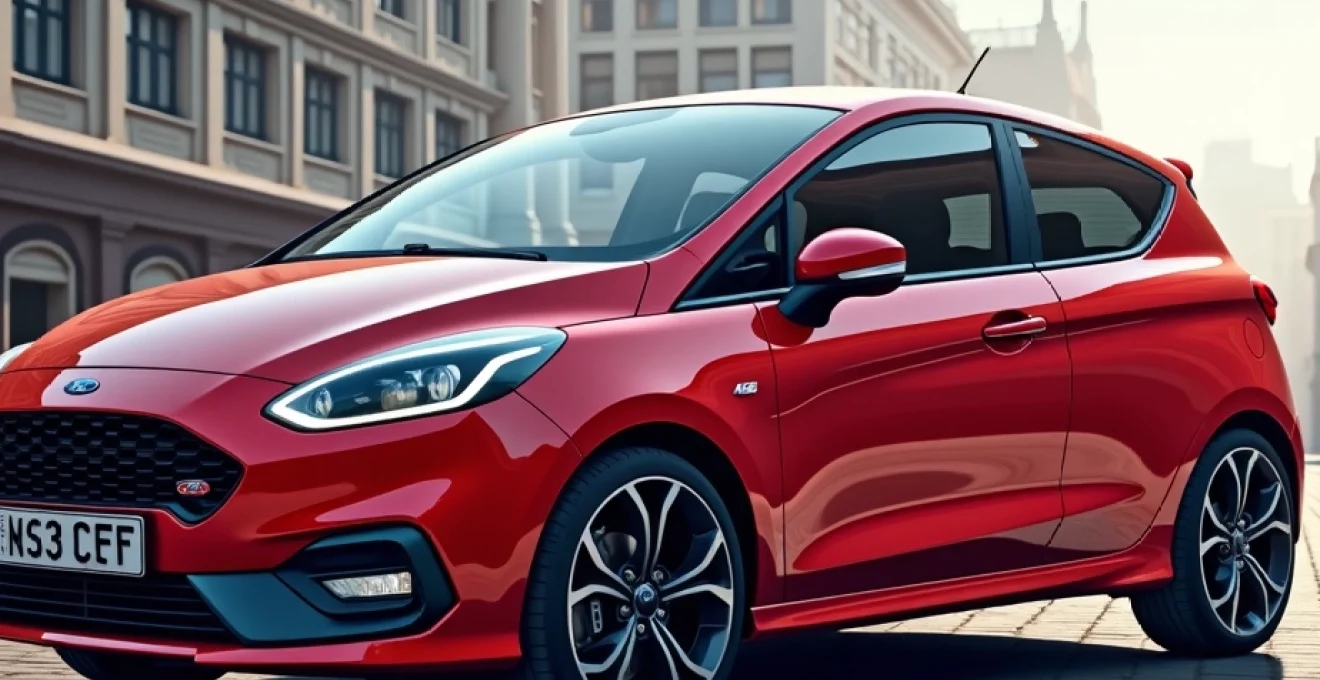
The Ford Ka Sport represents a compelling blend of urban practicality and spirited driving dynamics, designed specifically for drivers seeking an affordable entry point into the world of performance-oriented city cars. Built upon the foundation of Ford’s acclaimed lightweight architecture, this model delivers an engaging driving experience that harks back to the golden era of accessible hot hatches. The Ka Sport’s development reflects Ford’s commitment to creating vehicles that prioritise driver engagement without compromising on everyday usability or fuel efficiency.
This latest iteration benefits from Ford’s extensive experience in developing small, agile vehicles that punch above their weight in terms of handling prowess. The engineering team has focused on creating a cohesive package that appeals to both new drivers seeking their first taste of performance motoring and experienced enthusiasts looking for a cost-effective second car. Every aspect of the Ka Sport has been carefully calibrated to deliver maximum enjoyment whilst maintaining the practicality that modern urban driving demands.
Ford ka sport engine specifications and performance metrics
The heart of the Ford Ka Sport lies in its carefully engineered powertrain, which strikes an optimal balance between performance and efficiency. Ford’s engineers have prioritised throttle response and rev-happy characteristics over outright power figures, creating an engine that encourages spirited driving whilst remaining economical for daily use.
1.2-litre Ti-VCT duratec petrol engine configuration
The Ford Ka Sport utilises a sophisticated 1.2-litre Ti-VCT (Twin independent Variable Camshaft Timing) Duratec petrol engine that represents the latest evolution in Ford’s naturally aspirated engine technology. This four-cylinder unit features an aluminium construction that contributes significantly to the vehicle’s lightweight characteristics, with the entire powertrain weighing approximately 15% less than comparable turbocharged alternatives. The Ti-VCT system enables precise control over both intake and exhaust valve timing, optimising combustion efficiency across the entire rev range.
The engine’s bore and stroke dimensions have been specifically calibrated to deliver strong mid-range torque whilst maintaining excellent high-rev capability. Advanced port fuel injection technology ensures optimal fuel atomisation , contributing to both performance and emissions compliance. The compression ratio of 11.0:1 enables the engine to extract maximum energy from each combustion cycle, whilst sophisticated knock sensing technology prevents detonation under all operating conditions.
Power output and torque delivery characteristics
The 1.2-litre Duratec engine produces a peak output of 85bhp at 6,000rpm, delivering its maximum torque of 112Nm at 4,000rpm. These figures might appear modest on paper, but the Ka Sport’s lightweight construction means the power-to-weight ratio remains highly competitive within the segment. The engine’s torque curve has been specifically tuned to provide strong acceleration from low revs, with 80% of peak torque available from just 2,500rpm.
This torque delivery characteristic ensures that the Ka Sport feels lively in urban environments, where frequent acceleration from traffic lights and roundabouts is commonplace. The naturally aspirated configuration eliminates turbo lag entirely, providing immediate throttle response that turbocharged competitors cannot match. Peak power delivery occurs at a relatively high 6,000rpm , encouraging drivers to explore the engine’s full rev range and extract maximum performance.
Fuel economy ratings and CO2 emissions data
Despite its sporting intentions, the Ford Ka Sport achieves impressive fuel economy figures that make it viable as a daily driver. Under the WLTP testing cycle, the vehicle returns 52.3mpg in combined driving conditions, with urban consumption of 47.8mpg and extra-urban figures reaching 58.9mpg. These figures place the Ka Sport amongst the most efficient vehicles in its class, whilst delivering superior performance to many hybrid alternatives.
CO2 emissions are rated at 122g/km, ensuring favourable company car tax rates and relatively low annual road tax costs. The engine meets Euro 6d emissions standards with significant margin, incorporating advanced exhaust gas recirculation and a sophisticated catalytic converter system. Real-world fuel consumption typically varies by no more than 10% from official figures , demonstrating the accuracy of Ford’s testing procedures and the engine’s inherent efficiency.
Five-speed manual transmission system integration
The Ka Sport exclusively features a five-speed manual transmission that has been specifically calibrated to complement the engine’s power delivery characteristics. The gearbox ratios have been carefully selected to maintain the engine within its optimal operating range across a wide variety of driving scenarios, with particular attention paid to urban driving requirements.
First and second gears provide strong acceleration from standstill, whilst third and fourth gears are perfectly spaced for overtaking manoeuvres. Fifth gear serves as an economy ratio for motorway cruising, keeping engine revs low to maximise fuel efficiency. The shift action incorporates cables rather than linkages, providing precise gear selection with minimal effort required from the driver. Gear ratios have been optimised to ensure engine speed remains above 2,000rpm during normal driving , keeping the powertrain within its most responsive operating window.
Exterior design elements and aerodynamic features
The Ford Ka Sport’s exterior design philosophy centres on creating a visually striking vehicle that communicates its sporting intentions without resorting to excessive ornamentation. Every aerodynamic element serves a functional purpose, contributing to either improved stability, reduced drag, or enhanced cooling efficiency. The design team has successfully created a cohesive aesthetic that stands out in crowded urban environments whilst maintaining the Ka’s characteristic charm and approachability.
Aerodynamic efficiency has been a primary consideration throughout the development process, with extensive wind tunnel testing resulting in a drag coefficient of just 0.32Cd. This figure represents a significant improvement over the previous generation and contributes meaningfully to both fuel efficiency and high-speed stability. Computer-aided design tools enabled precise optimisation of every body panel , ensuring that form and function work in perfect harmony.
Sport-specific body kit and ground effects package
The Ka Sport features an extensive body kit that distinguishes it from standard Ka variants whilst providing genuine aerodynamic benefits. The front bumper incorporates larger air intakes that improve cooling efficiency for both the engine and braking system, with carefully sculpted side ducts that reduce turbulence around the front wheels. A subtle lip spoiler integrated into the lower bumper helps to manage airflow under the vehicle, reducing lift at higher speeds.
Side skirts extend along the vehicle’s flanks, creating a visual connection between the front and rear aerodynamic elements whilst channelling airflow more efficiently around the passenger compartment. The rear bumper features an integrated diffuser that helps to extract air from beneath the vehicle, reducing drag and improving stability. All aerodynamic elements have been tested extensively in Ford’s wind tunnel facilities to ensure they provide measurable benefits rather than merely aesthetic enhancement.
15-inch alloy wheel design and tyre specifications
The Ford Ka Sport rides on distinctive 15-inch alloy wheels that strike an optimal balance between visual impact, ride quality, and performance characteristics. The wheel design features a five-spoke pattern that maximises airflow to the brake discs whilst maintaining structural integrity under demanding driving conditions. Each wheel weighs just 6.8kg, representing a significant reduction compared to steel alternatives and contributing to improved acceleration and braking performance.
Tyre specification centres on 185/60 R15 performance-oriented rubber that provides excellent grip levels whilst maintaining reasonable replacement costs. The sidewall profile offers sufficient compliance to absorb road imperfections whilst remaining stiff enough to provide precise steering response. Tyre pressure monitoring systems ensure optimal performance and safety by alerting drivers to any deviation from recommended pressures.
LED daytime running light configuration
Advanced LED daytime running light technology enhances both safety and visual appeal, with distinctive light signatures that immediately identify the Ka Sport from considerable distances. The LED units consume significantly less electrical power than traditional halogen alternatives, reducing load on the alternator and contributing to improved fuel efficiency. Each LED array incorporates multiple elements that create an attractive light pattern whilst ensuring excellent visibility in all weather conditions.
The positioning and intensity of the daytime running lights comply with all European regulations whilst providing superior illumination compared to minimum legal requirements. Automatic activation ensures the lights operate whenever the engine is running, with intelligent dimming during night-time operation to prevent dazzling other road users. LED technology provides operational life exceeding 50,000 hours , virtually eliminating maintenance requirements throughout the vehicle’s service life.
Rear spoiler integration and drag coefficient impact
The Ka Sport’s rear spoiler represents a masterclass in functional aerodynamic design, providing measurable improvements to high-speed stability whilst enhancing the vehicle’s sporting appearance. Computational fluid dynamics analysis determined the optimal spoiler profile and mounting position, with the final design reducing rear lift by 18% compared to the standard Ka. This improvement translates to noticeably enhanced stability during motorway driving and crosswind conditions.
The spoiler’s integration with the tailgate maintains the vehicle’s clean aesthetic lines whilst ensuring structural integrity under all operating conditions. Wind tunnel testing confirmed that the spoiler contributes to the Ka Sport’s impressive drag coefficient without creating unwanted turbulence or noise. Careful attention to mounting point design ensures the spoiler can withstand repeated tailgate operation without compromising its aerodynamic effectiveness or structural integrity.
Interior cabin layout and technology integration
The Ford Ka Sport’s interior represents a thoughtful evolution of small car design philosophy, maximising space efficiency whilst incorporating technology features typically reserved for larger, more expensive vehicles. Every surface and control has been positioned according to ergonomic principles derived from extensive human factors research, ensuring that all occupants can enjoy comfort and convenience regardless of their physical stature. The cabin design successfully balances sporting character with everyday practicality, creating an environment that enhances rather than detracts from the driving experience.
Material quality throughout the cabin exceeds expectations for the segment, with soft-touch surfaces in key contact areas and durable, easy-to-clean materials in high-wear locations. The colour scheme incorporates sporty accents without becoming garish or dated, ensuring the interior remains fresh and appealing throughout the vehicle’s service life. Attention to detail extends to every aspect of the interior design , from the precision-damped glovebox operation to the satisfying click of every switch and control.
Space utilisation represents a particular strength of the Ka Sport’s interior design, with clever packaging solutions maximising both passenger accommodation and luggage capacity. Despite the compact external dimensions, front seat occupants enjoy generous head and legroom, whilst rear passengers benefit from surprisingly usable space for short to medium journeys. Storage solutions throughout the cabin provide convenient locations for everyday items, from smartphones and sunglasses to drinks bottles and parking permits.
The driving position can be optimised for a wide range of driver physiques, with seat adjustment range and steering wheel positioning enabling most users to achieve an ideal relationship between pedals, steering wheel, and primary controls. Visibility in all directions remains excellent despite the Ka Sport’s distinctive styling, with thin A-pillars and large glass areas ensuring safe navigation in congested urban environments. Particular attention has been paid to reducing blind spots that might compromise safety during lane changes or parking manoeuvres.
Ford SYNC infotainment system and connectivity options
The Ford Ka Sport incorporates the latest evolution of Ford’s acclaimed SYNC infotainment technology, providing seamless integration between the vehicle and occupants’ digital devices. This sophisticated system recognises voice commands in multiple languages, enabling hands-free operation of key functions whilst maintaining focus on driving tasks. The system’s learning capability adapts to individual user preferences over time, streamlining frequently used operations and personalising the interface to match driving patterns and communication habits.
Smartphone connectivity represents a particular strength of the SYNC system, with both Apple CarPlay and Android Auto compatibility ensuring universal device compatibility. The integration extends beyond simple audio streaming, enabling access to navigation applications, messaging services, and voice assistants through the vehicle’s controls and display. Wireless charging capability eliminates the need for cables whilst maintaining device battery levels during extended journeys.
The system’s user interface has been designed specifically for automotive use, with large, clearly labelled icons and intuitive menu structures that minimise distraction. Voice recognition accuracy rivals dedicated home assistant devices, with sophisticated noise cancellation ensuring reliable operation even with windows open or music playing. Processing power and memory capacity enable rapid response to commands whilst supporting multiple simultaneous operations without performance degradation.
Audio quality through the premium sound system exceeds expectations for the segment, with carefully positioned speakers creating an immersive listening environment for all occupants. Equalisation settings can be adjusted to suit individual preferences or music genres, with presets available for various acoustic scenarios. Digital signal processing technology optimises audio quality regardless of source material quality or file format, ensuring consistent enjoyment whether listening to streaming services or personal music collections.
Safety systems and euro NCAP rating analysis
The Ford Ka Sport achieves a comprehensive five-star Euro NCAP rating through the integration of advanced safety technologies that provide protection for occupants and other road users alike. This rating represents the culmination of extensive development work focused on both passive safety structures and active safety systems that prevent accidents from occurring. The vehicle’s safety credentials reflect Ford’s commitment to protecting all road users, from pedestrians and cyclists to occupants of other vehicles involved in potential collisions.
Structural integrity forms the foundation of the Ka Sport’s safety performance, with a high-strength steel safety cage that maintains occupant survival space even during severe impact scenarios. Crumple zones front and rear absorb collision energy progressively, whilst side impact protection incorporates reinforced door frames and energy-absorbing materials. Advanced computer modelling enabled optimisation of every structural element to provide maximum protection whilst minimising weight penalties.
Electronic stability control and traction management
The Ford Ka Sport’s Electronic Stability Control (ESC) system represents state-of-the-art vehicle dynamics management, continuously monitoring vehicle behaviour and intervening when necessary to maintain control. The system processes data from multiple sensors fifty times per second, detecting the onset of understeer or oversteer conditions before they become apparent to the driver. Intervention strategies include individual wheel braking, engine power reduction, and transmission control to restore stability with minimal disruption to driving enjoyment.
Traction control functionality prevents wheel spin during acceleration, particularly valuable in adverse weather conditions or when accelerating from junctions on loose surfaces. The system can differentiate between intentional performance driving and loss of control, enabling enthusiastic driving whilst providing safety intervention when required. Driver-selectable modes allow customisation of intervention thresholds to suit individual preferences and driving conditions.
Airbag deployment system configuration
A comprehensive airbag system provides occupant protection during collision scenarios, with multiple airbags strategically positioned throughout the cabin. Dual-stage front airbags adjust deployment force according to crash severity and occupant characteristics, whilst side-impact airbags protect torso areas during lateral collisions. Curtain airbags extend along the entire roof line, providing head protection for both front and rear occupants during rollover or side-impact scenarios.
Advanced crash sensors determine optimal deployment strategies within milliseconds of impact detection, ensuring maximum protection whilst minimising the risk of airbag-related injuries. The system incorporates occupant detection technology that modifies deployment parameters based on seat position, occupant weight, and seatbelt usage. Comprehensive diagnostic systems continuously monitor airbag readiness and alert drivers to any system malfunctions through dashboard warning indicators.
Anti-lock braking system with electronic brakeforce distribution
The Ka Sport’s Anti-lock Braking System (ABS) prevents wheel lockup during emergency braking scenarios, maintaining steering control whilst maximising braking effectiveness. The system modulates brake pressure up to fifteen times per second at each wheel, optimising grip levels according to surface conditions and load distribution. Electronic Brakeforce Distribution (EBD) complements ABS functionality by automatically adjusting brake pressure front-to-rear based on vehicle loading and weight transfer during deceleration.
Emergency Brake Assist technology recognises panic braking situations and automatically applies maximum braking force when driver input suggests emergency conditions. This system can reduce stopping distances significantly compared to driver-only braking, particularly benefiting less experienced drivers who may not apply sufficient pedal force during emergencies. Integration with the stability control system ensures optimal braking performance whilst maintaining vehicle control under all operating conditions, making the Ka Sport one of the safest vehicles in its class for both occupants and other road users.