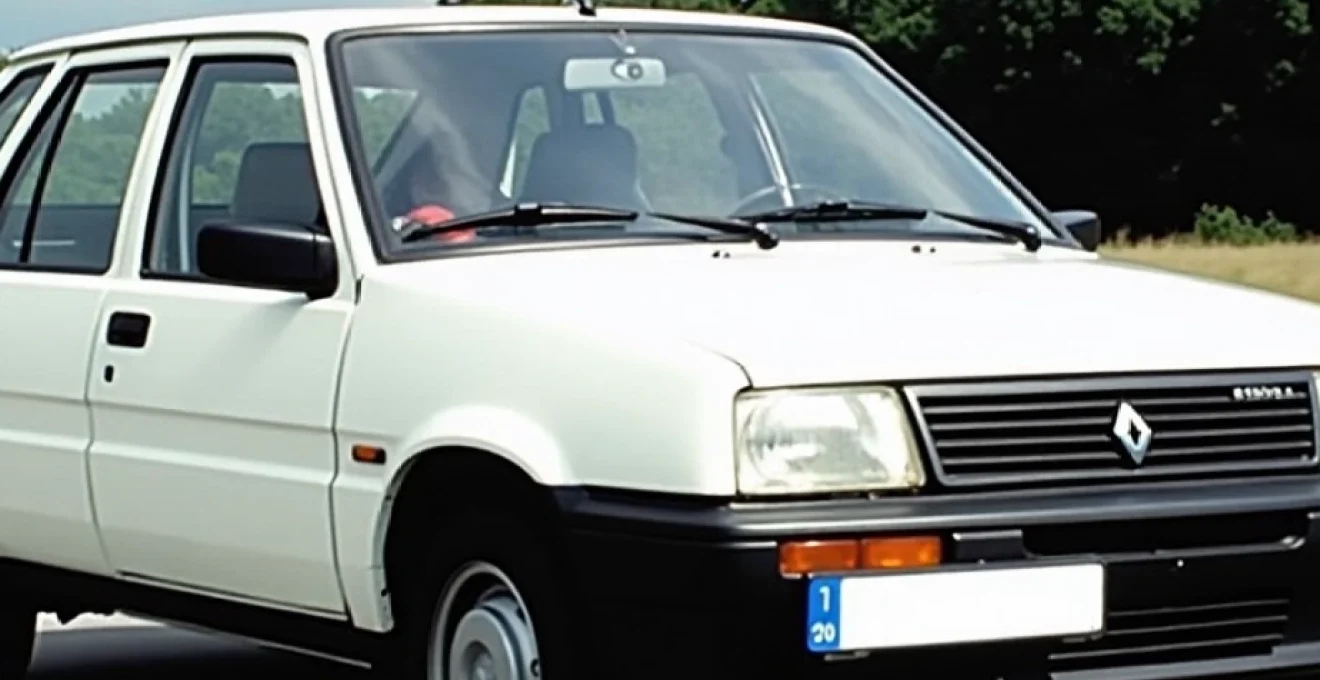
The Renault 19 16V Chamade represents a fascinating chapter in French automotive history, embodying Renault’s transition from turbocharged performance to naturally aspirated multi-valve excellence. Launched in 1990 as the saloon variant of the celebrated 16V hatchback, the Chamade delivered 137 bhp through its sophisticated F7P engine whilst offering the practical four-door configuration that many families demanded. This model marked Renault’s bold departure from forced induction technology, embracing the emerging trend of high-revving, naturally aspirated engines that would define the hot saloon segment throughout the early 1990s. Despite facing criticism from contemporary motoring journalists who questioned its interior quality and refinement, the Chamade proved that French engineering could produce genuinely engaging driver’s cars when properly executed.
Renault 19 16V chamade performance specifications and engine analysis
F7P 1.8-litre 16-valve engine technical overview
The heart of the Chamade’s appeal lay in its sophisticated F7P powerplant, an all-aluminium 1764cc four-cylinder engine that represented Renault’s engineering prowess in the early 1990s. This unit featured a cast-iron cylinder liner construction within an aluminium block, delivering exceptional thermal efficiency whilst maintaining structural integrity under high-stress conditions. The engine employed a cross-flow cylinder head design with twin overhead camshafts operating four valves per cylinder, enabling superior breathing characteristics compared to conventional eight-valve configurations.
Renault’s engineers positioned the exhaust manifold at the rear of the engine bay, an unusual configuration that whilst space-efficient, created significant heat management challenges. This design choice would later contribute to reliability concerns, particularly affecting the starter motor and alternator positioning. The F7P incorporated hydraulic valve adjustment, eliminating the need for periodic valve clearance maintenance whilst ensuring consistent performance throughout the engine’s operational life.
Power output and torque delivery characteristics
The F7P engine delivered its 137 bhp peak power output at 6500 rpm, immediately signalling its high-revving nature and preference for enthusiastic driving styles. Maximum torque of 122 lb-ft arrived at 4500 rpm, creating a power delivery curve that demanded commitment from drivers seeking optimal performance. This characteristic made the Chamade distinctly different from turbocharged contemporaries, rewarding those willing to explore the upper reaches of the rev range.
The engine’s naturally aspirated configuration provided linear power delivery without the sudden surge characteristics of turbocharged alternatives. This predictability proved particularly beneficial during spirited driving on winding roads, where consistent throttle response enabled precise vehicle control. However, the high-revving nature meant that urban driving could feel somewhat sluggish unless you maintained higher engine speeds than typical family saloon drivers might expect.
Compression ratio and fuel management systems
Renault specified a compression ratio of 10.5:1 for the F7P engine, representing an aggressive approach that maximised power extraction whilst maintaining compatibility with standard unleaded petrol. This relatively high compression ratio contributed significantly to the engine’s impressive specific power output of 77.5 bhp per litre, exceptional for naturally aspirated technology of the early 1990s. The engine management system employed Renault’s proprietary Fenix 3B electronic fuel injection, providing precise fuel metering across the entire operational range.
The sophisticated engine management system incorporated knock detection and adaptive fuel mapping, ensuring optimal performance regardless of fuel quality variations. This technology proved particularly beneficial for European markets where fuel octane ratings varied significantly between countries. The system’s ability to adapt to different driving conditions contributed to the engine’s reputation for reliability when properly maintained, despite its high-performance orientation.
Transmission options: BE1 manual gearbox performance
The Chamade employed Renault’s BE1 five-speed manual transmission, a robust unit that proved capable of handling the F7P engine’s power output whilst providing precise gear selection. The gearbox featured closely spaced ratios optimised for the engine’s high-revving characteristics, ensuring that drivers could maintain the powerplant within its optimal performance band. First gear provided adequate acceleration from standstill, whilst the remaining ratios enabled effective exploitation of the engine’s narrow power band.
Gear selection quality varied between individual examples, with some owners reporting notchy operation, particularly when cold. The transmission’s fourth gear mounting point shared components with later Clio models, demonstrating Renault’s platform-sharing philosophy that would become increasingly important throughout the 1990s. Despite occasional criticism regarding refinement, the BE1 transmission proved mechanically robust, with many examples surviving high-mileage use without major mechanical intervention.
Chassis dynamics and suspension engineering assessment
Macpherson strut front suspension geometry
The Chamade’s front suspension employed a conventional MacPherson strut configuration enhanced with specifically tuned components to complement the 16V model’s performance aspirations. Renault engineers selected progressive-rate springs and gas-filled dampers to provide the optimal balance between ride comfort and handling precision. The suspension geometry incorporated negative camber settings that improved cornering stability whilst maintaining acceptable tyre wear characteristics for daily driving use.
Anti-roll bar specification differed from standard 19 models, with the 16V variants receiving thicker bars to reduce body roll during enthusiastic cornering. The front suspension mounting points were reinforced on early production models following reports of stress-related failures, indicating Renault’s commitment to addressing durability concerns. These modifications, implemented during 1993, significantly improved long-term reliability whilst maintaining the suspension’s dynamic characteristics.
Torsion beam rear axle configuration
Renault’s choice of torsion beam rear suspension reflected contemporary French automotive engineering philosophy, prioritising packaging efficiency and manufacturing cost-effectiveness over ultimate sophistication. The system employed four transverse torsion bars working in conjunction with trailing arms to provide wheel location and spring functionality. This configuration delivered surprisingly effective handling characteristics, particularly considering its relatively simple construction compared to independent alternatives.
The rear suspension’s behaviour proved particularly well-suited to the Chamade’s front-wheel-drive configuration, providing predictable lift-off oversteer characteristics that enhanced driver engagement without compromising safety. Contemporary road tests frequently praised the chassis balance, noting that the rear suspension’s compliance allowed effective power deployment whilst maintaining directional stability. The system’s robust construction proved highly durable, with many examples surviving decades of use without significant mechanical degradation.
Steering response and road holding capabilities
The Chamade featured Renault’s rack-and-pinion steering system with variable assistance levels depending on specification. Higher-specification models incorporated speed-sensitive power steering that reduced assistance at higher speeds, improving road feel and directional stability during spirited driving. The steering ratio provided an excellent balance between low-speed manoeuvrability and high-speed stability, contributing significantly to the car’s reputation for engaging dynamics.
Road holding capabilities impressed contemporary testers, with the Chamade demonstrating grip levels that challenged more expensive German alternatives. The chassis tuning enabled drivers to explore the car’s limits safely, with progressive breakaway characteristics that warned of approaching traction limits. This predictability proved particularly valuable during wet weather driving, where the car’s balanced handling characteristics inspired confidence even in challenging conditions.
Braking system performance with ABS integration
Renault equipped higher-specification Chamade models with Bosch ABS technology, representing advanced safety equipment for the early 1990s. The braking system employed ventilated front discs and solid rear discs, providing adequate stopping power for the car’s performance capabilities. Brake pedal feel received praise from contemporary testers, offering good progression and consistent performance during extended use.
The ABS system’s calibration proved well-suited to the car’s handling characteristics, intervening predictably without unsettling the chassis balance. This integration contributed to the Chamade’s reputation for safety, enabling drivers to maintain steering control during emergency braking situations. However, some owners reported premature brake component wear, particularly front disc and pad combinations, requiring more frequent maintenance than some competitors.
Interior design philosophy and ergonomic analysis
The Chamade’s interior design reflected Renault’s functional approach to cabin architecture, prioritising driver engagement over luxury refinement. The dashboard layout featured a distinctive slab-sided design that attracted significant criticism from contemporary reviewers, who frequently commented on the use of low-grade plastic materials throughout the cabin. Despite these shortcomings, the driving position proved exemplary, with supportive seats that provided excellent lateral support during spirited driving sessions.
Renault’s decision to position window switches on the dashboard rather than door panels created ergonomic challenges, particularly for right-hand-drive markets where the conversion compromised optimal switch placement. The instrument cluster featured clear, legible gauges with a central tachometer that emphasised the car’s sporting pretensions. However, the interior’s propensity for developing squeaks and rattles became legendary among owners, with even minor road surface irregularities generating unwanted cabin noise.
The front seats deserved particular praise, offering support levels that rivalled dedicated sports cars. Contemporary reviewers frequently compared the seat quality to rally car specifications , noting their ability to maintain driver positioning during aggressive cornering manoeuvres. Optional leather upholstery improved visual appeal whilst addressing durability concerns associated with the standard cloth materials, which resembled aftermarket seat covers according to harsh contemporary assessments.
Rear passenger accommodation proved adequate for the compact saloon segment, though tall adults might find headroom marginal. The boot offered reasonable capacity for a sporting saloon, though the high loading lip could complicate heavy item transportation. Overall interior space utilisation demonstrated typical French efficiency, maximising passenger room within the available exterior dimensions whilst maintaining structural integrity requirements.
Comparative market position against contemporary hot saloons
BMW 318i E30 performance benchmarking
The BMW 318i E30 represented the Chamade’s primary German challenger, offering rear-wheel drive sophistication and premium brand cachet that French alternatives struggled to match. BMW’s 1.8-litre four-cylinder engine produced similar power outputs, though delivered through different characteristics that emphasised mid-range torque over high-rev excitement. The BMW’s superior build quality and materials became immediately apparent during direct comparison, highlighting Renault’s compromises in pursuit of competitive pricing strategies.
However, the Chamade demonstrated superior dynamic engagement through corners, with its front-wheel-drive configuration providing more direct feedback and involving driving characteristics. The French car’s suspension tuning enabled more aggressive cornering techniques, whilst the BMW’s rear-drive layout required greater skill to exploit fully. This difference proved particularly significant for drivers seeking maximum entertainment value rather than ultimate refinement, positioning the Chamade as the enthusiast’s choice over the executive’s preference.
Peugeot 405 mi16 competitive analysis
Peugeot’s 405 Mi16 offered the closest mechanical comparison to the Chamade, employing a similar naturally aspirated 16-valve configuration though with larger displacement and greater power output. The Peugeot’s 1.9-litre engine produced 158 bhp, providing superior straight-line performance whilst maintaining the high-revving characteristics that defined this engine family. Interior quality standards exceeded Renault’s efforts, with better material selection and assembly standards that addressed many criticisms levelled at the Chamade.
The 405’s suspension configuration employed more sophisticated independent rear suspension, delivering superior ride quality and handling refinement compared to the Chamade’s torsion beam arrangement. However, the Renault countered with more aggressive styling and a lower purchase price that attracted budget-conscious performance enthusiasts. Both cars shared similar reliability characteristics, with high maintenance requirements offset by exceptional driving rewards when properly maintained and enthusiastically driven.
Citroën BX 16V market positioning
Citroën’s BX 16V represented perhaps the most innovative alternative within the French hot saloon segment, combining hydropneumatic suspension technology with naturally aspirated multi-valve performance. The BX’s unique suspension system provided unmatched ride quality over poor surfaces whilst maintaining impressive handling capabilities that challenged conventional suspension alternatives. Power output matched the Chamade’s specifications, though delivered through distinctively different characteristics that reflected Citroën’s individual engineering philosophy.
The BX’s aerodynamic efficiency exceeded both Renault and Peugeot alternatives, contributing to superior high-speed fuel economy and reduced wind noise levels. However, the Citroën’s complex suspension system demanded specialist maintenance knowledge that limited its appeal among cost-conscious enthusiasts. The Chamade’s conventional mechanical configuration offered greater long-term ownership simplicity, making it attractive to drivers seeking performance without exotic maintenance requirements or specialist service support.
Long-term ownership experience and maintenance considerations
Common F7P engine reliability issues
The F7P engine’s unusual exhaust manifold positioning created persistent reliability challenges that affected numerous components throughout the engine bay. The rear-mounted exhaust manifold wrapped around the starter motor, subjecting this crucial component to extreme thermal stress that frequently caused premature failure. Owners quickly learned to avoid restart attempts immediately after high-speed driving , allowing adequate cooling time to prevent starter motor damage from excessive heat exposure.
Alternator reliability proved equally problematic, with the component’s proximity to heat sources causing regular failures that frustrated owners seeking dependable transportation. The cooling system demanded particular attention, with the complex routing required by the rear exhaust manifold creating potential failure points that could lead to catastrophic overheating if ignored. Regular cooling system maintenance proved essential, with many owners implementing preventive replacement schedules to avoid roadside breakdowns.
Clutch cable failures became notorious among Chamade owners, with the system’s design proving inadequate for the stresses imposed by enthusiastic driving. Renault issued technical bulletins addressing this concern, though many examples continued experiencing repeat failures throughout their service lives. CV joint wear proved accelerated compared to less powerful variants, requiring periodic replacement that added significantly to ownership costs for high-mileage examples.
Electrical system durability assessment
The Chamade’s electrical systems reflected typical French automotive practices of the early 1990s, combining innovative features with questionable component quality that created long-term reliability concerns. Power window mechanisms proved particularly troublesome, with expensive failures common after several years of regular use. The remote stereo controls integrated into the steering column demonstrated Renault’s forward-thinking approach, though mechanical durability often failed to match the innovative concept.
Instrument cluster reliability varied significantly between individual examples, with some owners reporting persistent gauge failures whilst others experienced trouble-free operation throughout extended ownership periods. The ABS system’s electronic components proved generally reliable, though replacement parts carried premium pricing that deterred some owners from maintaining full functionality. Central locking systems frequently developed intermittent faults that required specialist diagnosis to resolve effectively.
Parts availability and restoration viability
Contemporary parts availability for the Chamade reflects its status as a forgotten performance saloon, with many components becoming increasingly difficult to source through conventional channels. Engine management system components remain available through specialist suppliers, though pricing has increased significantly as stocks diminish. Suspension components benefit from shared applications across the broader Renault 19 range, ensuring reasonable availability for maintenance and restoration projects.
Interior trim pieces present particular challenges for restoration enthusiasts, with many components unavailable as new parts. The notorious plastic dashboard components rarely survive decades of use without developing cracks or discolouration that compromises visual appeal. Sourcing replacement seats in acceptable condition proves increasingly difficult, as the supportive construction that impressed contemporary testers often succumbed to wear after extended use patterns.
Insurance classification and running costs
Modern insurance classification varies significantly between providers, with some recognising the Chamade’s classic status whilst others maintain standard premium structures based on performance capabilities. The car’s four-door configuration often attracts lower premiums compared to three-door alternatives, reflecting perceived reduced theft risk and more conservative ownership demographics. Specialist classic car policies frequently offer improved coverage terms for well-maintained examples, particularly those with documented service histories.
Fuel consumption patterns reflect the engine’s high-revving nature, with enthusiastic driving easily achieving consumption figures exceeding manufacturer specifications. Urban driving proved particularly thirsty, as the engine’s power delivery characteristics encouraged higher rev usage to maintain adequate performance. However, steady motorway cruising could deliver respectable economy figures that justified the car’s touring capabilities for longer journeys requiring both performance and efficiency.
Collector value trajectory and investment potential analysis
The Chamade’s collector status remains underdeveloped compared to its three-door siblings, despite offering superior practicality and arguably more distinctive styling proportions. Current market values reflect this disparity, with four-door examples trading at significant discounts compared to equivalent hatchback specifications. However, this pricing differential may represent opportunity for discerning collectors recognising the model’s unique position within Renault’s performance heritage narrative.
Surviving examples demonstrate the typical attrition patterns affecting 1990s performance cars, with many succumbing to neglect as values remained depressed throughout the 2000s and early 2010s. The recent renaissance of interest in naturally aspirated performance cars has begun influencing values, though the Chamade benefits less
than its three-door counterparts from this renewed interest. The model’s four-door configuration positions it within a distinct market segment that attracts different collector demographics, potentially limiting value appreciation compared to traditional hot hatch alternatives.
Investment potential remains speculative, with condition proving the primary value determinant rather than specification details. Well-maintained examples with comprehensive service documentation command premium pricing, whilst neglected cars often require investment exceeding their potential market value. The limited production numbers for right-hand drive markets may eventually support stronger appreciation, particularly as enthusiasts recognise the model’s significance within Renault’s transition from turbocharging to naturally aspirated performance.
Market analysts suggest the Chamade’s investment appeal lies primarily in its historical significance rather than immediate financial returns. The model represents the final expression of numbered Renault performance cars before the company’s transition to name-based model designations. This historical context, combined with the F7P engine’s reputation among enthusiasts, creates a compelling narrative that supports long-term collector interest despite current market undervaluation.
The convertible variants command significantly higher values, reflecting their limited production numbers and enhanced visual appeal. However, the saloon’s practical advantages and superior structural rigidity may eventually attract collector attention as enthusiasts seek usable performance cars rather than garage ornaments. The question remains whether the collector market will recognise these practical virtues before surviving examples disappear entirely.
Future value trajectory depends heavily on the broader classic car market’s evolution and changing collector preferences. Younger enthusiasts increasingly appreciate 1990s performance cars for their analogue driving experiences, potentially benefiting models like the Chamade that offer genuine driver engagement without modern electronic intervention. The model’s relative rarity compared to contemporary alternatives may ultimately prove its strongest asset in developing collector markets.