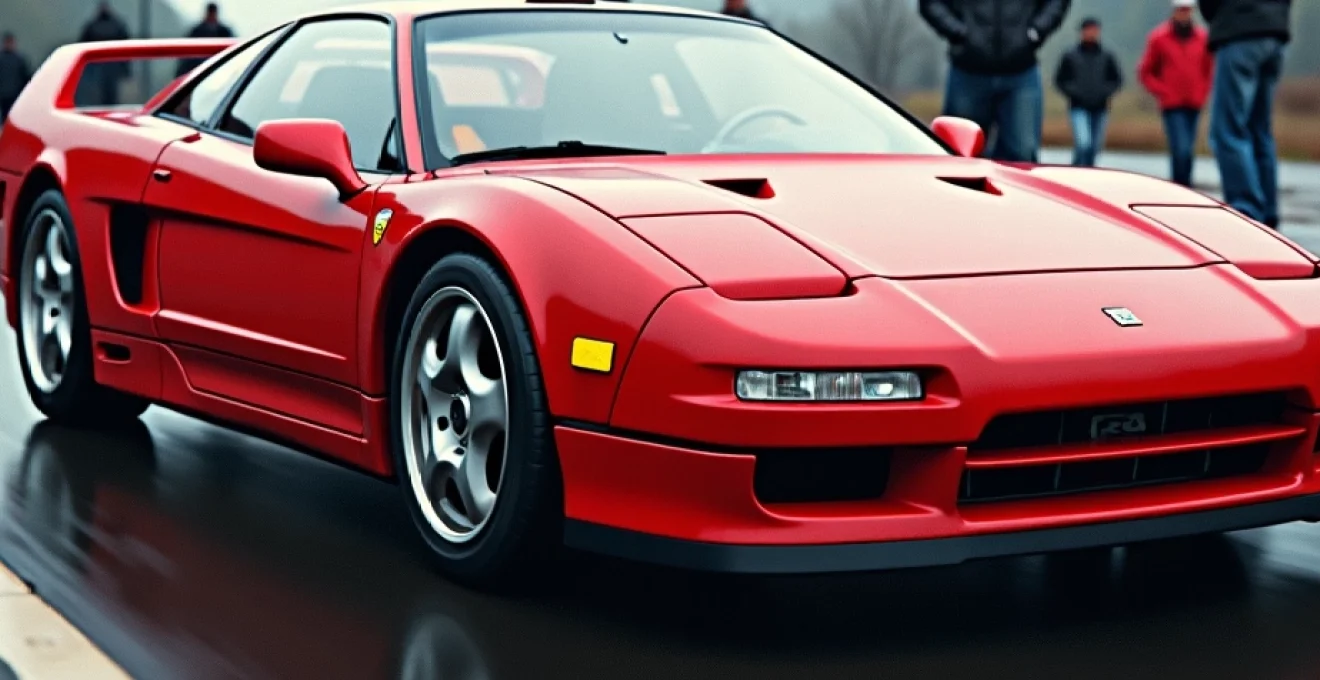
The 1990s stands as a pivotal decade in automotive history, marking the transition from mechanical simplicity to electronic sophistication whilst retaining the raw driving experience that enthusiasts cherish today. This era witnessed unprecedented innovation across all market segments, from affordable sports cars that democratised performance to cutting-edge supercars that pushed technological boundaries. Japanese manufacturers revolutionised the industry with their precision engineering and reliability, whilst European marques responded with groundbreaking designs and advanced materials. The decade’s legacy continues to influence modern automotive development, with many 1990s vehicles now commanding astronomical prices as collectors recognise their historical significance and engineering excellence.
Legendary japanese performance icons of the 1990s
Japan’s automotive industry reached its zenith during the 1990s, producing a constellation of performance cars that fundamentally altered global perceptions of Japanese engineering. The nation’s manufacturers leveraged advanced technologies, meticulous attention to detail, and innovative design philosophies to create vehicles that challenged European dominance in the performance sector. These machines combined reliability with excitement in ways previously thought impossible, establishing benchmarks that remain relevant today.
Honda NSX Mid-Engine engineering excellence and VTEC integration
The Honda NSX represented a quantum leap in supercar philosophy when it debuted in 1990. Unlike temperamental European exotics, the NSX delivered Ferrari-fighting performance with Honda Civic reliability. Its all-aluminium construction, developed with input from Formula One experience, created a rigid yet lightweight platform that weighed just 1,410 kilograms. The 3.0-litre V6 engine featured Honda’s revolutionary Variable Valve Timing and Lift Electronic Control (VTEC) system, producing 274 horsepower and delivering an intoxicating 8,000 rpm redline that still sends shivers down enthusiasts’ spines.
The NSX’s influence extended far beyond its own production run. Ferrari acknowledged the NSX’s impact by completely redesigning the 348’s successor , whilst Gordon Murray famously used it as the benchmark for the McLaren F1’s daily usability. The car’s perfect weight distribution and sublime handling characteristics, refined with input from Ayrton Senna himself, created a driving experience that remained unmatched for decades. Today, pristine examples command six-figure sums, reflecting their status as the supercar that changed everything.
Nissan skyline GT-R R32 RB26DETT Twin-Turbo dominance
The Nissan Skyline GT-R R32 emerged as perhaps the most technologically advanced performance car of its era, earning the moniker “Godzilla” for its domination of Australian touring car racing. Its 2.6-litre RB26DETT twin-turbocharged inline-six produced an official 276 horsepower, though reality suggested figures closer to 320 horsepower. The sophisticated ATTESA E-TS all-wheel-drive system could transfer power between axles in milliseconds, whilst the HICAS four-wheel steering system provided unprecedented agility for such a heavy machine.
The GT-R’s electronic sophistication was decades ahead of its time. Multiple sensors monitored everything from wheel slip to throttle position, adjusting power delivery and suspension settings in real-time. This technological tour de force transformed a humble sedan platform into a weapon capable of embarrassing exotic supercars on both road and track. The R32’s racing success was so complete that regulations were eventually changed to exclude it from competition, cementing its legendary status.
Toyota supra A80 2JZ-GTE Inline-Six turbo legacy
The fourth-generation Toyota Supra represented the pinnacle of Japanese grand touring philosophy, combining effortless high-speed cruising with devastating straight-line performance. Its 3.0-litre 2JZ-GTE twin-turbocharged inline-six was a masterpiece of over-engineering, featuring forged internals capable of handling enormous power increases. From the factory, it produced 320 horsepower in European specification, though Japanese domestic market versions were limited to the gentlemen’s agreement figure of 276 horsepower.
The Supra’s iron-block construction and conservative factory tune created an engine that could reliably produce double its original power output with relatively simple modifications. This tunability, combined with the car’s dramatic styling and pop-culture prominence through films like The Fast and the Furious , established it as an icon that transcended automotive enthusiasm. Modern examples in pristine condition have appreciated dramatically, with some variants commanding prices exceeding their original retail cost by significant margins.
Mazda RX-7 FD rotary engine technology and sequential turbocharging
The third-generation Mazda RX-7 FD represented the absolute pinnacle of rotary engine development, showcasing technology that remains unmatched today. Its 1.3-litre twin-rotor 13B-REW featured sequential turbocharging, where a smaller primary turbocharger provided instant response at low revs before a larger secondary unit joined forces for maximum power. This system delivered 255 horsepower whilst maintaining the rotary’s characteristic high-revving nature and distinctive exhaust note.
The FD’s styling, penned by Tom Matano, created one of the most beautiful sports cars ever produced. Its flowing lines and perfect proportions have aged gracefully, looking as contemporary today as when it first appeared. The rotary engine’s compact dimensions allowed for a low bonnet line and near-perfect weight distribution, creating handling dynamics that few sports cars could match. However, the engine’s thirst for fuel and oil, combined with its sensitivity to maintenance intervals, meant the RX-7 remained a specialist choice for dedicated enthusiasts.
Subaru impreza WRX STI symmetrical All-Wheel drive rally heritage
The Subaru Impreza transformed from humble economy car to rally legend through the application of sophisticated all-wheel-drive technology and turbocharged boxer engines. The WRX and STI variants brought World Rally Championship technology to public roads, featuring permanent all-wheel drive that provided unshakeable traction in all conditions. The 2.0-litre turbocharged flat-four produced its power in a distinctive manner, with a characteristic burble from its unequal-length headers that became the Impreza’s sonic signature.
Colin McRae’s spectacular driving style in Subaru’s rally cars captured public imagination, turning the practical five-door hatchback into a performance icon. The STI’s advanced centre differential could actively distribute torque between axles, whilst sophisticated suspension systems maintained composure over challenging terrain. This combination of accessibility and capability made the Impreza the thinking enthusiast’s choice, proving that four doors and practicality need not compromise excitement.
European supercar revolution and technological breakthroughs
European manufacturers responded to Japanese innovation with groundbreaking supercars that pushed technological and performance boundaries to unprecedented levels. These machines represented the continent’s engineering prowess and design excellence, introducing advanced materials, revolutionary construction techniques, and powertrains that redefined automotive possibility. The decade’s European supercars established templates that continue influencing modern exotic car development.
Mclaren F1 central driving position and BMW V12 engineering
The McLaren F1 stands as the ultimate expression of 1990s automotive ambition, representing an uncompromising pursuit of the perfect driving machine. Gordon Murray’s revolutionary three-seater layout positioned the driver centrally, flanked by passenger seats set slightly rearward. This configuration provided optimal weight distribution and unparalleled visibility, creating a driving position that felt more akin to a single-seater racing car than a road vehicle.
BMW’s specially developed 6.1-litre V12 produced 627 horsepower through naturally aspirated means, an achievement that remains impressive by modern standards. The engine’s gold-lined bay served both aesthetic and functional purposes, reflecting heat away from carbon fibre components. Every aspect of the F1’s construction prioritised weight reduction and performance, from its carbon fibre monocoque to its magnesium wheels. The car’s 240.1 mph top speed stood as the production car record for over a decade, whilst its £634,500 price tag has proven prescient as examples now command eight-figure sums.
The F1’s influence extends far beyond its production numbers, establishing precedents for modern hypercars in terms of materials science, aerodynamics, and uncompromising engineering philosophy.
Ferrari F355 Five-Valve-Per-Cylinder technology and berlinetta design
The Ferrari F355 marked Maranello’s renaissance after the disappointing 348, introducing five valves per cylinder to create one of the most sonically memorable V8 engines ever produced. This configuration, with three intake and two exhaust valves per cylinder, enabled an 8,500 rpm redline that transformed the driving experience. The 3.5-litre unit produced 375 horsepower whilst delivering a crescendo of mechanical music that defined Ferrari’s character for generations.
Pininfarina’s styling evolution refined the 348’s proportions whilst introducing more sophisticated aerodynamics and improved cooling. The F355’s introduction of power steering and enhanced chassis dynamics made it significantly more approachable than its predecessor, expanding Ferrari ownership beyond the most dedicated enthusiasts. The manual transmission versions, featuring an open gate shifter, provided tactile engagement that modern paddle-shift systems cannot replicate . Today’s collectors prize these manual examples above their F1-equipped counterparts, recognising their superior driver involvement.
Lamborghini diablo carbon fibre construction and viscous coupling AWD
The Lamborghini Diablo represented Italian automotive excess at its most extreme, featuring aggressive styling that made every other supercar appear conservative by comparison. Its 5.7-litre V12 initially produced 485 horsepower, later increasing to 550 horsepower in VT specification. The Diablo VT introduced Lamborghini’s first all-wheel-drive system, utilising a viscous coupling centre differential that could transfer up to 25% of torque to the front wheels when rear grip was compromised.
Advanced composite construction reduced weight whilst increasing structural rigidity compared to traditional steel construction. The Diablo’s dramatic scissor doors and theatrical presence made it the poster car of choice for an entire generation. Its 202 mph top speed and sub-four-second acceleration to 60 mph established performance benchmarks that seemed almost impossible to achieve. The car’s analog character, with minimal electronic intervention, provided a visceral driving experience that modern supercars struggle to replicate despite their superior performance figures.
Porsche 911 turbo 993 Twin-Turbo Flat-Six and advanced aerodynamics
The 993-generation 911 Turbo represented the culmination of air-cooled flat-six development, featuring twin turbochargers that eliminated the lag issues that plagued earlier single-turbo models. The 3.6-litre engine produced 408 horsepower whilst maintaining the characteristic Porsche sound and response. Advanced intercooling and engine management systems ensured reliability despite the significant power increase over naturally aspirated variants.
Porsche’s aerodynamic development created an automatically adjustable rear spoiler that balanced high-speed stability with low-speed aesthetics. The all-wheel-drive system, derived from the Carrera 4, provided exceptional traction whilst maintaining the 911’s characteristic rear-biased handling balance. The 993 Turbo’s combination of everyday usability and explosive performance made it the definitive supercar for those who actually drove their exotic purchases. As the final air-cooled 911 Turbo, it has achieved icon status among Porsche enthusiasts, with pristine examples commanding premium prices.
American muscle car renaissance and V8 innovation
American automotive manufacturers experienced a performance renaissance during the 1990s, rediscovering their muscle car heritage whilst incorporating modern technology and engineering sophistication. Detroit’s resurgence challenged European and Japanese dominance through sheer displacement and innovative approaches to power delivery. The decade witnessed the birth of modern American supercars that could compete with exotic imports whilst maintaining characteristic American engineering philosophies.
The Chevrolet Corvette ZR-1, developed in partnership with Lotus, featured an all-aluminium 5.7-litre V8 that produced 375 horsepower through advanced four-cam technology. This “King of the Hill” Corvette demonstrated American capability in sophisticated engine development, achieving 180 mph performance whilst maintaining relative affordability compared to European alternatives. The ZR-1’s Lotus-tuned suspension provided handling sophistication that transformed perceptions of American sports cars.
Dodge revolutionised the supercar landscape with the Viper, whose 8.0-litre V10 produced 400 horsepower in gloriously unsophisticated fashion. The Viper’s minimalist approach eschewed electronic aids in favour of raw mechanical engagement, creating a driving experience that was simultaneously thrilling and terrifying. Its fibreglass construction and aluminum space-frame chassis kept weight reasonable despite the massive engine, whilst its distinctive styling established an instantly recognisable American design language.
The Ford Mustang Cobra represented more accessible performance, featuring supercharged V8 engines that delivered substantial power increases over standard models. These special editions maintained the Mustang’s mass-market appeal whilst providing serious performance credentials. The SVT Cobra’s development demonstrated Ford’s commitment to performance engineering, creating a template for future high-performance derivatives that continues today.
Affordable sports car democratisation and mass market appeal
The 1990s witnessed unprecedented democratisation of sports car ownership, with manufacturers recognising that performance appeal need not be limited to exotic price brackets. This philosophical shift created some of the decade’s most beloved vehicles, proving that driving excitement could be accessible to enthusiasts with modest budgets. These affordable sports cars often provided more genuine engagement than their expensive counterparts, prioritising handling balance and driver involvement over outright power.
The Mazda MX-5 Miata single-handedly revived the affordable roadster segment, drawing inspiration from classic British sports cars whilst incorporating Japanese reliability and build quality. Its 1.6-litre engine produced just 115 horsepower, yet the car’s 1,000-kilogram kerb weight ensured entertaining performance. More importantly, its perfect weight distribution, communicative steering, and balanced chassis dynamics created a driving experience that connected driver and machine in ways that many exotic cars failed to achieve.
The Lotus Elise redefined lightweight construction through its innovative bonded aluminium chassis, achieving remarkable rigidity whilst weighing just 725 kilograms. Its Rover K-series engine provided adequate power for the featherweight chassis, creating acceleration and handling that embarrassed much more expensive machinery. The Elise’s uncompromising design philosophy, prioritising performance over comfort, established it as the thinking enthusiast’s choice and arguably the purest sports car of its era.
European hot hatches reached new heights of sophistication during this period, with models like the Renault Clio Williams and Peugeot 106 GTI demonstrating that small capacity engines could deliver tremendous entertainment when paired with lightweight construction and precise chassis tuning. These vehicles proved that expensive materials and complex systems were unnecessary for engaging driving experiences, instead relying on fundamental engineering principles and careful development.
The decade’s affordable sports cars demonstrated that driving pleasure was not exclusively the domain of exotic manufacturers, establishing principles that continue influencing modern performance car development.
Motorsport homologation specials and racing technology transfer
The 1990s represented the golden age of homologation specials, where manufacturers created limited-production road cars to satisfy racing regulations whilst transferring cutting-edge motorsport technology to public roads. These vehicles represented the closest connection between competition and street driving, featuring components and engineering solutions developed under the intense pressure of international motorsport competition.
The Ford Escort RS Cosworth epitomised this philosophy, transforming the humble Escort platform into a rally weapon through the application of sophisticated four-wheel-drive systems and turbocharged engines. Its dramatic whale-tail spoiler and flared wheel arches served functional aerodynamic purposes whilst creating one of the decade’s most distinctive silhouettes. The car’s competition success in the World Rally Championship validated its engineering solutions, though its road-going characteristics sometimes demanded skilled handling to extract maximum performance safely.
Subaru’s various Impreza WRX and STI models brought rally technology directly from the special stages to suburban driveways. These vehicles featured sophisticated centre differential systems that could actively manage torque distribution between axles, whilst advanced suspension componentry maintained composure over challenging surfaces. The limited-edition models, such as the 22B STI, pushed these concepts to their ultimate expression through weight reduction, increased power, and enhanced aerodynamics.
The Mitsubishi Lancer Evolution series represented another approach to homologation requirements, utilising advanced electronic systems to manage power delivery and chassis dynamics. These vehicles featured active differentials, sophisticated traction management, and aerodynamic packages that bordered on the extreme. Their competition success in both rallying and circuit racing demonstrated the effectiveness of electronic assistance when properly calibrated, presaging modern performance car development.
Advanced electronic systems integration and digital revolution impact
The 1990s marked automotive industry’s first significant embrace of electronic systems integration, fundamentally transforming how vehicles operated and interacted with their drivers. This digital revolution introduced sophisticated engine management systems, advanced traction control technologies, and pioneering infotainment solutions that established foundations for modern connected vehicles. Manufacturers recognised that electronics could enhance both performance and safety whilst providing competitive advantages in increasingly crowded markets.
Anti-lock braking systems (ABS) became widespread during this period, evolving from luxury options to standard equipment across most vehicle segments. These systems utilised wheel speed sensors and electronic control units to prevent wheel lockup during emergency braking, dramatically improving vehicle control and reducing stopping distances on various road surfaces. The technology’s success encouraged further electronic intervention in vehicle dynamics, paving the way for more advanced stability management systems.
Engine management systems achieved unprecedented sophistication through the integration of multiple sensors monitoring everything from air temperature to throttle position. These systems could adjust fuel injection timing, ignition advance, and turbocharger boost pressure in real-time, optimising performance whilst meeting increasingly stringent emissions regulations. The marriage of mechanical engineering with electronic precision created powertrains that were simultaneously more powerful and more efficient than their predecessors.
Traction control systems emerged as game-changing technologies, particularly in high-performance applications where wheel spin could compromise both safety and acceleration. These systems monitored individual wheel speeds and could selectively apply brakes or reduce engine power to maintain optimal traction. The Nissan Skyline GT-R’s ATTESA E-TS system represented the pinnacle of this technology, demonstrating how electronic intervention could enhance rather than compromise the driving experience.
The decade also witnessed the introduction of electronic suspension systems that could adjust damping characteristics based on driving conditions and driver preferences. These adaptive systems provided unprecedented versatility, allowing vehicles to maintain comfort during normal driving whilst firming suspension settings for spirited performance. Such technologies demonstrated that electronic assistance could enhance mechanical systems without sacrificing fundamental driving dynamics.
The 1990s established the template for modern automotive electronics, proving that digital systems could enhance rather than diminish the driving experience when properly implemented and calibrated.
Navigation systems made their debut during this period, though early implementations were complex and expensive. These pioneering systems utilised CD-ROM databases and rudimentary GPS technology to provide basic route guidance, establishing the foundation for modern satellite navigation and connected vehicle services. The technology’s evolution from luxury curiosity to essential equipment reflects the decade’s broader trend toward electronic integration.
Electronic fuel injection became universal during the 1990s, finally displacing carburetion across all market segments. These systems provided precise fuel metering that improved both performance and emissions compliance, whilst enabling advanced features like cold-start assistance and altitude compensation. The technology’s reliability and efficiency gains convinced even traditional manufacturers to abandon mechanical fuel delivery systems that had served for decades.
The integration of electronic systems also enabled new approaches to vehicle diagnostics and maintenance. On-board diagnostic systems could monitor component performance and alert drivers to potential issues before they resulted in failures. This predictive capability transformed automotive servicing from reactive maintenance to proactive care, improving reliability whilst reducing ownership costs. Modern automotive service practices trace their origins to these pioneering diagnostic systems.
Advanced electronic systems also facilitated the development of increasingly sophisticated transmissions, including early continuously variable transmissions (CVT) and advanced automatic gearboxes with multiple operating modes. These systems utilised electronic controls to optimise gear selection for performance, economy, or comfort, providing versatility that mechanical systems could not match. The decade’s transmission innovations established precedents for modern dual-clutch and hybrid powertrains that rely heavily on electronic coordination.
Perhaps most significantly, the 1990s demonstrated that electronic systems could coexist with traditional automotive values of performance and engagement. Rather than creating sterile, disconnected driving experiences, properly calibrated electronic assistance enhanced vehicle capabilities whilst preserving the fundamental connection between driver and machine. This philosophical approach continues influencing modern performance car development, where electronic systems amplify rather than replace mechanical excellence.
The decade’s electronic revolution also established important precedents for automotive cybersecurity and system reliability. As vehicles became increasingly dependent on electronic systems, manufacturers developed robust testing protocols and fail-safe mechanisms that ensured safe operation even when individual components failed. These safety-critical design philosophies became fundamental principles for modern automotive electronics, where system failures could have catastrophic consequences.