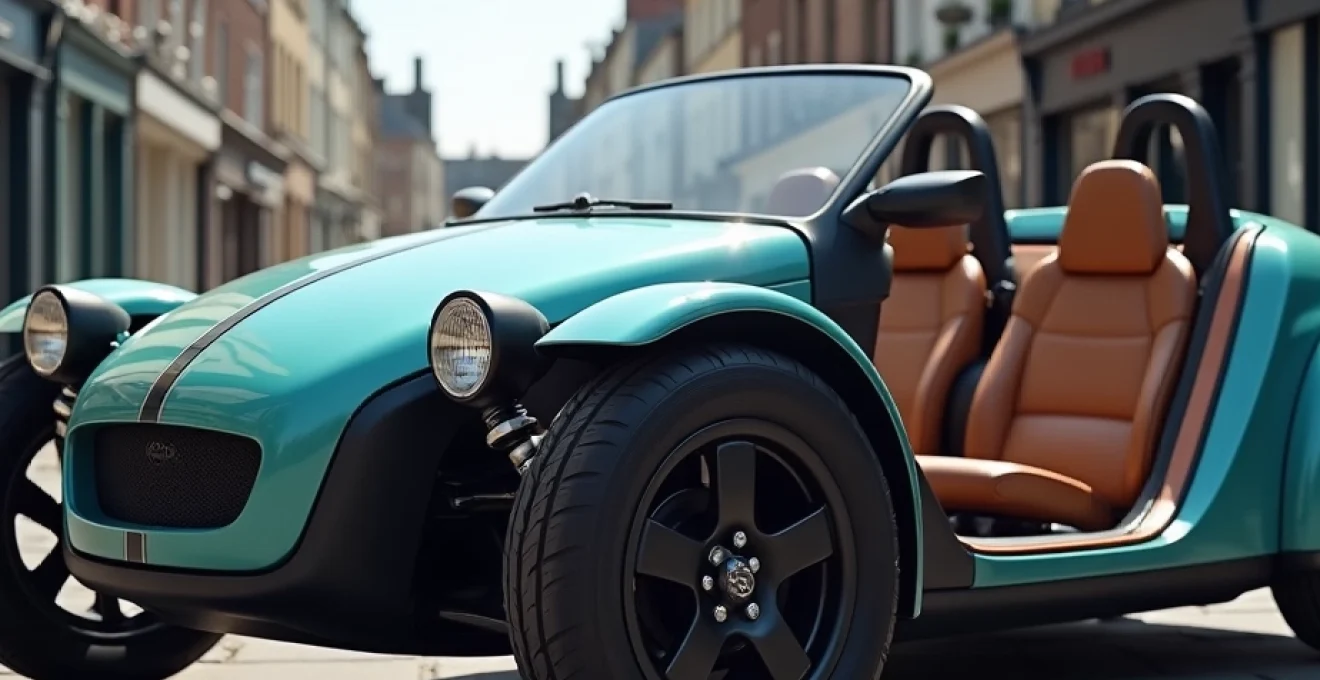
The British automotive landscape has witnessed a remarkable resurgence of interest in three-wheeled vehicles, combining nostalgic charm with modern engineering innovations. From the legendary Morgan Three-Wheeler that graced country lanes for over a century to cutting-edge electric tricycles designed for urban mobility, the UK market offers an increasingly diverse range of three-wheel vehicle options. These unique machines occupy a fascinating niche between motorcycles and traditional cars, providing an alternative transportation solution that addresses everything from fuel economy concerns to parking challenges in congested city centres. Whether driven by environmental considerations, performance enthusiasm, or simply the desire for something distinctly different, British motorists are rediscovering the appeal of vehicles that dare to be unconventional. The regulatory framework supporting these vehicles has evolved significantly, creating clearer pathways for manufacturers and buyers alike to navigate the complexities of three-wheel vehicle ownership in the modern era.
UK legal framework for Three-Wheeler vehicle classification and registration
The United Kingdom’s approach to three-wheeled vehicle regulation reflects the country’s pragmatic balance between innovation and safety. Understanding the legal landscape is crucial for anyone considering these unique vehicles, as classification determines everything from licensing requirements to insurance costs. The regulatory framework has evolved considerably since the early days of the Reliant Robin, adapting to accommodate both traditional tricycles and modern electric variants.
DVLA category B1 licensing requirements for motor tricycles
Three-wheeled vehicles in the UK fall under several distinct licensing categories, each with specific requirements that potential owners must understand. Motor tricycles exceeding 450kg unladen weight require a full Category B driving licence, the same qualification needed for standard passenger cars. This classification covers most traditional three-wheelers like the Morgan Super 3 and larger kit cars. Lighter tricycles under 450kg can be driven with a Category A1 motorcycle licence, provided the driver is at least 17 years old. For those who passed their car driving test before 19th January 2013, grandfather rights allow the operation of motor tricycles up to 25kW power output without additional testing. This provision has significantly benefited older drivers seeking alternative mobility solutions without bureaucratic hurdles.
Type approval regulations under UNECE WP.29 standards
The technical approval process for three-wheeled vehicles follows stringent European standards that remain applicable in post-Brexit Britain. UNECE WP.29 regulations classify these vehicles as either L5e light three-wheelers or L7e heavy quadricycles, depending on their specifications. Manufacturers must demonstrate compliance with safety standards covering everything from braking performance to electromagnetic compatibility. The approval process includes comprehensive testing of structural integrity, lighting systems, and emission levels. Small series type approval allows limited production runs of up to 1,000 units annually, making it economically viable for boutique manufacturers like Grinnall and smaller conversion specialists. This framework supports the UK’s thriving cottage industry of specialist vehicle builders while maintaining safety standards.
Insurance classifications for l5e light quadricycles vs motor tricycles
Insurance considerations for three-wheeled vehicles vary dramatically based on their technical classification and intended use. L5e vehicles, which include many electric three-wheelers, often benefit from lower insurance premiums due to their restricted speed capabilities and lighter construction. Traditional motor tricycles may attract higher premiums reflecting their performance potential and unique risk profiles. Many insurers now offer specialist policies designed specifically for three-wheelers, recognising their distinct characteristics compared to conventional motorcycles or cars. Classic vehicle insurance becomes relevant for heritage models like restored Bond Bugs or vintage Morgan Three-Wheelers, often providing more favourable terms for limited mileage usage. The growing market has encouraged several insurers to develop expertise in this niche, improving both coverage options and competitive pricing.
MOT testing protocols for Three-Wheeler vehicles over three years
The MOT testing regime for three-wheeled vehicles follows adapted procedures that account for their unique mechanical configurations. Test centres must have examiners qualified to assess three-wheeled vehicles, as standard car MOT protocols don’t adequately address tricycle-specific safety elements. Suspension systems, steering geometry, and braking balance receive particular attention during testing, reflecting the inherent stability challenges of three-wheeled designs. Electric three-wheelers undergo additional checks on high-voltage systems and battery security, following protocols established for electric passenger cars. The testing frequency remains annual for vehicles over three years old, though many manufacturers offer extended warranties that can defer initial MOT requirements. Newly built vehicles from established manufacturers like Pembleton typically come with three-year MOT exemptions, providing buyers with immediate road legality.
Traditional british Three-Wheeler manufacturers and heritage models
Britain’s three-wheeled vehicle heritage represents one of the most enduring automotive traditions in the world, spanning over a century of continuous development and refinement. The persistence of these manufacturers through economic upheavals, changing regulations, and shifting consumer preferences demonstrates the deep-rooted appeal of three-wheeled motoring in British culture. From the pioneering Morgan Motor Company to the more recent revival efforts, these manufacturers have consistently pushed the boundaries of what three-wheeled vehicles can achieve.
Morgan motor company Three-Wheeler revival and EV3 electric variant
Morgan Motor Company’s commitment to three-wheeled vehicles exemplifies British engineering tradition at its finest. The current Super 3 model represents the culmination of over 110 years of three-wheeler development, featuring a 118bhp Ford three-cylinder engine that delivers exhilarating performance while maintaining the classic Morgan character. The transition from the previous air-cooled V-twin to a modern water-cooled engine demonstrates Morgan’s ability to evolve while preserving essential design DNA. Production at the Malvern facility continues the artisanal approach that has defined Morgan for generations, with each vehicle hand-built by skilled craftsmen using traditional techniques combined with modern materials. The anticipated EV3 electric variant promises to extend Morgan’s three-wheeler legacy into the sustainable mobility era, though specific launch dates remain under wraps. Customisation options for the Super 3 are extensive, allowing buyers to create truly individual vehicles that reflect personal preferences while maintaining the fundamental Morgan aesthetic.
Reliant robin and rialto legacy models in secondary markets
The Reliant Robin’s cultural impact far exceeds its original commercial success, having achieved iconic status through television appearances and popular culture references. Secondary market values for well-maintained examples have risen significantly as collectors recognise their importance in British automotive history. The Robin’s fibreglass construction means that rust isn’t a concern, though UV degradation and accident damage are common issues affecting market values. Parts availability remains reasonable for Robin models, with several specialists maintaining comprehensive inventories of mechanical and body components. The Rialto, which briefly replaced the Robin name during quality concerns in the 1980s, represents excellent value for money in today’s market. Restoration projects often focus on updating mechanical systems while preserving the distinctive styling that made these vehicles instantly recognisable. The Robin’s 750cc four-stroke engine provides adequate performance for modern traffic conditions, though owners often pursue mild performance modifications.
Bond bug restoration projects and collector vehicle status
The Bond Bug occupies a unique position as arguably the most stylish three-wheeled vehicle ever produced in Britain. Its distinctive wedge-shaped design and mandatory orange colour scheme created an instantly recognisable icon of 1970s automotive design. Restoration projects command premium prices due to the Bug’s rarity, with fewer than 2,500 originally produced between 1970 and 1974. The lifting canopy mechanism requires particular attention during restoration, as the hydraulic struts and sealing systems often deteriorate with age. Collector interest in Bond Bugs has intensified dramatically, with concours-quality examples commanding prices that would have seemed impossible just a decade ago. The shared mechanical components with Reliant models means that drivetrain restoration is relatively straightforward, though body panels and interior trim pieces are becoming increasingly scarce. Many restoration specialists now focus exclusively on Bond Bugs, developing expertise in the unique challenges these vehicles present.
Grinnall scorpion kit cars and specialist manufacturing
Grinnall Engineering represents the evolution of British three-wheeler manufacturing into the modern era, offering sophisticated kit cars that combine motorcycle performance with weather protection. The Scorpion series demonstrates how three-wheeled design can deliver genuine sports car performance, utilising powerful motorcycle engines in lightweight chassis configurations. Build quality reflects decades of refinement, with comprehensive instruction manuals and ongoing technical support making these kits accessible to competent amateur builders. The reverse-trike configuration, with two wheels at the front, provides enhanced stability compared to traditional three-wheelers while maintaining the unique driving experience. Performance specifications vary depending on the donor motorcycle engine chosen, with some variants capable of supercar-level acceleration figures. The kit car approach allows builders to spread costs over time while gaining intimate knowledge of their vehicle’s construction and maintenance requirements.
Contemporary electric Three-Wheeler options available in UK markets
The electric vehicle revolution has brought new vitality to the three-wheeled vehicle sector, with manufacturers leveraging the inherent efficiency advantages of lighter, more aerodynamic designs. These modern electric three-wheelers address urban mobility challenges while offering environmentally conscious consumers genuine alternatives to conventional transportation. The regulatory framework for electric vehicles has created opportunities for innovative designs that might not have been viable with internal combustion engines.
Arcimoto FUV Right-Hand drive availability and UK distribution
Arcimoto’s Fun Utility Vehicle represents a fresh approach to three-wheeled design, emphasising practicality alongside environmental responsibility. The tandem seating arrangement maximises aerodynamic efficiency while providing weather protection through optional doors and windscreens. UK availability remains limited as the company focuses on establishing distribution networks and adapting vehicles for right-hand drive markets. The FUV’s classification as an L5e vehicle means it can be driven with a car licence while benefiting from motorcycle-style parking privileges in many locations. Performance characteristics include a claimed 75-mile range from its 19.2kWh battery pack, with acceleration comparable to urban-focused conventional vehicles. The regenerative braking system extends range while providing a unique driving experience that appeals to early adopters of electric mobility solutions.
Citroën ami quadricycle urban mobility solutions
While technically a quadricycle rather than a three-wheeler, the Citroën Ami demonstrates how European manufacturers are reimagining urban mobility through innovative vehicle classifications. Its 28mph top speed and 46-mile range reflect its focus on city centre transportation rather than longer journeys. The Ami’s rental and subscription models offer alternatives to traditional vehicle ownership, appealing to younger consumers seeking flexible mobility solutions. UK market entry has been gradual, with pilot programmes in selected urban areas allowing potential customers to experience the vehicle before wider availability. Charging infrastructure compatibility includes standard domestic plugs, eliminating range anxiety for urban users with predictable journey patterns. The vehicle’s symmetrical design and interchangeable parts reduce manufacturing costs while creating distinctive styling that stands out in city traffic.
Silence S04 electric tricycle commercial applications
The Spanish-manufactured Silence S04 addresses commercial three-wheeler requirements with its cargo-focused design and robust construction. UK distribution through specialist dealers has targeted delivery companies and urban logistics providers seeking zero-emission solutions. The S04’s payload capacity of 125kg and weather-resistant cargo area make it suitable for last-mile delivery applications in congested urban environments. Battery technology includes swappable packs that address charging infrastructure limitations while enabling continuous operation for commercial users. Running costs compare favourably to petrol-powered alternatives, particularly when factoring in London’s Ultra Low Emission Zone charges and similar urban restrictions. The vehicle’s motorcycle classification provides access to bus lanes and motorcycle parking areas, offering significant operational advantages in city centre environments.
Local assembly options through electric vehicle conversion specialists
The UK’s growing network of electric vehicle conversion specialists increasingly offers three-wheeled solutions tailored to specific customer requirements. These specialists typically work with established chassis designs, adapting them for electric powertrains while maintaining familiar handling characteristics. Conversion projects often focus on classic three-wheelers like Morgan or Reliant models, creating unique vehicles that blend vintage styling with modern electric performance. The modular nature of electric powertrains makes such conversions more accessible than traditional engine swaps, though electrical safety standards require professional installation. Customisation possibilities include everything from basic commuter conversions to high-performance builds utilising Tesla drive units or purpose-built racing components. Local assembly supports regional employment while allowing customers to specify exactly the performance and range characteristics they require.
Performance specifications and technical comparisons across vehicle categories
Understanding the performance landscape of modern three-wheeled vehicles requires examining how different approaches to design and propulsion affect real-world capabilities. The diversity of available options means that potential buyers can find vehicles suited to everything from urban commuting to weekend recreational driving. Performance metrics extend beyond simple acceleration figures to encompass handling characteristics, efficiency ratings, and practical usability factors that determine long-term satisfaction with these unique vehicles.
Traditional petrol-powered three-wheelers like the Morgan Super 3 deliver impressive power-to-weight ratios that often exceed conventional sports cars. The Super 3’s 118bhp engine propels just 635kg of vehicle weight, resulting in acceleration figures that surprise many four-wheeled competitors. However, this performance comes with the inherent stability limitations of three-wheeled design, requiring different driving techniques and awareness compared to conventional vehicles. Braking performance receives particular attention in modern designs, with advanced systems compensating for the unique weight distribution challenges of three-wheeled configurations.
Electric three-wheelers demonstrate different performance characteristics, typically optimising for efficiency rather than outright speed. The immediate torque delivery of electric motors provides excellent urban acceleration, while regenerative braking systems extend range and reduce brake wear. Battery placement becomes critical in three-wheeled designs, affecting both handling balance and interior space utilisation. Most electric variants prioritise low-speed manoeuvrability and parking convenience over highway performance, reflecting their intended usage patterns. Range calculations for electric three-wheelers must account for their unique aerodynamic profiles and weight distributions, which can vary significantly from conventional electric vehicle assumptions.
| Vehicle Type | Power Output | Weight | Top Speed | 0-60mph |
|---|---|---|---|---|
| Morgan Super 3 | 118bhp | 635kg | 115mph | 7.0s |
| Grinnall Scorpion | 130-200bhp | 450kg | 140mph | 4.5s |
| Arcimoto FUV | 75bhp | 635kg | 75mph | 7.5s |
| Reliant Robin | 40bhp | 450kg | 85mph | 14.0s |
The handling characteristics of three-wheeled vehicles vary dramatically depending on their wheel configuration and suspension design. Traditional Morgan-style layouts with two wheels at the front provide better braking stability but can exhibit unique cornering behaviors that require adaptation from conventional car drivers. Reverse-trike configurations like the Grinnall Scorpion offer more predictable handling at the expense of the classic three-wheeler aesthetic. Suspension tuning becomes particularly critical in three-wheeled designs, as conventional automotive approaches often don’t translate directly to the different weight distribution and loading patterns these vehicles experience.
Cost analysis: purchase price, running costs, and depreciation factors
The economics of three-wheeled vehicle ownership present a complex picture that extends well beyond initial purchase prices. While these vehicles often command premium prices reflecting their specialist nature and limited production volumes, their running costs can offer significant advantages over conventional alternatives. Understanding the total cost of ownership requires examining not just fuel and maintenance expenses, but also insurance, depreciation, and the less tangible costs associated with owning unique vehicles.
Purchase prices for new three-wheeled vehicles typically range from £15,000 for basic electric models to over £50,000 for premium examples like the Morgan Super 3. This pricing reflects the boutique manufacturing processes that characterise most three-wheeler production, where hand-built construction and limited economies of scale influence costs. Kit car options can reduce initial expenditure significantly, though buyers must factor in assembly time and the skills required for successful completion. The used market shows interesting patterns, with well-maintained examples of discontinued models like the Bond Bug commanding prices that exceed their original retail costs.
Running costs favour three-wheeled vehicles in several key areas, particularly fuel consumption and road tax obligations. The lightweight construction and aerodynamic efficiency of most three-wheelers result in excellent fuel economy, often exceeding 50mpg even with performance-oriented engines. Road tax calculations based on CO2 emissions typically place three-wheelers in the lowest bands, with some models qualifying for zero annual duty. Insurance costs vary significantly depending on the vehicle type and intended usage, though specialist insurers now
offer competitive rates for experienced three-wheeler enthusiasts with clean driving records. Maintenance costs generally favour simpler designs, though specialist knowledge requirements can increase labour charges at some service centres.
Depreciation patterns for three-wheeled vehicles differ markedly from conventional cars, with many models demonstrating remarkable value retention or even appreciation over time. Limited production numbers create scarcity value that supports residual values, particularly for well-regarded models from established manufacturers. Classic three-wheelers like early Morgan models or pristine Bond Bugs have shown consistent appreciation, making them viable investment vehicles as well as transportation solutions. However, this trend doesn’t extend uniformly across all three-wheeler categories, with some modern electric variants facing uncertain resale values as technology evolves rapidly.
| Vehicle Category | New Price Range | Annual Running Costs | 5-Year Depreciation |
|---|---|---|---|
| Morgan Super 3 | £45,000-£55,000 | £2,500-£3,500 | 25-35% |
| Electric Three-Wheeler | £15,000-£30,000 | £1,200-£2,000 | 40-60% |
| Kit Car Build | £8,000-£20,000 | £1,800-£2,800 | 15-25% |
| Classic Restoration | £5,000-£25,000 | £2,000-£4,000 | -10% to +20% |
The specialist nature of three-wheeler ownership introduces additional cost considerations that don’t affect conventional vehicle buyers. Access to qualified technicians may require travelling to specialist centres, potentially increasing service costs and inconvenience. Parts availability varies dramatically between models, with some enjoying comprehensive support networks while others rely on enthusiast communities and fabrication specialists. Storage considerations often favour three-wheelers due to their compact dimensions, though security requirements may be higher due to their unusual nature and theft visibility.
Practical considerations for UK Three-Wheeler ownership and daily usage
The reality of living with a three-wheeled vehicle extends far beyond the initial excitement of ownership, encompassing everything from daily commuting practicality to long-term maintenance planning. Understanding these practical implications helps potential buyers make informed decisions about whether three-wheeled motoring suits their lifestyle and transportation requirements. The unique characteristics that make these vehicles appealing can also present challenges that conventional car owners never encounter.
Weather protection varies significantly across different three-wheeler designs, affecting their suitability for year-round use in the UK’s changeable climate. Traditional open-cockpit models like the Morgan Super 3 provide an exhilarating driving experience but require appropriate clothing and weather awareness from their operators. Modern enclosed designs offer better protection but may compromise the visceral driving experience that attracts many three-wheeler enthusiasts. Heating systems in three-wheelers often struggle with the thermal challenges posed by unconventional body shapes and limited insulation opportunities, making winter comfort a genuine consideration for daily users.
Storage and cargo capacity limitations represent significant practical constraints for three-wheeler users. Most designs prioritise performance or efficiency over load-carrying capability, making them unsuitable for families requiring substantial cargo space. However, creative storage solutions and optional luggage systems can extend their utility for touring and recreational use. The narrow profile that benefits parking and fuel economy can make loading bulky items challenging, requiring different approaches to trip planning and logistics. Security considerations become more complex with three-wheelers, as their unusual nature makes them conspicuous while their lightweight construction can make them vulnerable to theft or vandalism.
Maintenance accessibility presents both advantages and challenges compared to conventional vehicles. The simpler mechanical systems found in many three-wheelers can make routine maintenance more straightforward, particularly for mechanically inclined owners. However, the specialist nature of many components means that diagnosis and repair often require specific expertise that may not be available at conventional service centres. Parts sourcing can involve longer lead times and higher costs, though active owner communities often provide valuable support networks and knowledge sharing. Diagnostic equipment for modern three-wheelers may require specialist tools that general mechanics don’t possess, potentially limiting service options in some geographical areas.
The social aspects of three-wheeler ownership create unique considerations that extend beyond pure transportation utility. These vehicles invariably attract attention and curiosity, leading to spontaneous conversations and questions from strangers. While many owners enjoy this social interaction, it can become intrusive for those seeking anonymous transportation. The enthusiast community surrounding three-wheelers provides valuable support networks, technical knowledge, and social opportunities through clubs and events. Parking scenarios often work in favour of three-wheeler owners, with their compact dimensions allowing access to spaces unavailable to conventional cars, though some car parks may have unclear policies regarding their accommodation.
Insurance considerations for three-wheeler ownership require careful evaluation of coverage options and provider expertise. Standard motor insurance policies may not adequately address the unique risks and values associated with specialist three-wheelers. Agreed value policies become particularly important for classic or modified vehicles where standard market valuations may not reflect true replacement costs. The limited number of qualified repairers can affect claim settlement times and costs, making breakdown and recovery coverage essential considerations. Usage restrictions in some insurance policies may limit annual mileage or geographical coverage, affecting the vehicle’s utility for touring or extended trips.
The learning curve associated with three-wheeler operation requires consideration from potential buyers transitioning from conventional vehicles. While licensing requirements may not demand additional training, the unique handling characteristics and stability considerations of three-wheeled designs benefit from gradual familiarisation and potentially professional instruction. Emergency manoeuvring techniques differ from conventional cars, particularly in situations involving sudden braking or obstacle avoidance. The visibility profile of three-wheelers can affect their interaction with other road users, requiring heightened awareness of positioning and predictive driving techniques. Seasonal variations in handling characteristics become more pronounced with three-wheelers, as reduced tyre contact patches make them more sensitive to surface conditions and weather changes.