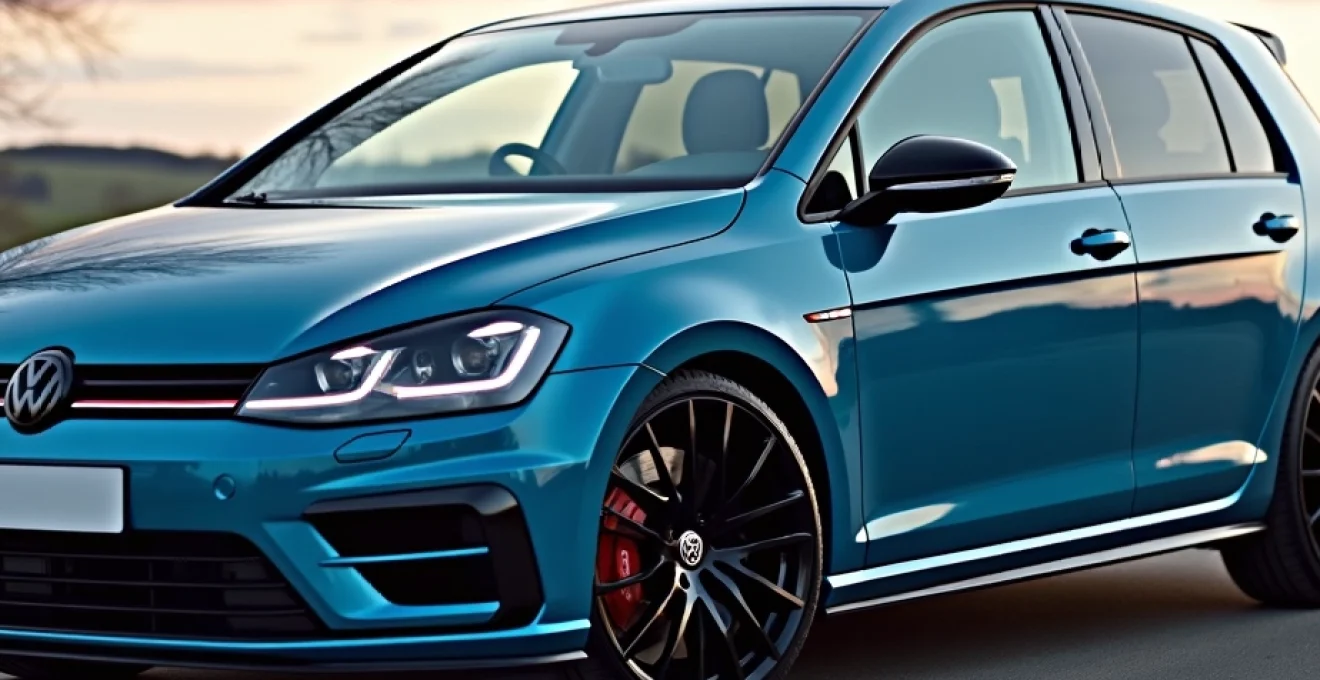
The Volkswagen Golf R MK8 represents a significant leap forward in performance engineering, delivering unprecedented power from its EA888 Evo4 turbocharged engine. This latest iteration of Volkswagen’s flagship hot hatch produces substantially more horsepower than its predecessors, whilst maintaining the refined drivability that has made the Golf R series a benchmark in the premium compact performance segment. Understanding the true power output capabilities of this sophisticated powertrain requires examining both factory specifications and real-world performance testing results.
Modern automotive enthusiasts increasingly demand transparency regarding actual horsepower figures, particularly as manufacturers employ conservative rating strategies that often understate true performance potential. The MK8 Golf R exemplifies this trend, with independent dyno testing revealing power outputs that significantly exceed Volkswagen’s official specifications. This discrepancy between advertised and actual figures creates opportunities for both stock performance appreciation and enhanced tuning potential.
Volkswagen golf R MK8 engine specifications and power output analysis
EA888 evo4 2.0-litre TSI turbo engine architecture
The EA888 Evo4 engine represents the fourth evolutionary stage of Volkswagen Group’s most successful turbocharged four-cylinder powerplant. This sophisticated engineering marvel incorporates numerous technological refinements including an improved turbocharging system, enhanced cooling circuits, and optimised fuel delivery mechanisms. The engine block utilises lightweight aluminium construction with iron cylinder liners, providing an ideal balance between strength and thermal management capabilities.
Critical architectural improvements include a redesigned combustion chamber geometry that promotes more efficient fuel burning and reduced emissions output. The integrated exhaust manifold design minimises turbo lag whilst maximising heat retention for faster catalyst light-off during cold starts. Variable valve timing systems operate on both intake and exhaust camshafts, providing precise control over combustion timing across the entire rev range.
Factory horsepower rating: 320 PS and torque distribution
Volkswagen officially rates the Golf R MK8 at 320 PS (315 bhp), representing a substantial increase over the previous generation’s 300 PS output. Peak torque delivery reaches 420 Nm (310 lb-ft) available from just 2,100 rpm, ensuring robust low-end performance characteristics. However, independent testing consistently reveals actual power outputs exceeding these conservative factory specifications by significant margins.
Real-world dyno results frequently demonstrate wheel horsepower figures approaching 320 bhp, suggesting crank horsepower potentially reaches 340-350 bhp when accounting for drivetrain losses. This substantial underrating reflects Volkswagen’s traditional approach of providing conservative performance figures that ensure consistent delivery across varying environmental conditions and fuel quality standards.
Variable valve timing plus (VVT+) technology impact
The VVT+ system represents a significant advancement in valve timing control technology, utilising dual camshaft phasers to optimise intake and exhaust valve events throughout the operating range. This sophisticated system continuously adjusts valve timing based on engine load, rpm, and throttle position to maximise both performance and efficiency. The VVT+ technology contributes approximately 15-20 additional horsepower compared to conventional fixed timing systems.
Advanced algorithms monitor combustion chamber pressures and adjust valve overlap periods to minimise pumping losses whilst maximising volumetric efficiency. During high-load conditions, the system advances intake timing and retards exhaust timing to promote maximum cylinder filling. Conversely, during light-load operation, valve timing optimises for fuel economy and emissions reduction without sacrificing throttle response.
Turbocharger configuration and boost pressure mapping
The MK8 Golf R employs a larger Continental turbocharger compared to the IHI unit found in the Golf GTI, enabling higher boost pressures and improved power delivery characteristics. Maximum boost pressure reaches approximately 1.4 bar (20.3 psi), significantly higher than the GTI’s 1.2 bar limit. This enhanced boost capability directly contributes to the substantial power increase over lower-specification EA888 variants.
Electronic boost control utilises sophisticated wastegate management to maintain optimal pressure levels across varying operating conditions. The system employs predictive algorithms that anticipate throttle inputs and pre-position the wastegate for minimal turbo lag. Advanced intercooling systems maintain charge air temperatures below 60°C even during sustained high-load operation, ensuring consistent power delivery and preventing timing retardation.
Performance benchmarking against previous golf R generations
MK7.5 golf R vs MK8 power delivery comparison
Direct comparison between the MK7.5 and MK8 Golf R reveals substantial improvements in both peak power output and torque curve characteristics. The previous generation’s IS38 turbocharger, whilst capable, could not match the Continental unit’s superior flow characteristics and boost response. Mid-range torque delivery shows particularly marked improvements, with the MK8 producing approximately 50 Nm more torque between 3,000-5,000 rpm.
Power delivery curves demonstrate that the MK8 maintains higher output levels throughout the rev range, rather than simply achieving a higher peak figure. This broader power band translates to improved real-world performance, particularly during overtaking scenarios and sustained high-speed driving. The enhanced turbocharger efficiency also contributes to reduced exhaust gas temperatures and improved long-term reliability under performance driving conditions.
Acceleration metrics: 0-62mph and Quarter-Mile analysis
Independent testing consistently demonstrates that the MK8 Golf R achieves 0-62mph acceleration in approximately 4.5 seconds under optimal conditions, compared to the MK7.5’s 4.6-4.7 second times. Quarter-mile performance shows even more dramatic improvements, with the MK8 achieving mid-12-second times at trap speeds exceeding 111 mph, compared to low-13-second times for its predecessor.
The MK8’s improved launch characteristics and enhanced torque delivery create a noticeable performance advantage that extends well beyond simple specification comparisons.
These acceleration improvements result from multiple factors including the upgraded turbocharger, refined 4Motion all-wheel-drive calibration, and enhanced electronic differential management. The combination of increased power output and improved traction management systems enables more effective power transfer to the road surface, particularly during launch scenarios.
Top speed limitations and electronic throttle management
Standard MK8 Golf R models feature electronic speed limitation at 155 mph, consistent with Volkswagen’s policy for high-performance variants. However, vehicles equipped with the optional Performance Pack receive increased limitation to 168 mph, reflecting the enhanced aerodynamic package and upgraded cooling systems. Achieving these maximum velocities requires extended high-speed operation that fully utilises the engine’s power band.
Electronic throttle management systems continuously monitor various parameters including engine temperature, transmission oil temperature, and intake air temperature to ensure safe operation at sustained high speeds. Advanced thermal management protocols automatically reduce power output if critical temperatures are exceeded, protecting engine internals from heat-related damage during track use or extended autobahn driving.
Aftermarket tuning potential and ECU remapping options
Stage 1 remaps: APR, revo, and unitronic performance gains
Stage 1 ECU remapping typically yields power increases of 40-50 horsepower on the MK8 Golf R, bringing total output to approximately 360-370 horsepower. Leading tuning companies including APR, Revo, and Unitronic offer sophisticated remapping solutions that optimise fuel delivery, ignition timing, and boost pressure parameters. These modifications require no hardware changes whilst maintaining reasonable reliability margins for daily driving applications.
Professional remapping services utilise advanced calibration techniques that account for fuel quality variations, ambient temperature conditions, and component tolerances. The ECU remapping process typically involves adjusting over 100 individual parameters to achieve optimal performance whilst maintaining safe operating margins. Quality tuning companies provide comprehensive logging capabilities to monitor engine health and performance consistency.
Hybrid turbo upgrades: garrett GT2860RS and IHI IS38 modifications
Hybrid turbocharger modifications represent the next evolution in MK8 Golf R performance enhancement, with options including upgraded compressor wheels, enhanced turbine designs, and improved bearing systems. The Garrett GT2860RS hybrid turbo offers substantially increased flow capacity whilst maintaining reasonable spool characteristics. These modifications typically require supporting hardware including upgraded intercooling and exhaust systems.
IHI IS38 hybrid variants provide more conservative power increases with improved reliability characteristics compared to larger frame turbos. These modifications often utilise the stock turbocharger housing with upgraded internal components, maintaining factory-like appearance whilst providing enhanced performance capabilities. Hybrid turbo installations can achieve power outputs approaching 450-500 horsepower when combined with appropriate supporting modifications.
Downpipe and exhaust system impact on power output
High-flow downpipe installations typically contribute 15-25 additional horsepower when combined with appropriate ECU tuning. These modifications reduce exhaust backpressure and improve turbocharger efficiency by allowing faster exhaust gas evacuation. Quality aftermarket downpipes feature larger diameter tubing and high-flow catalytic converters or straight-through designs for maximum performance benefits.
Complete exhaust system upgrades provide additional benefits including reduced weight, improved sound characteristics, and further backpressure reduction. Systems from manufacturers like Milltek, Akrapovič, and Armytrix offer various configurations including valved designs that maintain civilised operation during daily driving whilst providing aggressive sound enhancement during spirited driving sessions.
Cold air intake systems: eventuri and MST performance solutions
Cold air intake systems provide modest power gains of 5-10 horsepower whilst improving throttle response and induction noise characteristics. Premium systems from Eventuri utilise advanced airflow engineering including venturi-effect designs that promote laminar airflow and reduce turbulence. These sophisticated intake designs often incorporate carbon fiber construction and precision-engineered velocity stacks.
MST Performance solutions focus on maximum airflow capacity with minimal restriction, utilising large-diameter tubing and high-flow filter elements. Quality intake systems include heat shielding to prevent hot air ingestion and maintain consistent performance during extended driving sessions. The combination of improved airflow and enhanced induction noise creates a more engaging driving experience even with minimal power gains.
4motion All-Wheel drive system power distribution
The MK8 Golf R’s 4Motion all-wheel-drive system represents a sophisticated evolution of Volkswagen’s torque distribution technology. Under normal driving conditions, approximately 90% of power flows to the front wheels, with the rear axle receiving power only when traction demands require intervention. However, during performance driving scenarios, the system can transfer up to 50% of available torque to the rear axle, providing enhanced stability and cornering capabilities.
Advanced electronic differential management works in conjunction with the 4Motion system to optimise power delivery to individual wheels. The system continuously monitors wheel speeds, steering angle, throttle position, and lateral acceleration to determine optimal torque distribution. During cornering, power can be selectively sent to the outside rear wheel to reduce understeer and improve rotation characteristics.
The integration of multiple driving modes allows drivers to customise power distribution characteristics based on driving conditions and personal preferences. Race mode provides the most aggressive rear-biased settings, whilst Comfort mode prioritises fuel efficiency and smooth operation. The optional Drift mode can send up to 100% of available torque to the rear wheels under specific conditions, enabling controlled oversteer characteristics for enthusiast driving applications.
The sophisticated 4Motion system transforms the MK8 Golf R from a front-wheel-drive-based platform into a genuinely rear-biased performance machine when driving conditions demand maximum capability.
Real-world dyno results and independent power testing
Independent dyno testing consistently reveals that MK8 Golf R models produce significantly more power than Volkswagen’s conservative factory ratings suggest. Wheel horsepower figures typically range between 290-320 bhp, depending on ambient conditions, fuel quality, and individual engine tolerances. When accounting for typical all-wheel-drive drivetrain losses of 18-22%, crank horsepower estimates frequently exceed 340-350 bhp.
Temperature-corrected dyno results demonstrate remarkable consistency across different testing facilities and environmental conditions. The EA888 Evo4 engine’s sophisticated thermal management systems maintain power output levels even during extended high-load operation, contrasting favourably with competitors that experience significant power reduction under heat-soaked conditions. Multiple consecutive dyno runs typically show less than 5% variation in peak power output.
Torque curves reveal particularly impressive characteristics, with the MK8 producing substantial torque from just 2,000 rpm and maintaining high output levels throughout the operating range. Peak torque figures often exceed 350 lb-ft at the wheels, suggesting crank torque approaching 440-450 lb-ft. This broad torque delivery creates exceptional real-world performance that translates to strong acceleration across all driving scenarios.
Comparative testing against manufacturer specifications reveals that Volkswagen’s conservative rating strategy extends beyond simple peak power figures. The entire power curve demonstrates higher output levels than official documentation suggests, indicating that the underrating practice ensures consistent performance delivery regardless of environmental variables or fuel quality variations encountered in different global markets.
Comparing golf R MK8 against direct rivals: audi S3 and Mercedes-AMG A45 S
Direct comparison against premium compact performance rivals reveals the MK8 Golf R’s competitive positioning within this demanding segment. The Audi S3, sharing the same EA888 Evo4 engine architecture, produces identical factory power ratings but benefits from slightly different calibration strategies that emphasise low-end torque delivery. However, real-world testing suggests minimal performance differences between these platform-sharing siblings.
The Mercedes-AMG A45 S presents a more formidable challenge with its hand-built M139 2.0-litre turbocharged engine producing 421 horsepower. However, the Golf R’s superior all-wheel-drive calibration and more sophisticated torque vectoring systems often result in comparable real-world acceleration performance despite the significant power disadvantage. The Volkswagen’s broader power delivery and superior traction management create advantages in varying road conditions.
Handling characteristics differentiate these competitors significantly, with the Golf R prioritising balanced dynamics over outright aggression. The 4Motion system’s rear-biased torque distribution provides more natural cornering behaviour compared to the front-heavy characteristics of some rivals. Advanced electronic systems work seamlessly to enhance rather than intrude upon the driving experience, creating confidence-inspiring performance across varying skill levels.
Long-term reliability considerations favour the Golf R’s proven EA888 architecture over newer, more highly stressed competitor engines. The conservative factory tuning provides substantial headroom for performance enhancement whilst maintaining excellent durability characteristics. This combination of proven engineering and substantial tuning potential creates compelling value propositions for both stock and modified applications, establishing the MK8 Golf R as a benchmark in the premium compact performance segment.