The dream of owning a Ferrari no longer requires a seven-figure budget or membership in an exclusive millionaire’s club. While the latest hypercars from Maranello command astronomical prices, numerous accessible entry points exist within the Ferrari ecosystem for enthusiasts willing to explore the pre-owned market. From overlooked classics to recently depreciated modern supercars, the Italian marque offers surprisingly attainable options that deliver authentic prancing horse DNA without bankrupting your finances. Understanding these market opportunities requires careful analysis of depreciation patterns, maintenance considerations, and the unique characteristics that make certain Ferrari models more accessible than their legendary siblings.
The automotive landscape has shifted dramatically over recent years, with luxury sports car values experiencing unprecedented volatility. Some Ferrari models have soared to investment-grade status, whilst others remain surprisingly undervalued by collectors and enthusiasts. This market disparity creates genuine opportunities for those seeking their first Ferrari ownership experience or adding to an existing collection without the premium traditionally associated with the brand.
Ferrari california T: Entry-Level prancing horse analysis
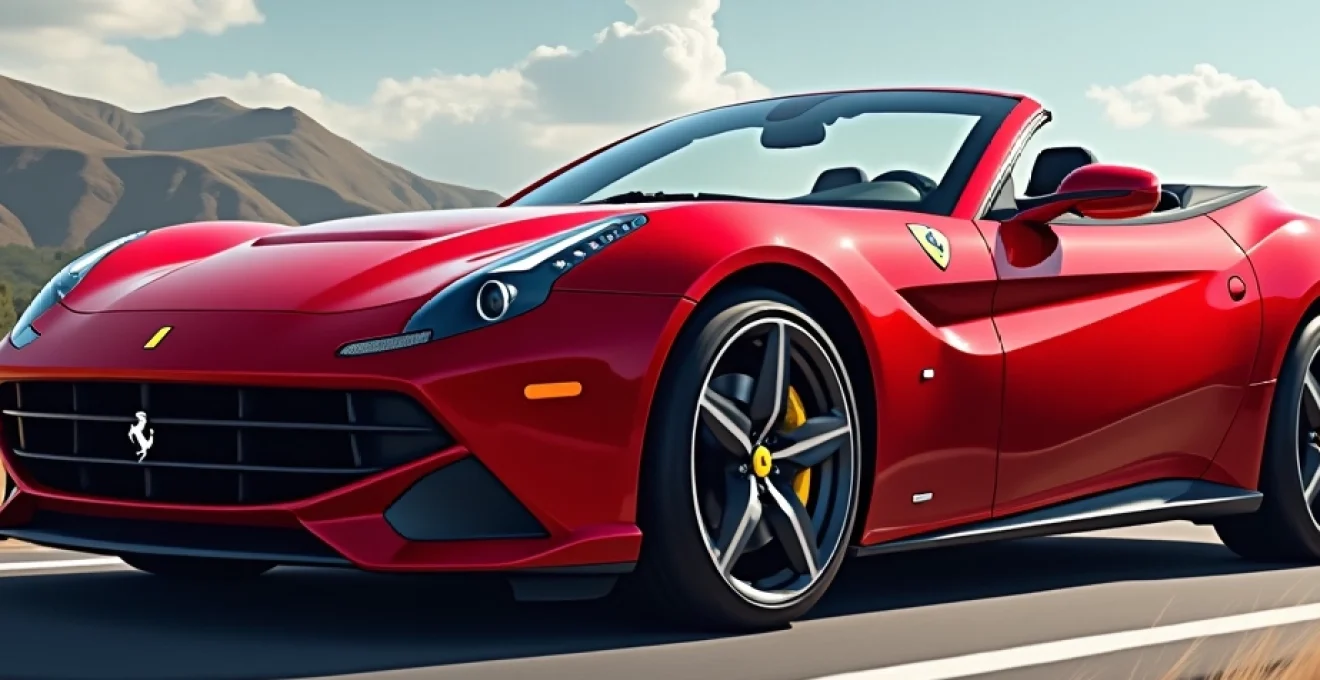
The California T represents Ferrari’s most deliberate attempt at creating an accessible grand touring experience, positioning itself as the gateway drug to Maranello ownership. Introduced in 2014 as an evolution of the original California, this model addressed many criticisms of its predecessor whilst maintaining the practical appeal that makes it suitable for daily driving scenarios. The combination of a retractable hardtop, 2+2 seating configuration, and relatively modest maintenance requirements has established the California T as a compelling entry point for prospective Ferrari owners.
California T pricing structure and market positioning
Current market analysis reveals California T models trading between £120,000 and £150,000 for well-maintained examples, representing significant depreciation from their original £150,000+ pricing when new. Early 2014 models now offer the most compelling value proposition, having absorbed the steepest depreciation curve whilst retaining modern Ferrari technology and refinement. The pricing structure reflects the model’s position as Ferrari’s volume seller during its production run, with higher availability keeping values more accessible than limited-production alternatives.
Market positioning analysis indicates that California T values have stabilised after initial steep depreciation, suggesting a potential floor has been established. This stabilisation coincides with increased recognition of the model’s capabilities and growing appreciation for its sophisticated engineering package . Collectors increasingly view the California T as a legitimate Ferrari rather than a compromise, contributing to improved market sentiment and value retention.
3.9-litre Twin-Turbo V8 performance specifications
The heart of the California T experience lies within its 3.9-litre twin-turbocharged V8 engine, delivering 553 horsepower and 557 lb-ft of torque through a sophisticated seven-speed dual-clutch transmission. This powerplant represents Ferrari’s first turbocharged engine since the F40, incorporating advanced technologies including variable boost mapping and sophisticated engine management systems. The result is a remarkably flexible power delivery that transforms the driving experience across different scenarios, from comfortable grand touring to spirited canyon carving.
Performance figures include a 0-62mph acceleration time of just 3.6 seconds, whilst maintaining reasonable fuel consumption figures for a Ferrari. The turbocharged configuration provides substantial low-end torque compared to naturally aspirated Ferrari engines, making the California T particularly accessible for drivers transitioning from conventional sports cars. Advanced traction control and stability systems ensure that the considerable performance remains manageable across varying driver skill levels.
Retractable hardtop mechanism and weight distribution
The California T’s retractable hardtop represents a significant engineering achievement, transforming the car’s character from enclosed coupe to open-air roadster in just 14 seconds. This sophisticated mechanism utilises a complex folding system that maintains optimal weight distribution whilst providing genuine weather protection when closed. The hardtop configuration offers superior noise insulation compared to traditional fabric convertible tops, making the California T suitable for extended touring scenarios.
Weight distribution benefits from Ferrari’s front-engine, rear-transmission layout, achieving a near-perfect 47:53 front-to-rear balance that enhances handling characteristics. The retractable roof mechanism adds approximately 100kg compared to a fixed-roof equivalent, but careful engineering ensures this weight penalty doesn’t significantly compromise performance or handling balance. Advanced aluminum construction throughout the chassis helps offset the additional complexity of the convertible mechanism.
Depreciation curves for 2014-2017 model years
Depreciation analysis reveals distinct patterns across California T model years, with 2014 examples experiencing the steepest initial value decline but now offering the most compelling price points. Mid-production 2015-2016 models represent a sweet spot between depreciation and modern features, whilst final 2017 examples retain higher values due to updated styling and enhanced technology packages. The depreciation curve has flattened considerably since 2020, suggesting market maturation and growing collector interest.
Mileage significantly impacts depreciation patterns, with high-mileage examples (over 30,000 miles) trading at substantial discounts to low-mileage garage queens. However, well-maintained higher-mileage California T models often represent better value propositions, having proven their reliability whilst commanding significantly lower acquisition costs. The key consideration involves balancing initial purchase price against potential maintenance requirements and future value retention.
Ferrari mondial: classic affordable alternative assessment
The Ferrari Mondial stands as perhaps the most misunderstood model in the company’s illustrious history, representing exceptional value for those seeking authentic vintage Ferrari ownership. Produced between 1980 and 1993, the Mondial pioneered the 2+2 mid-engine layout that would influence future Ferrari designs whilst offering genuine practicality uncommon in supercars of its era. Despite its innovative engineering and distinctive Pininfarina styling, the Mondial remains significantly undervalued compared to its contemporaries, creating unique opportunities for discerning enthusiasts.
The Mondial’s combination of mid-engine handling dynamics, distinctive 1980s styling, and relative affordability makes it an increasingly attractive proposition for those seeking entry into classic Ferrari ownership without the premium associated with more celebrated models.
Mondial 8 vs mondial QV engine configuration differences
The evolution from Mondial 8 to Mondial QV (Quattrovalvole) represents a significant leap in performance and refinement, with the four-valve-per-cylinder configuration delivering substantially improved power output and throttle response. Early Mondial 8 models produce 214 horsepower from their 3.0-litre V8 engines, whilst QV variants generate 240 horsepower through enhanced breathing and more sophisticated fuel injection systems. The QV configuration also benefits from improved reliability characteristics and reduced maintenance complexity.
Engine configuration differences extend beyond simple power outputs, with the QV featuring enhanced Bosch K-Jetronic fuel injection calibration and improved exhaust system design. These modifications result in better fuel economy, reduced emissions, and more linear power delivery throughout the rev range. The four-valve design also enables higher rev limits and more aggressive cam timing, contributing to the more engaging driving experience that defines later Mondial variants.
Pininfarina design evolution across production years
Pininfarina’s design evolution for the Mondial reflects changing aesthetic preferences and functional requirements throughout the 1980s and early 1990s. Early models featured more angular, wedge-shaped proportions characteristic of period supercars, whilst later variants incorporated smoother lines and improved aerodynamics. The transition from sharp-edged early designs to more rounded later interpretations demonstrates Pininfarina’s ability to evolve the fundamental concept whilst maintaining visual coherence.
Significant design updates occurred with the introduction of the Mondial 3.2 and subsequent Mondial T variants, featuring revised front and rear styling, improved integration of functional elements, and enhanced interior appointments. These later models benefit from lessons learned during the extended production run, resulting in better build quality, improved ergonomics, and more sophisticated detail execution. The design evolution reflects Ferrari’s growing understanding of the 2+2 market segment and its specific requirements.
Maintenance cost analysis for bosch K-Jetronic systems
The Mondial’s Bosch K-Jetronic fuel injection system represents both an advantage and a potential maintenance consideration for prospective owners. This mechanical fuel injection technology offers excellent reliability when properly maintained, but requires specific expertise for optimal performance and troubleshooting. Annual service costs typically range between £1,500-£2,500 for comprehensive maintenance at specialist facilities, with major service intervals occurring every 6,000-9,000 miles depending on usage patterns.
Common maintenance items include fuel injection component cleaning, ignition system updates, and periodic valve adjustments that ensure optimal performance. The K-Jetronic system benefits from regular use and high-quality fuel, making the Mondial well-suited to enthusiastic ownership rather than static display. Parts availability remains reasonable through specialist suppliers, though some components require rebuilding rather than replacement, adding complexity to maintenance planning.
Market availability in UK classic car dealerships
UK market availability for Mondial models fluctuates seasonally, with the strongest selection typically available during spring months as owners prepare vehicles for summer driving seasons. Specialist Ferrari dealerships maintain the highest-quality examples, though independent classic car specialists often offer more competitive pricing for project vehicles or higher-mileage examples. The UK market benefits from right-hand-drive availability for many Mondial variants, eliminating the complexity associated with imported left-hand-drive alternatives.
Pricing ranges from £25,000 for early project cars requiring significant attention to £45,000+ for exceptional later examples with comprehensive service histories. The middle market, representing solid drivers in good mechanical condition, typically trades between £30,000-£38,000 depending on specific model year, mileage, and condition factors. This pricing structure makes the Mondial considerably more accessible than most Ferrari alternatives whilst offering authentic ownership experiences.
Pre-owned ferrari 348 and 355 market dynamics
The Ferrari 348 and 355 models represent the evolution of Ferrari’s mid-engine sports car philosophy during the 1990s, offering increasingly sophisticated engineering packages and enhanced performance capabilities. These models bridge the gap between classic 1980s Ferraris and modern supercars, incorporating advanced technologies whilst maintaining the visceral driving characteristics that define the marque. Market dynamics for both models reflect growing collector interest, though significant value disparities exist between different variants and condition levels.
The 348 series, produced from 1989-1995, encompasses multiple variants including the 348tb, 348ts, and 348 Spider configurations. Early examples now represent compelling value propositions, with well-maintained 348tb models available from £60,000-£80,000 depending on specification and condition. The 348’s reputation suffered initially due to perceived reliability concerns, but modern understanding of proper maintenance requirements has rehabilitated the model’s standing amongst enthusiasts. Contemporary examples benefit from extensive aftermarket support and improved parts availability.
Ferrari 355 models command premium pricing compared to 348 alternatives, reflecting their enhanced performance, improved reliability characteristics, and more sophisticated chassis dynamics. The 355 introduced Ferrari’s first F1-derived paddle-shift transmission option, alongside more powerful naturally aspirated V8 engines and advanced electronic systems. Current market pricing ranges from £80,000-£120,000 for excellent examples, with F1 transmission models commanding slight premiums over traditional manual variants. The 355’s market position reflects its status as the final analog Ferrari before electronic driver aids became predominant.
Both models benefit from growing appreciation amongst collectors who recognize their historical significance and driving purity compared to modern alternatives. The 348 and 355 represent the last generation of Ferraris developed primarily for driving pleasure rather than ultimate performance figures, creating unique market appeal for enthusiasts seeking authentic mechanical experiences . Market dynamics suggest continued value appreciation for exceptional examples, though accessible entry points remain available for those willing to accept higher mileage or cosmetic imperfections.
Ferrari financing options and ownership cost breakdown
Ferrari ownership involves sophisticated financial considerations extending far beyond initial purchase prices, encompassing insurance costs, maintenance requirements, and depreciation management strategies. Understanding these comprehensive ownership costs enables informed decision-making and helps establish realistic budgets for sustainable Ferrari ownership experiences. Modern financing options have evolved to address the unique characteristics of luxury sports car ownership, offering flexible solutions for various financial situations and ownership objectives.
Maranello approved Pre-Owned programme terms
Ferrari’s Approved Pre-Owned programme establishes quality standards and warranty coverage for certified vehicles sold through official dealership networks. Programme requirements include comprehensive mechanical inspections, detailed service history verification, and cosmetic condition assessments that ensure vehicles meet Ferrari’s exacting standards. Approved vehicles benefit from extended warranty coverage, typically ranging from 12-24 months, providing additional peace of mind for prospective owners concerned about potential maintenance costs.
Financing terms through the Approved programme often include competitive interest rates and flexible payment structures designed to accommodate varying customer requirements. Typical arrangements include deposit requirements of 10-20% with repayment periods extending up to 60 months for qualifying applicants. The programme’s rigorous certification process commands premium pricing compared to independent alternatives, but the additional security and warranty coverage often justify the incremental costs for risk-averse buyers seeking maximum protection.
Insurance premium calculations for young driver demographics
Insurance costs for Ferrari ownership vary dramatically based on driver demographics, vehicle specifications, and coverage requirements, with young drivers facing particularly significant premiums due to perceived risk factors. Comprehensive coverage for drivers under 30 typically ranges from £3,000-£8,000 annually depending on specific model, driving history, and geographic location factors. These elevated premiums reflect both the vehicles’ high values and performance capabilities, alongside statistical claims data for younger demographic groups.
Premium reduction strategies include advanced driver training courses, security system installations, and limited mileage policies that can substantially reduce annual costs. Many insurers offer specialist classic car policies for older Ferrari models that provide agreed-value coverage at reduced premiums compared to standard sports car policies. The key involves working with specialist brokers who understand Ferrari ownership patterns and can identify the most competitive coverage options for individual circumstances.
Annual service intervals at authorised ferrari centres
Authorised Ferrari service centres recommend annual maintenance intervals regardless of mileage accumulation, recognising that these vehicles require attention even when used sparingly. Comprehensive annual services typically cost £1,200-£2,500 depending on model complexity and required interventions, with major services occurring every two years involving more extensive inspections and component replacements. Modern Ferrari models benefit from extended service intervals compared to classic alternatives, though the complexity of contemporary systems often increases individual service costs.
Service planning should account for both routine maintenance and potential unexpected repairs, particularly for higher-mileage examples or vehicles with incomplete service histories. Establishing relationships with reputable independent Ferrari specialists can provide cost savings compared to main dealer servicing, though warranty considerations may require official dealer involvement for newer vehicles. Proper service planning and preventive maintenance significantly impact long-term ownership costs and vehicle reliability.
Tyre replacement costs for pirelli P zero specifications
High-performance tyres represent a significant ongoing cost for Ferrari ownership, with Pirelli P Zero specifications typically costing £300-£500+ per tyre depending on specific size requirements and performance variants. Complete tyre replacements for standard Ferrari applications often exceed £1,500-£2,000 including fitting and balancing, making this a substantial consideration for budget planning. Tyre life varies dramatically based on driving style, with aggressive use potentially requiring replacement every 5,000-8,000 miles.
Tyre selection impacts both performance characteristics and replacement costs, with ultra-high-performance variants commanding premium pricing whilst offering superior grip and handling capabilities. Some owners opt for slightly less aggressive tyre specifications during normal use, reserving maximum-performance options for track events or spirited driving scenarios. Proper tyre maintenance, including regular pressure monitoring and wheel alignment checks, can extend service life and optimise both safety and cost considerations throughout the ownership experience.
Alternative affordable supercars: McLaren 570S and lamborghini gallardo comparisons
The supercar market offers compelling alternatives to Ferrari ownership, with McLaren 570S and Lamborghini Gallardo models providing different approaches to accessible high-performance motoring. These alternatives deserve consideration alongside Ferrari options, offering unique advantages in terms of performance, technology, or value propositions that may better suit specific ownership requirements. Understanding these competitive dynamics helps inform purchasing decisions and ensures optimal alignment between vehicle characteristics and owner expectations.
McLaren 570S models represent the most technologically advanced option in this comparison, featuring carbon fibre construction, sophisticated active suspension systems, and turbocharged V8 engines delivering exceptional performance figures. Current market pricing for quality 570S examples ranges from £130,000-£160,000, positioning them competitively against newer Ferrari alternatives whilst offering superior power-to-weight ratios and advanced aerodynamic packages. The McLaren’s track-focused engineering appeals to performance enthusiasts seeking maximum capability rather than traditional luxury appointments.
Lamborghini Gallardo models offer a middle ground between Ferrari’s grand touring philosophy and McLaren’s track-focused approach, combining Italian styling with Audi-derived reliability and more accessible maintenance costs. Gallardo pricing has stabilised in recent years
between £45,000-£65,000, making them particularly attractive for budget-conscious enthusiasts seeking exotic ownership experiences. The Gallardo’s naturally aspirated V10 engine provides exceptional soundtrack and linear power delivery, whilst benefiting from more conventional maintenance requirements compared to Ferrari alternatives. Parts availability through Audi’s extensive network offers practical advantages for long-term ownership scenarios.
Each alternative presents distinct ownership propositions that merit careful consideration against Ferrari options. The McLaren emphasises cutting-edge technology and track performance, the Lamborghini balances exotic appeal with practical reliability, whilst Ferrari prioritises heritage, exclusivity, and emotional connection. Understanding these fundamental differences helps prospective buyers identify which approach best aligns with their personal priorities and usage patterns.
Market dynamics suggest that all three marques will retain strong residual values, though Ferrari’s historical appreciation patterns provide the strongest long-term investment potential. However, the McLaren’s technological advancement and the Lamborghini’s accessibility may offer superior ownership experiences for those prioritising different aspects of the supercar ownership equation. The optimal choice depends heavily on individual preferences regarding performance characteristics, maintenance considerations, and brand values.
Performance comparisons reveal interesting contrasts across these three alternatives, with each manufacturer pursuing different engineering philosophies. McLaren’s focus on lightweight construction and aerodynamic efficiency delivers exceptional track capabilities, whilst Lamborghini’s emphasis on naturally aspirated engines provides visceral auditory experiences. Ferrari strikes a balance between performance and refinement, creating vehicles that excel across diverse usage scenarios from daily driving to weekend track sessions.
Ultimately, the choice between Ferrari ownership and these compelling alternatives depends on personal priorities, budget constraints, and intended usage patterns. Those seeking the ultimate in technological advancement may gravitate toward McLaren options, whilst enthusiasts prioritising soundtrack and drama might prefer Lamborghini alternatives. However, Ferrari’s unique combination of heritage, exclusivity, and comprehensive ownership experience continues to attract discerning buyers who value the complete package rather than individual performance metrics.